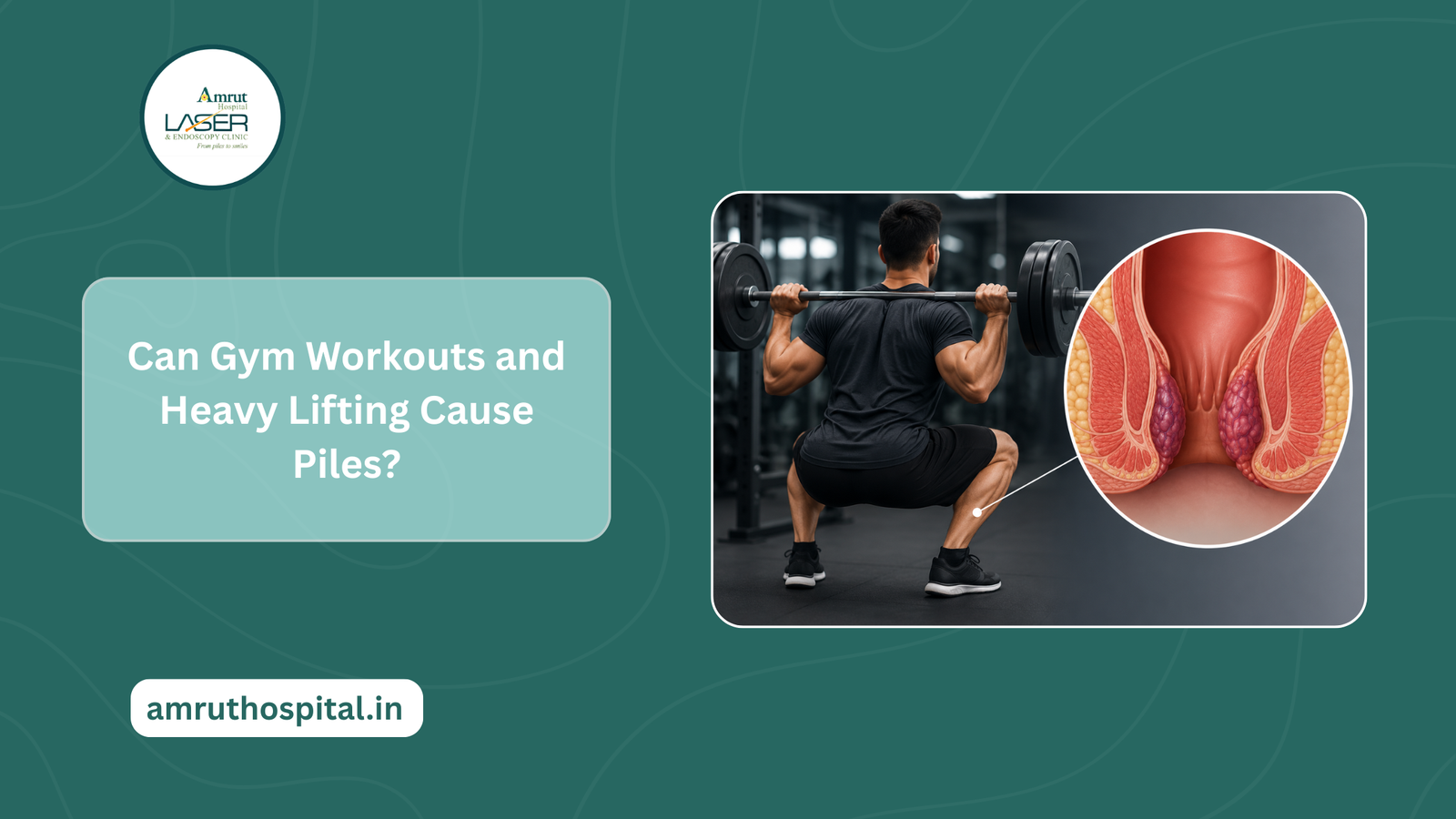
Gym workouts are usually good for your body, digestion, weight control, and overall health. But many people who lift heavy weights worry when they notice symptoms like pain, itching, bleeding, swelling, or a small lump near the anus after training.
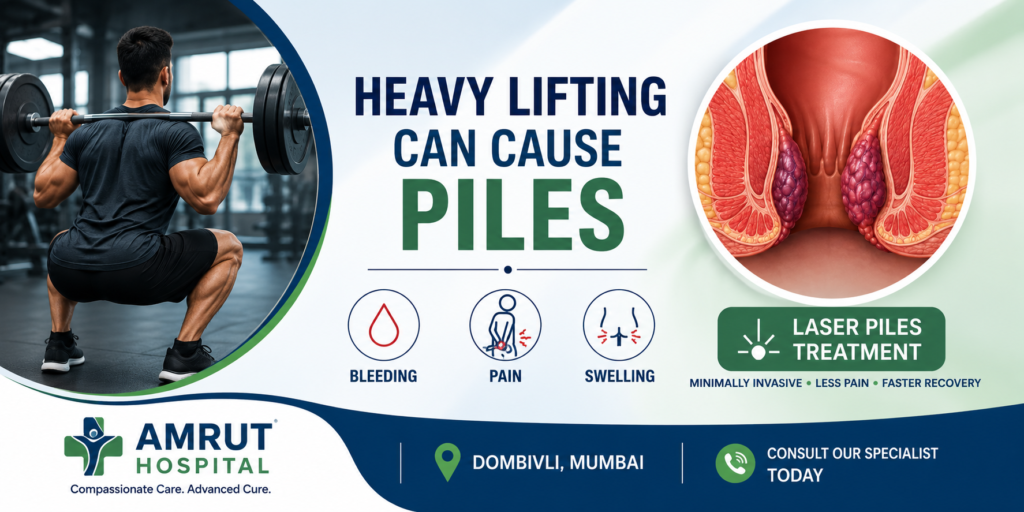
The concern is valid. Heavy lifting does not directly “create” piles in every person, but it can increase pressure in the lower rectal area, especially when you hold your breath, strain too hard, lift beyond capacity, or already have constipation. Medical sources list regular heavy lifting, straining, prolonged toilet sitting, constipation, and low-fiber diet among factors that may contribute to hemorrhoids or piles.
For fitness lovers, gym trainers, athletes, and working professionals in Dombivli, Mumbai, the key is not to stop exercising blindly. The smarter approach is to understand symptoms early, correct workout habits, improve bowel health, and consult a specialist when bleeding or pain continues.
If symptoms are advanced, options like laser piles treatment in dombivli may be considered after proper diagnosis at Amrut Hospital.
Gym workouts do not directly cause piles, but heavy lifting can worsen or trigger piles when combined with straining, constipation, low fiber intake, dehydration, and breath-holding during lifts. If bleeding, swelling, pain, or a lump near the anus continues, consult a piles specialist for diagnosis and treatment options.
What is gym-related piles risk?
Gym-related piles risk means the chance of developing or worsening hemorrhoids due to repeated pressure on the rectal veins during heavy lifting, poor breathing technique, and excessive straining.
Piles, also called hemorrhoids, are swollen veins in the lower rectum or around the anus. They may be internal or external. Internal piles commonly cause painless bleeding or protrusion during bowel movements, while external piles may cause itching, pain, swelling, or a tender lump.
The gym itself is not the problem. The issue usually comes from:
- Lifting too heavy too soon
- Holding breath during squats, deadlifts, or leg press
- Straining during bowel movements
- Poor hydration
- Low-fiber diet
- Ignoring early symptoms
Causes / Importance / Need
Heavy lifting can increase pressure inside the abdomen. When this pressure repeatedly affects the lower rectal veins, it may worsen existing piles or trigger symptoms in people already at risk.
Common causes and risk factors include:
- Straining during bowel movements: This increases pressure in rectal veins.
- Holding breath while lifting: Breath-holding can increase internal pressure. Mayo Clinic advises avoiding straining and breath-holding because it raises pressure in lower rectal veins.
- Regular heavy lifting: NIDDK and Mayo Clinic both list frequent heavy lifting as a contributing factor for hemorrhoids.
- Constipation: Hard stools make you push harder.
- Low-fiber diet: Less fiber can lead to constipation and harder stools.
- Long toilet sitting: Sitting too long, especially on the toilet, increases anal vein pressure.
- Ignoring early bleeding: Rectal bleeding should not always be assumed to be piles; other conditions may need evaluation. ASCRS notes that rectal bleeding should not automatically be attributed to hemorrhoids.
Mini Summary Box:
Heavy lifting is not the only cause of piles. The bigger risk comes when heavy workouts combine with constipation, poor toilet habits, low fiber, dehydration, and repeated straining.
How it Works / Process / Step-by-step
Here is how gym habits may contribute to piles symptoms:
Step 1: Heavy lifting increases abdominal pressure
Exercises like squats, deadlifts, leg press, overhead press, and heavy core training can create pressure inside the abdomen.
Step 2: Breath-holding adds more pressure
Many people hold their breath during difficult reps. This may push pressure downward toward the rectal veins.
Step 3: Existing weak veins start swelling
If the person already has constipation, low fiber intake, obesity, or a sedentary lifestyle, the veins may already be under stress.
Step 4: Straining during toilet worsens the condition
The gym may trigger discomfort, but toilet straining often worsens piles more.
Step 5: Symptoms appear
Common signs include bleeding, pain, itching, burning, swelling, or a lump near the anus.
Step 6: Diagnosis decides treatment
A piles specialist checks the grade of piles and suggests lifestyle changes, medicines, office procedures, or advanced options like laser treatment for piles when required.
Benefits
Early diagnosis and proper treatment offer several benefits:
- Relief from pain, itching, and swelling
- Better control over bleeding symptoms
- Reduced fear during workouts
- Lower risk of worsening piles
- Faster return to normal routine when treated early
- Better bowel habits and long-term prevention
- Treatment based on grade, not guesswork
For mild cases, doctors may suggest fiber, fluids, stool softeners, sitz baths, and medicines. NIDDK recommends high-fiber foods, fluids, avoiding straining, avoiding long toilet sitting, and avoiding regular heavy lifting for prevention.
For moderate to advanced cases, a specialist may discuss procedures such as rubber band ligation, coagulation, hemorrhoidectomy, or laser operation for piles, depending on symptoms and grade.
Comparison with alternatives
| Treatment Option | Best For | Recovery Comfort | Notes |
|---|---|---|---|
| Lifestyle changes | Early symptoms, constipation-related piles | High | Includes fiber, water, toilet habit correction, and exercise modification |
| Medicines / creams | Mild pain, itching, swelling | Moderate | Useful for temporary relief; prolonged steroid cream use should be avoided unless advised |
| Rubber band ligation | Internal bleeding or prolapsing piles | Moderate | ASCRS considers hemorrhoid banding an effective office-based treatment for selected grade I–III cases. |
| Conventional surgery | Large, severe, recurring, or external piles | Lower initially | Effective but may involve more postoperative pain and downtime |
| Laser piles procedure | Suitable selected cases | Often more comfortable | Laser surgery for piles may be advised after diagnosis, especially for patients looking for minimally invasive care |
Laser options are not for every patient. The right treatment depends on the grade of piles, bleeding, prolapse, pain, associated fissure or fistula, and overall health.
Who is a good candidate / Who needs this?
You should consult a piles specialist if you are a gym-goer and notice:
- Bright red bleeding after stool
- Pain during or after bowel movement
- Itching or burning near the anus
- Swelling or lump near the anal area
- Piles coming out during toilet
- Symptoms returning after home remedies
- Discomfort while sitting, cycling, or lifting
- Fear of working out because of piles pain
A good candidate for laser hemorrhoid surgery may include someone with recurring symptoms, suitable grade of piles, persistent bleeding, or discomfort that does not improve with conservative care.
However, a doctor must examine the condition first. Not every bleeding case is piles, and not every piles case needs laser surgery.
Cost / Pricing Factors
The cost of piles treatment in Dombivli, Mumbai can vary depending on the patient’s condition.
Common pricing factors include:
- Grade of piles
- Internal or external piles
- Bleeding severity
- Need for laser or non-laser procedure
- Surgeon consultation and diagnosis
- Hospital stay, if required
- Medicines and follow-up care
- Additional problems like fissure, fistula, constipation, or infection
- Insurance or cashless facility availability
In general, mild piles may cost less because they can often be managed with medicines and lifestyle correction. Advanced piles may need procedures such as laser operation for piles or surgery.
The best way to know the cost is to book a consultation and get a diagnosis-based estimate.
Industry trends in 2026
In 2026, piles treatment is moving toward early diagnosis, minimally invasive procedures, faster recovery, and patient comfort.
Key trends include:
- More people searching for discreet piles care
- Growing preference for minimally invasive treatment
- Increased awareness among gym-goers and working professionals
- Focus on same-day or short-stay procedures where suitable
- Better use of endoscopic and clinical evaluation for bleeding cases
- Lifestyle-based prevention plans after treatment
- More demand for local searches like laser piles treatment in dombivli
Another major trend is patient education. People no longer want only temporary relief creams. They want to know the cause, grade, recovery time, diet plan, workout safety, and long-term prevention.
Why Choose Amrut Hospital in Dombivli, Mumbai?
Amrut Hospital offers trusted care for patients dealing with piles, fissure, fistula, hernia, gallbladder issues, and other surgical concerns.
For patients seeking laser piles treatment in dombivli, Amrut Hospital focuses on:
- Proper consultation with a specialist
- Physical examination and diagnosis
- Grade-wise treatment planning
- Clear explanation of laser and non-laser options
- Minimally invasive care where suitable
- Recovery guidance after treatment
- Diet, hydration, and lifestyle advice
- Patient-friendly care in Dombivli, Mumbai
The goal is not just to treat piles once. The goal is to help patients understand why symptoms happened and how to reduce recurrence through better habits.
FAQs
1. Can heavy lifting cause piles?
Heavy lifting may not directly cause piles in every person, but regular heavy lifting can increase rectal pressure and worsen existing hemorrhoids, especially when combined with constipation and straining.
2. Should I stop gym if I have piles?
You may not need to stop all workouts. Light exercise, walking, and controlled training may help digestion. Avoid heavy lifting, breath-holding, and straining until a doctor checks your condition.
3. Is laser treatment for piles painful?
Laser treatment for piles is generally considered less invasive than conventional surgery for suitable patients. Pain levels vary based on grade, procedure type, and individual healing.
4. When should I see a doctor for piles?
See a doctor if bleeding, pain, swelling, or itching continues for more than a few days, or if you have severe pain or rectal bleeding. Mayo Clinic advises medical care if symptoms do not improve after a week of home care or if severe pain or bleeding occurs.
5. Can piles come back after laser surgery for piles?
Piles can recur if constipation, low fiber intake, straining, prolonged toilet sitting, or heavy pressure habits continue. Long-term prevention depends on diet, hydration, toilet habits, and workout technique.
Don’t ignore bleeding, pain, or swelling after workouts. Early diagnosis can prevent piles from becoming more painful and complicated.
Book a consultation at Amrut Hospital for expert evaluation and personalized treatment guidance. If suitable, advanced options like laser piles treatment in dombivli may help you recover with better comfort and confidence.