
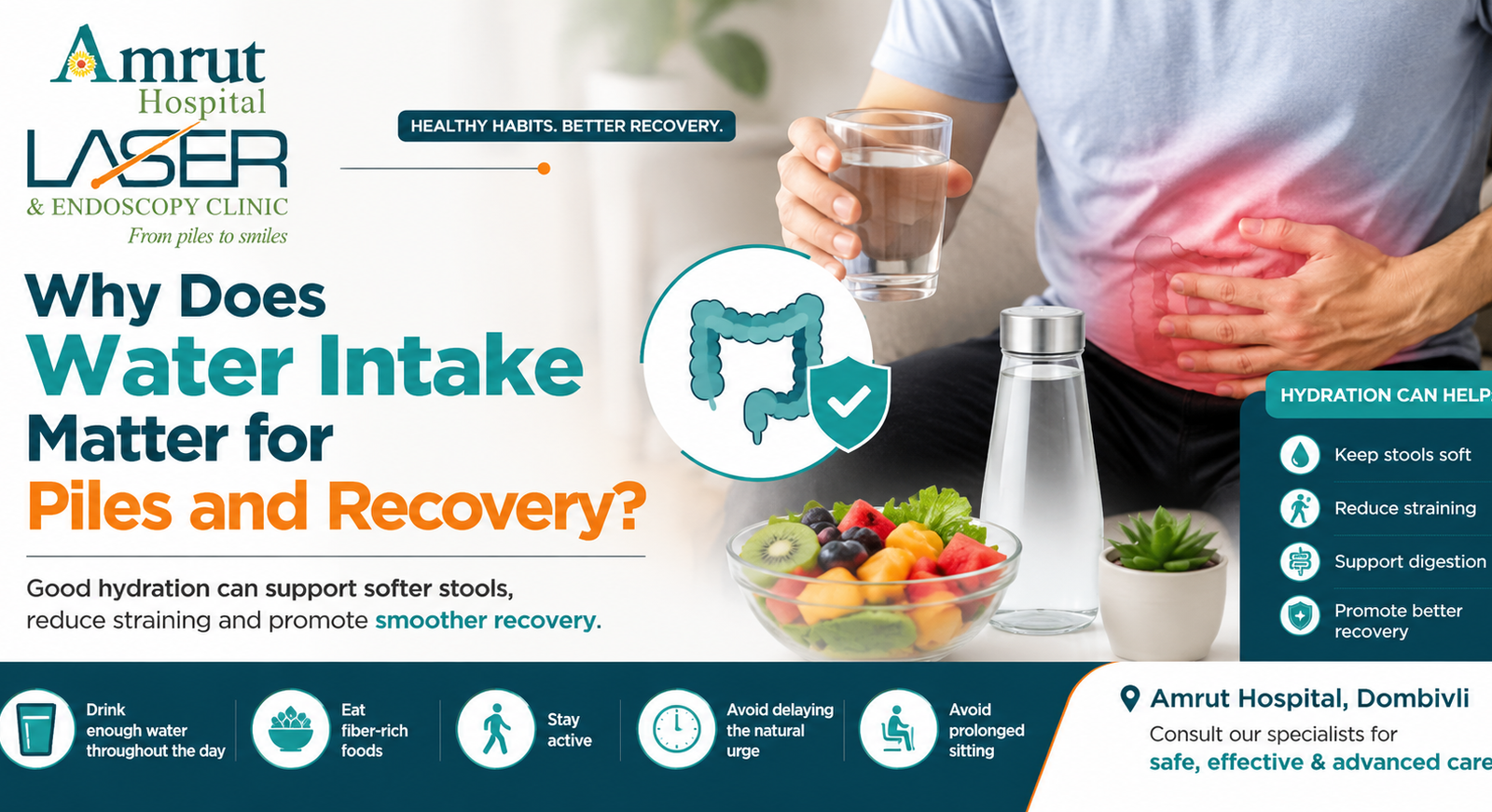
When someone searches for piles treatment in Dombivli, they usually think about pain, bleeding, swelling, medicines, creams, or surgery. But one simple daily habit often gets missed: drinking enough water.
Water may look like a small thing, but it can make a big difference in bowel comfort. When water intake is low, stool can become hard and dry. Hard stool may lead to straining during bowel movements. And straining can increase pressure around the anal and rectal area.
For piles patients, this pressure may worsen symptoms like pain, swelling, bleeding, itching, or discomfort. This is why hydration is important before and after treatment.
For patients planning or recovering from laser piles treatment in dombivli, water intake should be part of daily recovery care. Water, fiber-rich food, light movement, and better toilet habits can support softer stool and smoother bowel movements.
At Amrut Hospital, Dombivli, patients receive guidance about piles care, hydration, diet, bowel habits, treatment options, and recovery steps based on their symptoms and diagnosis.
Water intake matters for piles because it helps keep stool soft, supports fiber digestion, and may reduce straining during bowel movements. Drinking enough water can support comfort, constipation prevention, and smoother recovery after laser piles treatment in dombivli. Patients should follow doctor-guided hydration and diet advice.
What is Water Intake and Piles Care?
Water intake and piles care means drinking enough fluids every day to support healthy bowel movements and reduce constipation-related pressure.
Piles, also called hemorrhoids, are swollen veins in or around the anus and lower rectum. They may cause bleeding, itching, swelling, pain, or discomfort during stool passing.
Now, where does water come in?
When the body does not get enough water, stool can become dry and hard. This makes bowel movements difficult. The person may push harder, sit longer on the toilet, or feel fear while passing stool.
Water helps support smoother digestion. It helps stool stay softer, especially when combined with fiber-rich foods like fruits, vegetables, oats, dal, and whole grains.
This does not mean water alone can cure piles. It cannot replace diagnosis or medical treatment. But it is an important part of piles care, especially for patients looking for laser piles treatment in dombivli.
Water does not replace piles treatment, but it supports softer stool and easier bowel movements. For piles patients, good hydration can reduce avoidable pressure and support better recovery habits.
Why Is Water Intake Important for Piles?
Water intake is important because constipation is one of the common reasons piles symptoms may worsen. When stool is hard, the patient may strain. This strain can increase pressure on swollen veins near the anus.
Hydration may help because:
- It supports softer stool
- It helps fiber work better
- It may reduce constipation risk
- It may reduce straining
- It supports smoother bowel movements
- It may reduce fear during stool passing
- It supports recovery after piles treatment
- It helps maintain bowel regularity
- It may reduce irritation caused by hard stool
- It supports daily digestive comfort
Many people do not realise they are drinking less water. For example, a working professional may sit for long hours, drink two or three cups of tea or coffee, skip water during meetings, and delay toilet urges. Slowly, stool becomes hard. Then piles discomfort may increase.
This pattern is common among office workers in Dombivli and nearby areas.
If bleeding, pain, swelling, or constipation keeps coming back, it is better to consult a Piles doctor in Dombivli. Not every case of bleeding is piles, so proper diagnosis is important.
How Does Water Intake Help in Piles Care?
Water helps piles care in a simple but important way. It supports softer stool and reduces the need to strain.
Step 1: Water supports digestion
Water helps the body digest food and move waste through the digestive tract. When water intake is low, the stool may become harder and more difficult to pass.
A person may not notice this immediately. But after a few days of low water intake, bowel movements can become uncomfortable.
Step 2: Water helps fiber work better
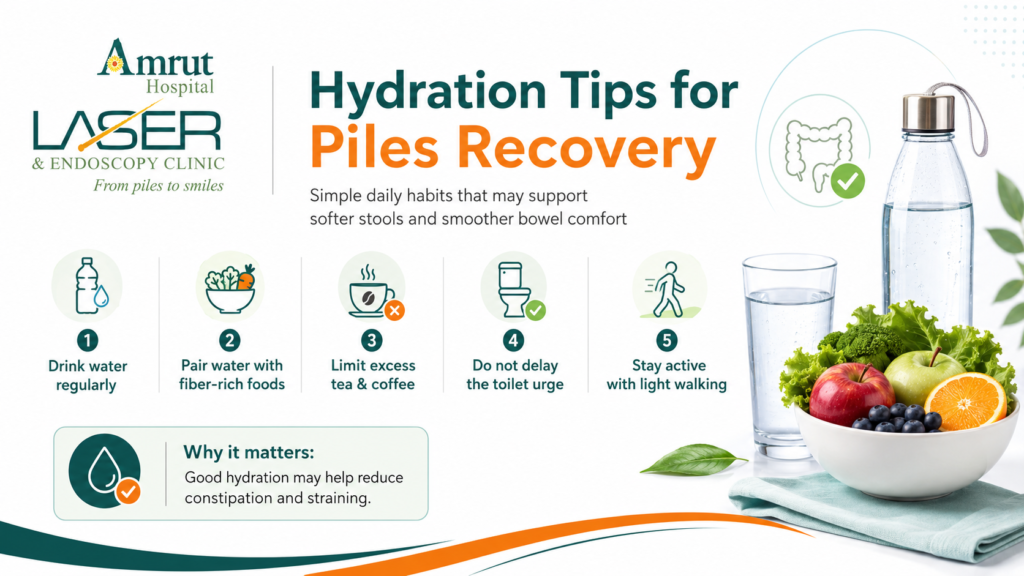
Fiber and water work together. Fiber absorbs water and helps form stool that is easier to pass.
But if someone eats fiber-rich food and drinks very little water, the stool may still remain hard. This is why doctors often advise patients to increase both fiber and fluids together.
Good fiber options include:
- Papaya
- Apple
- Banana
- Orange
- Green leafy vegetables
- Oats
- Daliya
- Whole wheat roti
- Dal and pulses
Step 3: Softer stool means less straining
When stool is soft, it usually passes with less pressure. Less straining may reduce irritation around the anal area.
This is very important for patients with piles, fissure-like pain, or post-treatment sensitivity.
Step 4: Less pressure supports comfort
Piles symptoms may worsen when there is repeated pressure during stool passing. Better hydration may help reduce this pressure by supporting smoother bowel movements.
It may also reduce fear during toilet visits, especially after treatment.
Step 5: Hydration supports recovery habits
After laser operation for piles in dombivli, some patients feel nervous about their first few bowel movements. This is completely understandable.
Drinking enough water, eating soft fiber-rich food, walking lightly, and following the doctor’s advice may make recovery more comfortable.
Step 6: Water should be part of a complete plan
Water works best when it is part of a full bowel care routine.
This may include:
- Fiber-rich food
- Light walking
- Avoiding straining
- Short toilet time
- Timely toilet habits
- Follow-up care
- Doctor-guided medicines if needed
Water helps fiber work better, supports softer stool, and may reduce straining. This makes hydration an important part of piles care and post-treatment recovery planning.
Benefits of Proper Water Intake for Piles Patients
Drinking enough water can support piles care in simple but meaningful ways.
Benefits may include:
- Softer stool
- Easier bowel movements
- Less straining
- Better fiber action
- Reduced constipation risk
- Better comfort during stool passing
- Less pressure around the anal area
- Better bowel routine
- Improved post-treatment recovery support
- Better daily digestive health
For suitable patients undergoing laser piles treatment in dombivli, hydration can support smoother recovery habits.
But every patient is different. Some people may have kidney disease, heart conditions, or fluid restrictions. Such patients should ask their doctor how much water is safe for them.
The goal is not to drink excessive water. The goal is to stay properly hydrated as per your body’s needs and medical condition.
Water Intake vs Low Hydration in Piles Care
| Factor | Good Water Intake | Low Water Intake |
|---|---|---|
| Stool texture | Softer and easier to pass | Harder and drier |
| Bowel movement | Smoother | Difficult |
| Straining | May reduce | May increase |
| Fiber effect | Works better with fluids | Fiber may not work properly |
| Constipation risk | May reduce | May increase |
| Piles discomfort | May support comfort | May worsen pressure |
| Recovery after treatment | Supports bowel comfort | May slow comfort |
| Toilet fear | May reduce | May increase |
This comparison shows why water intake should not be ignored in piles care.
Water is not a treatment by itself. But without enough hydration, even a fiber-rich diet may not give the expected comfort.
Think of it this way: fiber is helpful, but water helps fiber do its job better.
Who Needs to Focus on Water Intake for Piles?
Almost every piles patient should pay attention to water intake. But some people need to be extra careful because their lifestyle or health condition can increase constipation risk.
You may need to focus more on hydration if you have:
- Hard stool
- Repeated constipation
- Bleeding during stool
- Pain while passing stool
- Piles swelling
- Low-fiber diet
- Long sitting job
- Irregular meal timing
- Excess tea or coffee intake
- Less physical activity
- Fear of passing stool
- Recovery after piles treatment
Working professionals in Dombivli often struggle with hydration because of busy schedules, travel, meetings, long sitting, and delayed meals. A simple habit like keeping a water bottle on the desk can help.
Patients searching for a Piles clinic in Dombivli or Piles hospital in Dombivli should choose a place where diagnosis, treatment, hydration, diet, and bowel habits are explained clearly.
Also, remember that every anal symptom is not always piles. If symptoms continue, proper evaluation is important.
Cost and Pricing Factors for Piles Treatment and Hydration Guidance
Hydration advice is usually part of lifestyle and recovery guidance. But the total cost of piles treatment can vary from patient to patient.
Pricing factors may include:
- Grade of piles
- Internal or external piles
- Severity of bleeding
- Pain or swelling level
- Need for laser treatment
- Type of anesthesia
- Day-care or admission requirement
- Medicines after treatment
- Need for stool softeners
- Follow-up visits
- Presence of fissure or fistula
- Doctor’s expertise
- Hospital facilities
Patients often ask about the cost of laser operation for piles in dombivli, Kalyan. The correct cost can be shared only after consultation and examination.
It is better not to choose treatment only by price. Proper diagnosis, safe planning, doctor experience, hospital setup, and aftercare guidance also matter.
Industry Trends in 2026
In 2026, patients are becoming more aware that piles care is not only about medicines or procedures. Lifestyle guidance is now a major part of recovery.
Patients want answers to simple but important questions:
- How much water should I drink?
- What should I eat?
- How can I avoid constipation?
- When should I see a doctor?
- Is laser treatment suitable for me?
Important trends include:
- More focus on hydration and fiber guidance
- Growing awareness about constipation prevention
- More demand for minimally invasive piles care
- Increased local searches for piles specialists
- More interest in post-treatment recovery tips
- Better awareness about early diagnosis
- More patient education through blogs and videos
- Higher preference for day-care treatment options
- More attention to working professionals with long sitting habits
- Stronger focus on long-term bowel habit correction
Searches like laser piles treatment in dombivli, Kalyan Piles doctor in Dombivli, and Piles clinic in Dombivli show that patients want nearby care with clear guidance and modern treatment options.
Why Choose Amrut Hospital as a piles hospital in dombivli?
Amrut Hospital provides diagnosis and treatment guidance for piles, fissure, fistula, hernia, laparoscopic, and endoscopic concerns in Dombivli.
The focus is not only on treating symptoms. Patients also receive guidance on hydration, fiber intake, constipation prevention, bowel habits, and recovery care.
At Amrut Hospital, patients can consult for:
- Piles diagnosis and treatment planning
- Internal and external piles care
- Advanced laser piles treatment in dombivli
- Hydration and diet guidance
- Constipation prevention advice
- Follow-up after piles treatment
- Fissure and fistula evaluation
- Hernia evaluation when needed
- Laparoscopic care guidance
- Endoscopic evaluation when required
If you are looking for a Piles doctor in Dombivli, Piles hospital in Dombivli, laser operation for piles in dombivli, Hernia surgeon in Dombivli, Laparoscopic surgeon in dombivli, or Endoscopic surgeon in dombivli, Amrut Hospital can guide you based on your symptoms and condition.
Good care is not only about treatment. It is also about helping patients understand their body, reduce fear, and recover with better daily habits.
FAQs
1. Does drinking water help with piles?
Drinking enough water may help keep stool softer and support smoother bowel movements. This may reduce straining, which is important for piles patients.
2. How much water should I drink if I have piles?
Water needs depend on age, activity, weather, diet, and medical condition. Ask your doctor for the right amount, especially if you have kidney, heart, or fluid-related health concerns.
3. Is water important after laser piles treatment in dombivli?
Yes. Water intake can support softer stool and better bowel comfort after laser piles treatment in dombivli. Follow your doctor’s post-treatment diet and hydration advice.
4. Can low water intake make piles worse?
Low water intake may contribute to hard stool and constipation. Hard stool can increase straining and may worsen piles-related discomfort.
5. When should I visit a doctor for piles symptoms?
Consult a doctor if you have repeated bleeding, severe pain, swelling, constipation, discharge, fever, or symptoms that keep coming back.
Water intake may look like a small habit, but it can make a big difference in piles care and recovery comfort.
If you have repeated bleeding, pain, swelling, constipation, or discomfort during stool passing, do not ignore it.
For diagnosis, hydration guidance, aftercare, and advanced laser piles treatment in dombivli, consult Amrut Hospital, Dombivli.
Book your consultation today and take the first step toward smoother bowel habits and better recovery comfort.