
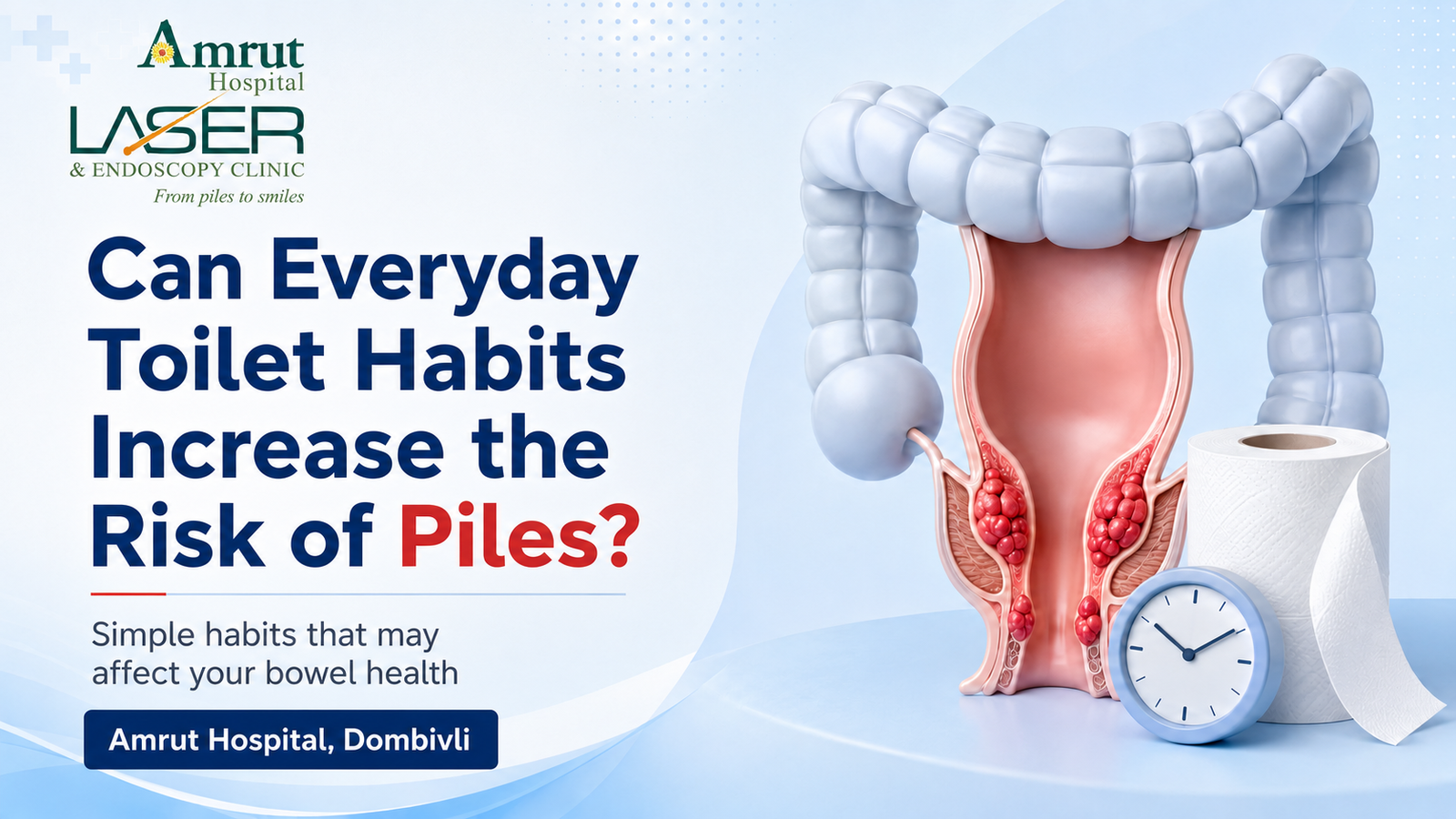
Using the toilet should be a simple part of the day, but when piles develop, even a regular bowel movement can become uncomfortable and worrying. Understanding the connection between Daily toilet habits and piles is important, especially if you notice itching, swelling, a lump near the anus or bright-red blood after passing stool.Using the toilet should be a simple part of the day. But when piles develop, even a regular bowel movement can become uncomfortable and worrying. You may notice itching, swelling, a lump near the anus or bright-red blood after passing stool.
Sometimes, these symptoms settle for a few days and then return. This can leave you wondering: Is it something I ate? Is constipation the reason? Or could one of my everyday toilet habits be making the problem worse?
Several factors can contribute to piles. However, habits such as straining, sitting on the toilet for too long, delaying the natural urge and regularly passing hard stool can increase pressure on the veins around the anus and lower rectum.
Small changes in your bathroom routine may reduce this pressure and prevent mild symptoms from getting worse. Still, rectal bleeding should never automatically be treated as piles. Anal fissures and other digestive conditions can cause similar symptoms.
If bleeding, pain or swelling continues, consult a qualified piles doctor in Dombivli. After a proper examination, treatment may include lifestyle changes, medicines or, when clinically suitable, laser piles treatment in Dombivli.
Can Toilet Habits Cause Piles? A Direct Answer
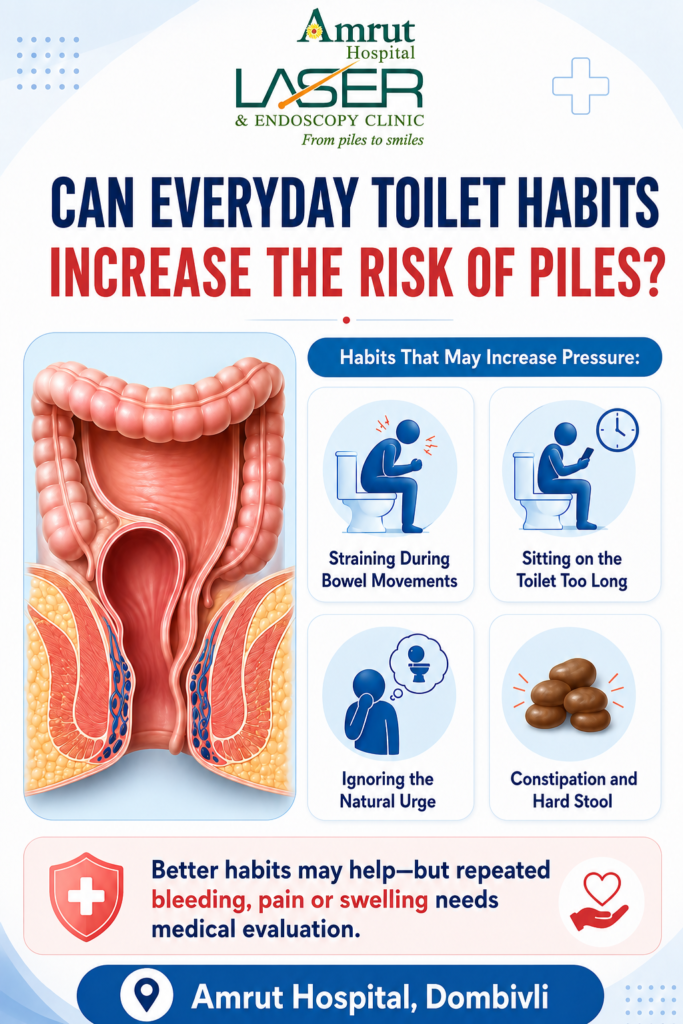
Yes, certain toilet habits can increase the likelihood of developing or aggravating piles. Straining, prolonged toilet sitting, ignoring the natural bowel urge and passing hard stool can increase pressure in the lower rectum. Better bowel habits may reduce this pressure, but persistent bleeding or pain requires medical evaluation.
What Are Piles?
Piles, also known as haemorrhoids, are swollen or enlarged blood vessels and supporting tissues in the lower rectum or around the anus. They may develop inside the rectum, outside the anal opening or in both areas.
Common symptoms can include:
- Bright-red blood after passing stool
- Itching or irritation around the anus
- Swelling or a lump near the anal opening
- Mucus discharge
- Discomfort during bowel movements
- Tissue that comes out while passing stool or shortly afterwards
Symptoms can feel different from one patient to another. For example, a person with internal piles may notice painless bleeding on the tissue paper. Someone with external piles may experience swelling, tenderness or pain, especially if a blood clot develops.
Some people may have only one symptom, while others notice several at the same time. This is why an examination matters. Symptoms alone may not always reveal the exact cause.
Piles are swollen tissues and blood vessels in or around the anus. Straining and prolonged toilet sitting can aggravate them, but similar symptoms may also occur with anal fissures or other conditions.
Which Daily Toilet Habits May Increase the Risk of Piles?
Medical sources identify straining, extended toilet sitting, chronic constipation or diarrhoea and a low-fibre diet as factors associated with haemorrhoids. These factors can repeatedly expose the lower rectal area to pressure.
Straining to pass stool
When stool feels hard or difficult to pass, the natural response may be to push harder. But forceful straining increases pressure on the veins in the lower rectum.
Imagine dealing with constipation several times a week. Each bowel movement involves repeated pushing and discomfort. Over time, this pressure may contribute to swelling or make existing piles protrude more.
Rather than forcing the stool, it is better to address the reason behind the constipation.
Which Daily Toilet Habits Increase the Risk of Piles?
A quick toilet visit can easily become a 15- or 20-minute scrolling session when a mobile phone is involved. It may feel harmless, but sitting in this position for too long can place unnecessary pressure on the anal area.
The American Society of Colon and Rectal Surgeons advises patients to avoid excessive straining and limit the amount of time spent on the toilet. Its patient guidance suggests keeping toilet sitting to approximately one or two minutes when possible.
If the stool does not pass naturally, sitting longer and repeatedly trying may not help. Step away and try again when the urge returns.
Ignoring the natural bowel urge
Have you ever delayed using the toilet because you were travelling, working or attending a meeting? Doing this occasionally may happen, but repeatedly ignoring the urge can affect the consistency of your stool.
When stool remains in the bowel for longer, more water may be absorbed from it. It can then become harder, drier and more difficult to pass. This often leads to straining—the very habit that can aggravate piles.
Using the toilet without a regular routine
An irregular toilet schedule does not directly cause piles in every person. However, it may contribute to constipation or make bowel movements less predictable.
Some people find it easier to pass stool after breakfast or another regular meal. Allowing enough unhurried time for a natural bowel movement can help, as long as you are not sitting and forcing the stool.
Excessive or harsh cleaning
When itching or irritation begins, people often clean the area more aggressively. Unfortunately, rough wiping can make the discomfort worse.
Fragranced wipes, strong soaps and repeated scrubbing may irritate the sensitive skin around the anus. This irritation is not the same as piles, but it can increase burning and itching when piles are already present.
Clean gently with water where possible and pat the area dry instead of rubbing it.
Spending too little time on fibre and hydration
Fibre and hydration may not sound like toilet habits, but they directly affect what happens in the bathroom. A diet that is low in fibre can lead to dry or hard stool. Inadequate fluid intake may make the problem worse for some people.
Adults generally require around 22–34 grams of fibre each day, depending on age and sex. Fibre should be added gradually and supported by suitable fluid intake.
Everyday fibre sources may include fruits, vegetables, whole grains, beans and lentils. Sudden large increases in fibre can cause bloating, so a gradual approach is usually easier to maintain.
How Do Poor Toilet Habits Affect the Rectal Area?
The problem often builds slowly rather than appearing overnight. Here is how it may develop:
- Stool becomes hard or difficult to pass: Low fibre, insufficient fluids, certain medicines or regularly delaying bowel movements may contribute to constipation.
- The person starts straining: When stool does not pass easily, forceful pushing raises pressure in the abdomen and lower rectum.
- Toilet visits become longer: The person may remain seated and keep trying, even when there is no natural urge.
- Rectal veins and supporting tissues face repeated pressure: Over time, the affected tissues may enlarge, become irritated or begin to protrude.
- Symptoms appear or become worse: Bleeding, swelling, itching, mucus or discomfort may begin. Existing piles may also become more troublesome.
- A medical examination identifies the cause: A doctor may discuss the symptoms, examine the anal area and recommend further evaluation when necessary.
Consider a person who frequently postpones bowel movements during working hours. By evening, the stool may be harder to pass. They strain, sit for longer and eventually notice bright-red blood. While piles may be one possible cause, an anal fissure can produce similar symptoms.
Constipation and hard stool can cause a small tear in the anal lining, known as an anal fissure. This commonly leads to sharp pain and bright-red bleeding during or after a bowel movement.
That is why self-diagnosis can be misleading. A proper examination helps identify what is actually causing the bleeding.
What Are the Benefits of Healthier Toilet Habits?
A healthier bathroom routine will not solve every case of piles, but it can reduce some of the pressure that aggravates the affected area.
Better toilet and bowel habits may:
- Reduce the need for forceful straining
- Help keep stool soft and formed
- Limit pressure on haemorrhoidal tissues
- Reduce irritation around the anal area
- Support recovery alongside prescribed treatment
- Lower the chance of repeated constipation
- Make bowel movements more comfortable
- Help prevent mild piles symptoms from worsening
A few small changes can make a meaningful difference. Use the toilet when you feel the natural urge, avoid forcing the stool and keep your visit brief. Leaving your mobile phone outside may also help you avoid sitting longer than necessary.
Dietary fibre, suitable water intake and regular physical activity can support bowel regularity. Even a daily walk may help some people maintain a healthier routine.
However, fluid requirements are not the same for everyone. Patients with heart, kidney or other medical conditions should ask their doctor how much fluid is appropriate for them.
Better Bathroom Routine: Go when you feel the natural urge, avoid forceful straining, keep toilet time short, eat enough fibre and stay appropriately hydrated. These measures can help, but they do not replace an examination when symptoms persist.
Toilet-Habit Changes vs Other Piles Treatments
| Approach | When it may be considered | Main purpose | Important limitation |
|---|---|---|---|
| Toilet-habit and dietary changes | Mild or early symptoms and prevention | Reduce constipation and rectal pressure | May not resolve advanced or prolapsing piles |
| Medicines and local symptom relief | Short-term mild pain, itching or swelling | Provide temporary symptom relief | Should not be used indefinitely without medical advice |
| Office-based procedures | Selected cases of internal piles | Treat enlarged haemorrhoidal tissue | Suitability depends on the pile grade and symptoms |
| Laser or surgical treatment | Persistent, recurring or advanced cases when clinically indicated | Treat the affected tissue through a procedure | Not every patient needs or qualifies for it |
| Evaluation for another condition | Unusual pain, repeated bleeding or an unclear diagnosis | Identify fissures, polyps or other possible causes | May require consultation and additional tests |
The best treatment depends on what the examination reveals—not simply on the presence of bleeding.
For example, one patient may improve with fibre, medication and better toilet habits. Another person with recurring prolapse or persistent symptoms may require a procedure. A third patient may not have piles at all.
A laser operation for piles in Dombivli should therefore be considered only after a surgeon has confirmed the diagnosis, assessed the severity and discussed the available alternatives.
Who Should Consult a Piles Doctor?
Consider visiting a piles clinic in Dombivli if you experience:
- Rectal bleeding that keeps returning
- Pain or burning during or after passing stool
- Persistent itching or irritation
- Swelling or a lump near the anus
- Tissue protruding during bowel movements
- Constipation that continues despite dietary changes
- Symptoms that return after temporary improvement
- A noticeable or unexplained change in bowel habits
- Unexplained weight loss or unusual tiredness
It may feel uncomfortable to discuss these symptoms, but delaying an examination can prolong the worry. Doctors regularly assess bowel and rectal concerns, and sharing accurate details can help them reach the right diagnosis.
Urgent medical attention is needed if you experience heavy or continuous bleeding, black or tar-like stool, fainting, dizziness, severe abdominal pain or marked weakness.
Black stool may indicate bleeding from higher in the digestive tract and should not be treated as a routine piles symptom. Rectal bleeding can have several causes, including haemorrhoids, anal fissures and other gastrointestinal conditions.
What Factors Affect the Cost of Piles Treatment?
There is no single treatment price that applies to every patient. Someone with mild symptoms may need only consultation, medicines and lifestyle guidance. Another patient may require diagnostic tests or a procedure.
The cost can vary according to:
- Type and grade of piles
- Severity and duration of symptoms
- Diagnostic examinations required
- Conservative treatments already attempted
- Procedure recommended by the surgeon
- Anaesthesia requirements
- Day-care admission or hospital stay
- Medicines and follow-up consultations
- Existing medical conditions
- Insurance coverage and policy terms
A consultation at a piles hospital in Dombivli helps determine whether habit changes and medicines may be enough or whether a procedure such as laser piles treatment in Dombivli should be considered.
Before agreeing to a procedure, ask for a written estimate and check what it covers. Does it include investigations, anaesthesia, medicines and follow-up appointments? Clear information can help you plan without unnecessary confusion.
Treatment should be selected according to medical need, safety and expected benefit—not price or advertising claims alone.
Piles Hospitals and clinics in Dombivli provide medical consultation, diagnostic support and treatment for different health concerns. Patients experiencing rectal bleeding, pain, swelling or constipation may search for a piles hospital in Dombivli, piles clinic in Dombivli, laser piles treatment hospital, multi speciality hospital in Dombivli, surgical clinic in Dombivli, general surgery hospital, or an endoscopy clinic in Dombivli. Choosing a qualified doctor and a well-equipped healthcare facility is important for accurate diagnosis and an appropriate treatment plan.
What Is Changing in Piles Care in 2026?
In 2026, responsible piles care continues to focus on an accurate diagnosis and a treatment plan suited to the individual. The same procedure may not be right for every person, even when the symptoms sound similar.
Important trends include:
- Greater attention to constipation and everyday bowel habits
- Earlier evaluation of recurring rectal bleeding
- Clearer differentiation between piles, fissures and other causes
- Increased use of day-care and minimally invasive procedures for suitable patients
- More structured recovery and follow-up guidance
- Shared decision-making between patients and surgeons
- Greater focus on realistic outcomes instead of “guaranteed cure” claims
Patients are also asking more questions before treatment—and rightly so. They want to understand why a procedure is being recommended, what recovery may involve and whether non-surgical options are suitable.
Technology can support treatment, but it cannot replace clinical judgement. Even when someone specifically asks about laser piles treatment in Dombivli, the first step should be confirming whether piles are truly responsible for the symptoms.
Why Choose Amrut Hospital in Dombivli?
Amrut Hospital provides evaluation and surgical guidance for people experiencing rectal bleeding, piles symptoms and related concerns.
Patients can consult Dr. Pramod D. Bahekar, Senior Consulting General Surgeon and Endoscopist with more than 35 years of experience. Following an examination, patients receive guidance based on their symptoms, diagnosis and overall health.
Someone visiting a piles doctor in Dombivli may need support with bowel habits, medication, investigations or procedural treatment. The recommendation depends on the individual case rather than a standard approach for everyone.
Amrut Hospital also provides access to a hernia surgeon in Dombivli, laparoscopic surgeon in Dombivli and endoscopic surgeon in Dombivli for relevant surgical and gastrointestinal concerns.
No treatment should be selected before a proper assessment. The aim is to understand the cause of the symptoms, explain suitable options in clear language and recommend care according to the patient’s medical findings.
Frequently Asked Questions
1. Can sitting on the toilet for too long cause piles?
Sitting on the toilet for an extended period can increase pressure around the anus. It may contribute to piles or make existing symptoms worse. Keep toilet visits brief, and avoid using your mobile phone while sitting.
2. Can straining once cause haemorrhoids?
One episode of straining may cause temporary discomfort, but repeated or forceful straining is a more recognised risk factor. If constipation keeps returning, address the underlying cause instead of regularly forcing the stool.
3. Should I ignore the urge to pass stool if I am busy?
No. Repeatedly delaying the natural urge can allow stool to become harder and more difficult to pass. Whenever possible, use the toilet when your body signals that it is ready.
4. Does every patient with piles need laser treatment?
No. Mild piles may improve with fibre, appropriate fluids, healthier toilet habits and prescribed treatment. Laser or another procedure may be considered only when the symptoms, pile grade and examination findings support it.
5. Is rectal bleeding always caused by piles?
No. Rectal bleeding can occur due to anal fissures and several other digestive conditions. Repeated bleeding should be evaluated. Black stool, heavy bleeding, dizziness, fainting or weakness requires prompt medical attention.
Take the Next Step
Small changes in your toilet habits may reduce constipation and protect your bowel health. But when bleeding, pain, swelling or a lump keeps returning, trying to diagnose the problem yourself can delay the right care.
For proper evaluation and personalised guidance, schedule a consultation at Amrut Hospital, Dombivli. A clinical examination can help determine whether you need lifestyle changes, medication or a procedure such as laser piles treatment in Dombivli, Thane