

Laser piles treatment in Dombivli is one of the options people may consider when piles symptoms keep returning despite changes in diet and bowel habits. Skipping breakfast regularly may reduce fibre intake, affect hydration, and disturb your usual bowel routine, which can make constipation more noticeable. Hard stools and repeated straining can then increase pressure on existing piles and worsen discomfort, swelling, or bleeding. At Amrut Hospital, patients can get a proper evaluation to understand whether lifestyle changes, medication, or a procedure is appropriate for their condition.
Constipation can make stools harder to pass and may lead to more straining during bowel movements. For people already dealing with piles, this extra pressure can make discomfort, itching, swelling, or bleeding feel worse.
Simple changes such as eating a fibre-rich breakfast, drinking enough water, staying active, and avoiding straining may help support better bowel health. However, if symptoms keep returning, it is important to get them checked properly.
For people experiencing recurring symptoms, simply changing breakfast may not be enough. A proper examination by a Piles operation in Dombivli can help determine the cause and whether lifestyle changes, medication, an office-based procedure, surgery, or laser piles treatment in Dombivli should be considered.
Can Skipping Breakfast Make Constipation and Piles Worse?
Skipping breakfast does not directly cause piles. However, regularly missing breakfast may disturb a person’s bowel routine or reduce daily fiber and fluid intake. Eating can naturally encourage the colon to move stool, which is why some people find it easier to have a bowel movement after breakfast. Persistent constipation and repeated straining may aggravate existing piles
What Is the Connection Between Skipping Breakfast, Constipation and Piles?
Constipation means bowel movements may become less frequent, stools may be hard or dry, or passing stool may require more effort. Some people also feel that they have not completely emptied their bowel
Breakfast can be useful because eating helps stimulate movement in the colon. The NIDDK notes that doctors may sometimes suggest attempting a bowel movement about 15 to 45 minutes after breakfast, because eating helps the colon move stool.
This doesn’t mean everyone must eat breakfast at exactly the same time. But a consistent morning routine can be helpful for people who struggle with irregular bowel habits.
Piles, or haemorrhoids, are swollen veins around the anus or lower rectum. Constipation, straining during bowel movements, and low-fiber eating patterns are among the factors associated with piles.
Why Can Skipping Breakfast Affect Your Bowel Routine?
Skipping one meal is rarely the only reason someone develops constipation. Problems are more likely when several habits happen together.
Common factors include:
- Lower fiber intake: If breakfast normally includes fruit, oats, whole grains, or other fiber-rich foods, skipping it can reduce total daily fiber.
- Less fluid intake: Some people also forget to drink water when they skip their morning meal.
- Irregular bowel timing: A changing meal schedule may affect an established morning toilet routine.
- Ignoring the urge: Rushing out of the house may mean postponing a bowel movement.
- Low physical activity: Long hours of sitting can accompany poor daily routines.
- Highly processed foods: Diets with little fiber can make stools harder to pass.
Adults generally require about 22–34 grams of fiber each day, depending on age and sex. Fibre should usually be increased gradually and supported with adequate fluids.
When stools become harder, people often strain more. Repeated straining may put additional pressure on existing haemorrhoids.
How Does the Problem Develop Step by Step?
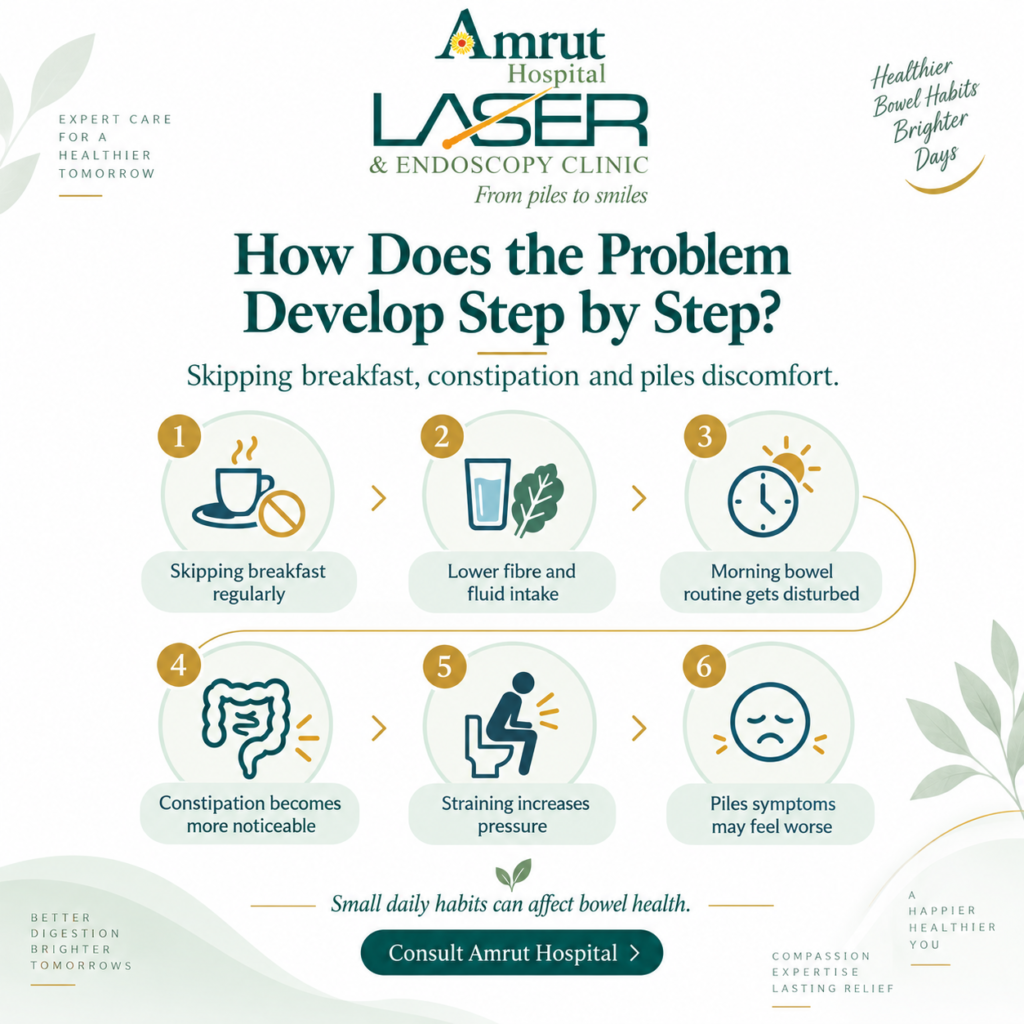
Think about a typical busy weekday.
Step 1: Breakfast gets skipped
You rush out with only tea or coffee and plan to eat later.
Step 2: Your morning bowel routine changes
The usual meal-related stimulation of the colon may not happen at the same time.
Step 3: Fibre and fluid intake may fall
By lunchtime, you may already have missed a good opportunity to include fruit, whole grains, or fluids in your diet.
Step 4: Stool becomes difficult to pass
If low fiber, inadequate fluids, delayed toilet visits, or other causes continue, constipation may become more noticeable.
Step 5: Straining increases
You may spend longer on the toilet or push harder to pass stool.
Step 6: Existing piles may become irritated
Pressure and repeated straining can make symptoms more troublesome.
Step 7: Persistent symptoms need evaluation
If pain, swelling, itching, bleeding, or constipation continues, visit a Piles clinic in Dombivli rather than repeatedly relying on home remedies.
Skipping breakfast alone does not cause piles. The concern is the pattern that may come with it less fiber, fewer fluids, irregular bowel habits and repeated straining. Fixing these habits can help, but persistent symptoms need medical evaluation.
What Are the Benefits of Improving Your Morning Routine?
A healthy morning routine is not a guaranteed treatment for piles, but it can support better bowel habits.
Possible benefits include:
- More regular bowel movements
- Softer and easier-to-pass stools
- Less need to strain
- Better daily fiber intake
- Improved hydration habits
- Reduced pressure during bowel movements
- Better awareness of your body’s natural toilet urge
High-fiber foods help make stools softer and easier to pass, while adequate liquids help fiber work effectively.
A simple breakfast could include oats with fruit, whole-grain foods, vegetables, or other fiber-rich choices suited to your diet.
How Do Lifestyle Changes Compare With Piles Treatment Options?
Treatment depends on the type and severity of piles, symptoms, examination findings, and previous treatment.
| Approach | When It May Be Considered | What It Involves |
|---|---|---|
| Diet and bowel-habit changes | Mild constipation or early symptoms | Fibre, fluids, activity and avoiding straining |
| Medicines | Selected mild symptoms or constipation | Treatment advised according to the patient’s symptoms |
| Office-based procedures | Certain internal haemorrhoids | Options may include rubber-band ligation, sclerotherapy or coagulation |
| Laser-based treatment | Selected patients after surgical assessment | Uses laser technology as part of a procedure chosen according to the condition |
| Conventional surgery | Larger, advanced or selected persistent piles | Surgical treatment determined by clinical findings |
Current clinical guidance supports conservative measures for many patients and recognizes several office and surgical approaches depending on the type and severity of haemorrhoidal disease. No single treatment is appropriate for everyone.
Therefore, choosing a laser operation for piles in Dombivli should follow an examination rather than being based only on online symptoms.
Who May Need Medical Evaluation for Piles?
Consider consulting a doctor if you have:
- Repeated bleeding during bowel movements
- Persistent pain or discomfort
- A lump or swelling near the anal area
- Recurring itching or irritation
- Constipation that does not improve
- Frequent straining
- Symptoms that keep returning despite diet changes
- A noticeable change in your usual bowel pattern
Rectal bleeding should not automatically be assumed to be piles because bleeding can have other causes. Medical assessment is particularly important if bleeding continues or is accompanied by abdominal pain, unexplained weight loss, fever, vomiting, or other concerning symptoms
A consultation at a Piles hospital in Dombivli can help determine what is actually causing your symptoms.
What Factors Affect the Cost of Laser Piles Treatment?
The cost of piles treatment in Dombivli cannot be accurately decided from symptoms alone.
Pricing may vary depending on:
- Type and grade of piles
- Number and size of haemorrhoids
- Tests required before treatment
- Type of anesthesia
- Procedure recommended
- Hospital and operating-room requirements
- Medicines and consumables
- Length of hospital stay, if required
- Follow-up care
- Associated medical conditions
Some patients may not require a procedure at all. Others may benefit from an office treatment or a different surgical approach.
For that reason, an examination should come before requesting a final treatment estimate.
What Are the Piles Treatment Trends in 2026?
In 2026, piles care continues to move toward individualized treatment rather than a one-treatment-fits-all approach.
Modern care increasingly focuses on:
- Identifying constipation and bowel habits first
- Using conservative management when appropriate
- Selecting minimally invasive or office-based procedures for suitable cases
- Considering day-care treatment where clinically appropriate
- Reducing unnecessary hospital stays
- Giving patients clearer guidance on post-treatment bowel habits
- Matching the procedure to the grade and type of piles
Importantly, newer technology does not automatically mean it is the correct choice for every patient. Evidence-based haemorrhoid guidelines continue to include lifestyle modification, office procedures and surgical options depending on clinical findings.
A surgeon should therefore assess whether laser piles treatment in Dombivli is suitable for the individual patient.
Why Choose Amrut Hospital in Dombivli?
At Amrut Hospital, the focus is not simply on treating a symptom. The first step is understanding why the problem is happening and how severe it is.
Patients with recurring constipation, bleeding, discomfort, or suspected piles can seek evaluation and discuss the available treatment options.
Depending on the diagnosis, care may involve dietary changes, medicines, bowel-habit advice, procedures, or surgical management.
Patients looking for a Piles doctor in Dombivli can also discuss whether a laser operation for piles in Dombivli is appropriate for their condition.
Amrut Hospital also provides surgical consultation for patients searching for a Hernia surgeon in Dombivli, Laparoscopic surgeon in Dombivli, or Endoscopic surgeon in Dombivli, depending on the medical problem and required evaluation.
FAQs
1. Can skipping breakfast directly cause piles?
No. Skipping breakfast itself does not directly cause piles. However, irregular eating patterns, low fiber intake, inadequate hydration and constipation may contribute to harder stools and straining, which can aggravate piles.
2. What should I eat for breakfast if I have constipation?
Consider fiber-rich foods such as oats, whole grains, fruits, vegetables or other foods suited to your diet. Increase fiber gradually and drink adequate fluids alongside it.
3. Can eating breakfast help with morning bowel movements?
For some people, yes. Eating naturally stimulates movement in the colon. The NIDDK notes that bowel training may involve trying to pass stool around 15–45 minutes after breakfast.
4. Does every patient with piles need laser treatment?
No. Mild piles may improve with changes in diet, bowel habits or other conservative treatments. Procedures are considered according to symptoms, examination findings and the type or grade of piles.
5. When should I consult a doctor about piles?
Seek medical advice if you have persistent bleeding, recurring pain, swelling, significant discomfort, ongoing constipation, or symptoms that do not improve. Bleeding should be properly assessed rather than automatically assumed to be piles.
Take the First Step Toward Better Bowel Health
Skipping breakfast occasionally may not be a major concern. But if rushed mornings have turned into chronic constipation, straining and recurring piles symptoms, your body may be telling you that something needs attention.
Start with simple habits: eat enough fiber, stay hydrated, remain active and avoid delaying bowel movements.
If symptoms continue, visit Amrut Hospital for a proper evaluation. Our team can help you understand the cause of your symptoms and discuss suitable options, including laser piles treatment in Dombivli when clinically appropriate.
For expert consultation and personalized treatment guidance, visit Amrut Hospital at Dr. R.P. Road, Tilak Nagar, Dombivli East, Kalyan, Maharashtra 421201. If you are experiencing recurring constipation, piles discomfort, bleeding, or related symptoms, book an appointment today and get the right medical evaluation. Call: 087796 02217.
Book a consultation with Amrut Hospital today and get the right treatment plan based on your symptoms and examination.