
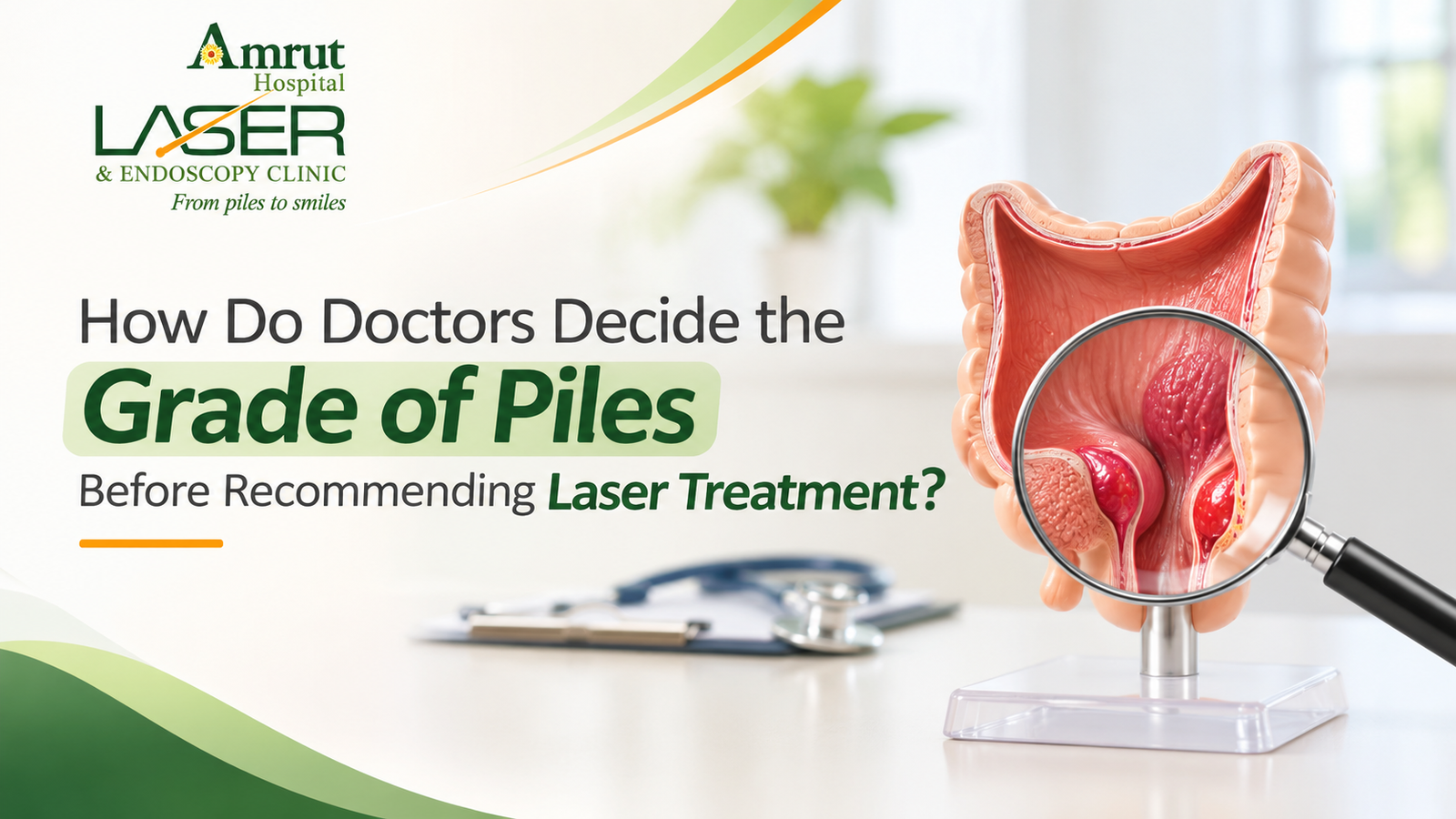
Piles, also known as hemorrhoids, are a common health condition that can cause bleeding, itching, swelling, discomfort and difficulty during bowel movements. However, not every patient experiences the same symptoms or requires the same treatment.
Many patients considering Laser Piles Treatment in Dombivli wonder whether laser surgery is necessary for their condition. Some experience occasional bleeding, while others struggle with persistent swelling or protruding tissue. The appropriate treatment depends on several factors, including the grade of piles, symptoms and overall health.
Before recommending laser treatment, doctors perform a clinical examination to understand the severity of the condition. Piles are generally classified into four grades when assessing internal hemorrhoids, and each grade may require a different treatment approach.
Early-stage piles may respond to dietary changes, medicines and lifestyle modifications, while more advanced cases may require medical procedures or surgery.
At Amrut Hospital, treatment planning is based on clinical evaluation and individual patient requirements. Understanding how piles are graded can help patients make informed decisions, avoid unnecessary procedures and seek appropriate medical attention at the right time.
How Do Doctors Determine the Grade of Piles?
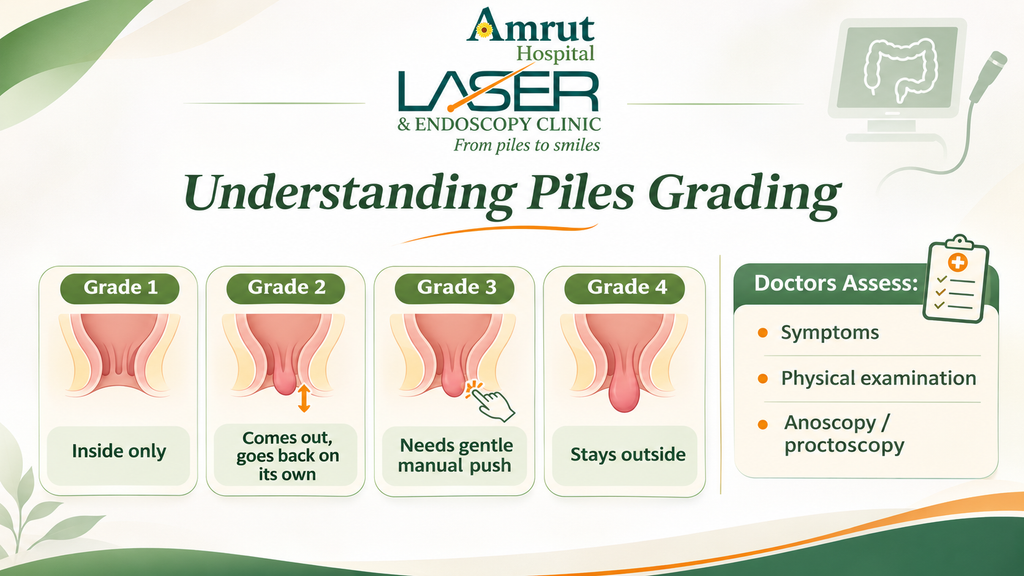
Doctors determine the grade of internal piles by examining whether hemorrhoidal tissue protrudes, whether it returns naturally or requires manual repositioning, and whether it remains permanently outside. Medical history, physical examination and anoscopy or proctoscopy may help assess the condition before recommending medicines, laser treatment or other surgical procedures.
What Is Piles Grading?
Piles grading is a clinical classification system used to determine the extent of prolapse in internal hemorrhoids. Prolapse occurs when hemorrhoidal tissue moves downwards and protrudes outside the anal opening.
The commonly used Goligher classification divides internal piles into four grades.
| Grade of Piles | Characteristics | Possible Treatment Options |
|---|---|---|
| Grade 1 | Remain inside without protruding; bleeding may occur | Dietary changes, medicines and lifestyle modifications |
| Grade 2 | Protrude during bowel movements but return naturally | Conservative treatment, banding or selected procedures |
| Grade 3 | Protrude and require manual repositioning | Selected laser procedures or other surgical treatments |
| Grade 4 | Remain outside and cannot be manually repositioned | Surgical evaluation, often conventional excisional surgery |
This grading system applies primarily to internal hemorrhoids. External piles are assessed differently based on their appearance, symptoms and complications.
A proper examination by a piles doctor is essential before determining the most suitable treatment.
Why Is Identifying the Grade of Piles Important?
The severity of symptoms alone does not always indicate the grade of piles. Some patients with early-stage hemorrhoids may experience considerable bleeding, while others with advanced piles may report relatively little pain.
Identifying the correct grade helps doctors:
- Determine the extent of hemorrhoidal prolapse.
- Understand whether conservative treatment may be sufficient.
- Identify patients who may benefit from laser procedures.
- Avoid unnecessary surgical interventions.
- Assess potential complications and recurrence risks.
- Develop an individualized treatment plan.
- Differentiate piles from fissures, fistulas and other medical conditions.
According to the American Society of Colon and Rectal Surgeons (ASCRS), dietary and behavioural modifications are generally recommended as the initial approach to managing symptomatic hemorrhoids.
Therefore, surgery should not automatically be considered the first treatment option for every patient.
How Do Doctors Examine and Grade Piles Before Laser Treatment?
Several steps may be involved in determining whether a patient is suitable for laser piles treatment.
1. Reviewing the Patient’s Medical History
The doctor begins by understanding the patient’s symptoms, medical history and daily habits.
Common questions include:
- How frequently does bleeding occur?
- Is there discomfort during bowel movements?
- Does swelling appear during or after passing stools?
- Does the protruding tissue return inside naturally?
- Is constipation a recurring problem?
- Have previous treatments been attempted?
These details provide important information about the condition and its progression.
2. Performing a Physical Examination
A physical examination helps identify external swelling, visible hemorrhoids, tenderness and other abnormalities.
The examination may also help distinguish hemorrhoids from conditions that cause similar symptoms.
3. Conducting a Digital Rectal Examination
When appropriate, a digital rectal examination may be performed to assess the surrounding tissues and identify abnormalities.
However, internal hemorrhoids may not always be identified through this examination alone.
4. Using Anoscopy or Proctoscopy
Anoscopy or proctoscopy allows the doctor to examine the internal region more clearly.
These examinations help assess:
- Location of internal hemorrhoids.
- Extent of swelling.
- Presence of bleeding.
- Degree of prolapse.
- Associated abnormalities.
Additional investigations, including colonoscopy, may be advised when bleeding requires further evaluation.
5. Selecting the Appropriate Treatment
After assessing the findings, the piles surgeon considers the grade, symptoms, previous treatments, associated conditions and overall health.
Patients seeking Piles Treatment in Dombivli should undergo a proper evaluation before deciding between conservative management, laser treatment and conventional surgery.
Quick Summary: How Piles Are Graded
- Grade 1: No prolapse.
- Grade 2: Prolapse returns naturally.
- Grade 3: Manual repositioning is required.
- Grade 4: Prolapse cannot be repositioned.
Remember: The grade is an important factor, but it is not the only consideration when recommending laser treatment.
What Are the Benefits of Grade-Based Piles Treatment?
Accurate grading allows doctors to recommend treatment according to the patient’s specific condition rather than applying the same procedure to everyone.
The benefits include:
- More personalized treatment planning.
- Better understanding of available treatment options.
- Reduced likelihood of unnecessary surgery.
- Appropriate selection of minimally invasive procedures.
- More realistic recovery expectations.
- Better assessment of potential recurrence.
- Improved patient awareness and informed decision-making.
For appropriately selected patients, laser hemorrhoidoplasty may offer reduced postoperative discomfort and a quicker return to routine activities compared with certain excisional procedures. However, long-term outcomes and recurrence risks should also be considered.
Laser Piles Treatment vs Other Treatment Options
Not every grade of piles requires laser surgery. Different treatment methods offer different advantages and limitations.
| Treatment Method | Generally Considered For | Main Advantage | Limitation |
|---|---|---|---|
| Dietary and lifestyle changes | Early-stage piles | Non-invasive management | May not resolve advanced prolapse |
| Medicines and ointments | Mild symptomatic piles | Symptom management | May provide temporary relief |
| Rubber band ligation | Grade 1, 2 and selected grade 3 internal piles | Outpatient procedure | Repeat treatment may be required |
| Laser hemorrhoidoplasty | Selected grade 2 and grade 3 piles | Potentially less postoperative discomfort | Recurrence is possible |
| Conventional hemorrhoidectomy | Advanced or combined internal and external piles | Effective treatment for significant disease | Recovery may involve greater discomfort |
Patients considering Piles Surgery in Dombivli should discuss the expected benefits, risks, recovery period and long-term outcomes of each procedure with their surgeon.
Who Is a Good Candidate for Laser Piles Treatment?
Laser treatment may be considered for patients who have:
- Selected grade 2 or grade 3 internal hemorrhoids.
- Persistent symptoms despite conservative treatment.
- Repeated hemorrhoidal swelling or bleeding.
- Suitable hemorrhoidal anatomy for laser procedures.
- Medical fitness for the recommended intervention.
However, patients with extensive external hemorrhoids, irreducible prolapse or certain associated conditions may require alternative surgical approaches.
Consulting a qualified laser piles surgeon helps determine whether the procedure is clinically appropriate.
What Factors Influence the Cost of Laser Piles Treatment?
The cost of piles treatment varies according to the severity of the condition and the procedure recommended.
Common pricing factors include:
- Grade and complexity of hemorrhoids.
- Pre-operative investigations.
- Type of surgical procedure.
- Anaesthesia requirements.
- Hospitalization and monitoring.
- Medicines and postoperative care.
- Applicable health insurance coverage.
An accurate treatment estimate can generally be provided after clinical examination and assessment.
Patients should avoid choosing a laser piles hospital solely on the basis of treatment cost. Clinical suitability, surgeon experience and follow-up care are equally important.
What Are the Latest Trends in Piles Treatment in 2026?
Hemorrhoid management in 2026 continues to emphasize individualized treatment, minimally invasive techniques and evidence-based surgical decisions.
Important developments include:
- Personalized treatment: Selecting procedures based on anatomy, symptoms and patient requirements.
- Minimally invasive techniques: Evaluating laser procedures and other alternatives to excisional surgery.
- Recovery-focused care: Supporting patient comfort and an appropriate return to daily activities.
- Long-term outcome monitoring: Assessing recurrence alongside short-term recovery.
- Patient education: Emphasizing bowel habits, dietary fibre and constipation management.
A 2026 systematic review comparing laser hemorrhoidoplasty with LigaSure hemorrhoidectomy reported that patients receiving laser treatment returned to routine activities approximately 5.75 days earlier on average. However, recurrence and suitability for advanced hemorrhoids remain important considerations.
Why Choose Amrut Hospital for Hemorrhoids Treatment in Dombivli?
Amrut Hospital is a Laser and Endoscopy Centre offering treatment for piles, fissures, fistulas and other general surgical conditions.
Under the guidance of Dr. Pramod D. Bahekar, Senior Consulting General Surgeon and Endoscopist with over 35 years of experience, patients can receive clinical evaluation and treatment guidance based on their individual medical requirements. Hemorrhoids Treatment at Amrut Hospital+2
The hospital’s treatment approach includes:
- Clinical assessment and piles grading.
- Individualized surgical treatment planning.
- Laser and conventional treatment options, as appropriate.
- Pre-operative guidance.
- Postoperative recovery and follow-up advice.
- Patient education regarding lifestyle and bowel habits.
Whether you are searching for a piles clinic in Dombivli, an experienced piles surgeon or a laser piles hospital in Dombivli, obtaining an accurate diagnosis should be the first priority.
Frequently Asked Questions (FAQs)
1. Which grade of piles requires laser surgery?
Laser treatment may be considered for selected grade 2 and grade 3 internal hemorrhoids. The final recommendation depends on symptoms, anatomy, previous treatment outcomes and clinical assessment.
2. Can grade 1 piles be treated without surgery?
Yes. Grade 1 piles can often be managed through dietary fibre, adequate hydration, improved bowel habits and medicines recommended by a doctor.
3. Can doctors identify the grade of piles without an examination?
Symptoms provide useful information, but a physical examination and, when necessary, anoscopy or proctoscopy are generally required for accurate grading.
4. Is laser treatment suitable for grade 4 piles?
Laser treatment alone may not be appropriate for extensive grade 4 hemorrhoids. Conventional hemorrhoidectomy or another surgical approach may be recommended depending on the condition.
5. When should I visit a piles doctor in Dombivli?
Medical evaluation is recommended for persistent bleeding, swelling, protruding tissue or discomfort during bowel movements. Heavy bleeding, dizziness or severe pain requires urgent medical attention.
Book a Consultation for Laser Piles Treatment in Dombivli
Persistent piles symptoms should not be ignored or managed indefinitely through self-medication. Identifying the correct grade is an important first step towards appropriate treatment.
If you are looking for a piles hospital in Dombivli or an experienced laser piles surgeon in Dombivli, visit Amrut Hospital for a comprehensive clinical assessment and personalized treatment guidance.
Consult Dr. Pramod D. Bahekar at Amrut Hospital and understand which piles treatment option may be suitable for your condition.
For further information contact:
Amrut Hospital | Piles Fistula and Fissure Doctor in DombivliAmrut Hospital | Piles Fistula and Fissure Doctor in Dombivli
Address: Dr R.P. Rd, Dombivli, Tilak Nagar, Dombivli East, Kalyan, Maharashtra 421201
Phone: 9920070956