
Piles, also known as hemorrhoids, can feel uncomfortable, painful and sometimes even embarrassing to talk about. Many people ignore bleeding, itching, swelling or pain during stool because they hope it will settle on its own. But when the same symptoms keep coming back, daily life becomes difficult.
Simple things like sitting for long hours, travelling, eating outside food or even going to the washroom can start feeling stressful. That is when diet becomes very important.
The right food can make stool softer, reduce pressure during bowel movements and help control constipation. The wrong food, on the other hand, can make stool hard and increase straining.
If you are in Dombivali and dealing with repeated piles symptoms, do not wait too long. Mild cases may improve with diet and lifestyle changes, but bleeding, severe pain or prolapse needs proper medical attention. At Amrut Hospital, patients looking for laser piles treatment in dombivli can get diagnosis-based care and treatment guidance.
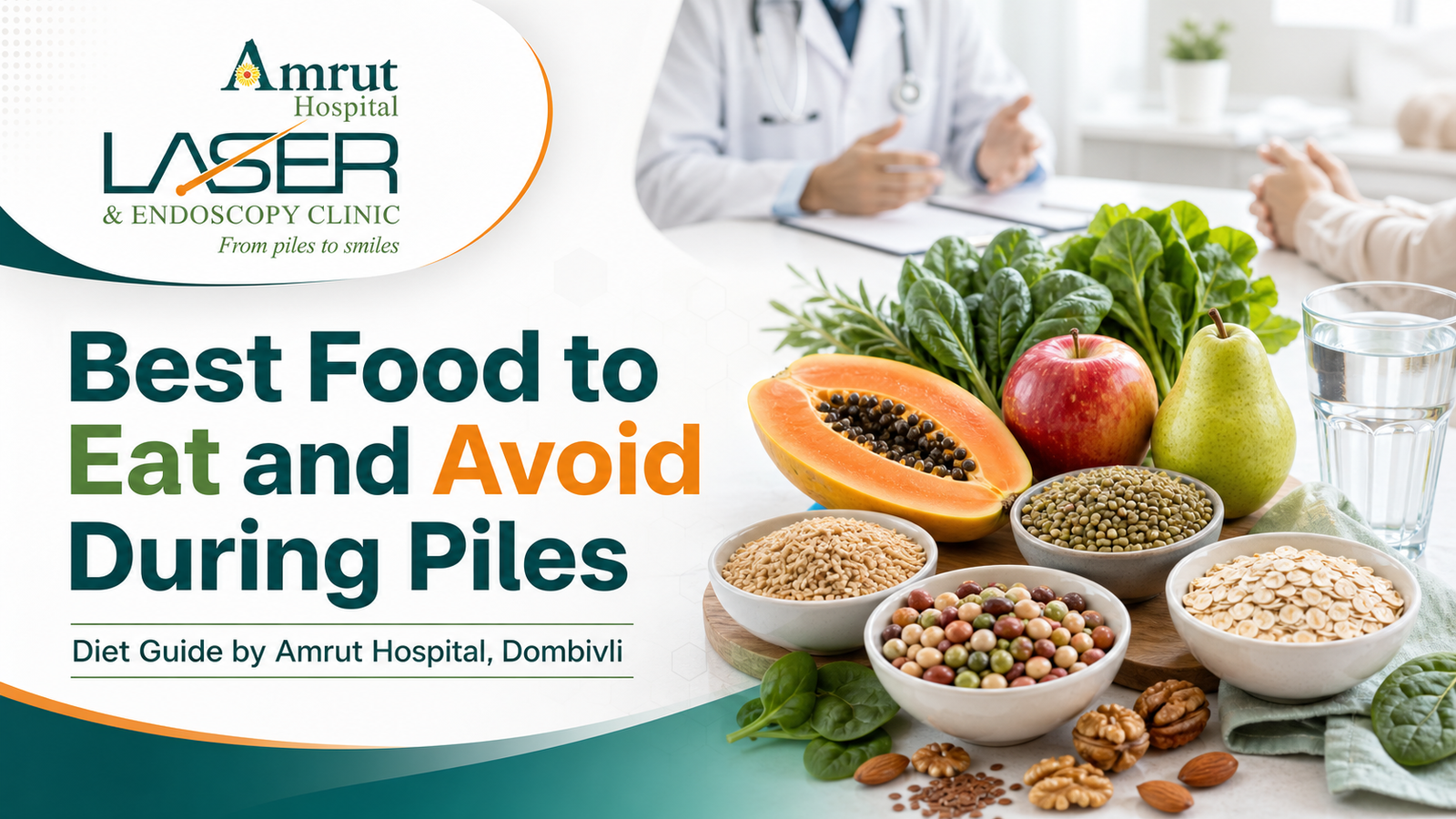
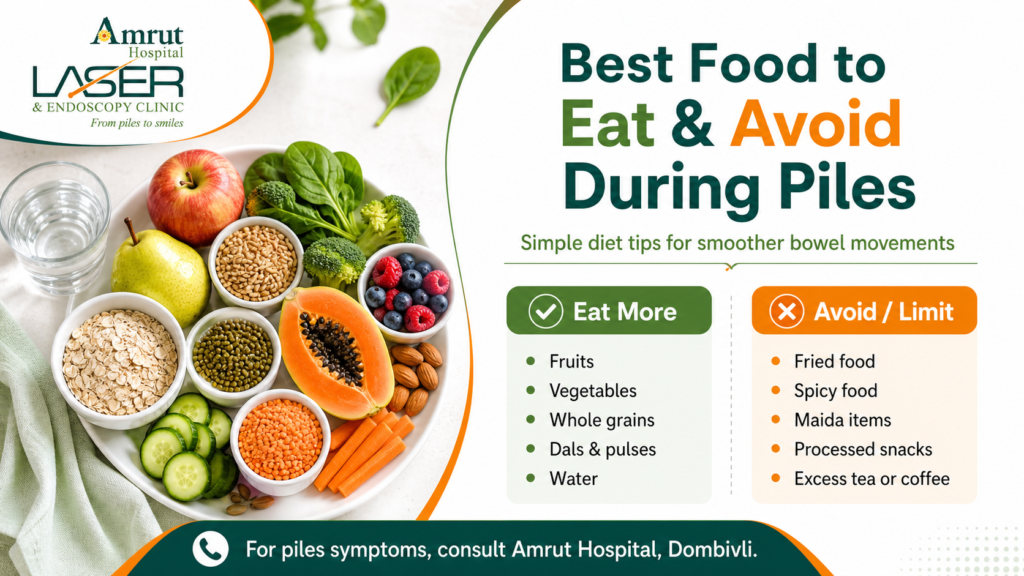
The best foods to eat during piles are high-fiber foods such as fruits, vegetables, whole grains, dals, beans, sprouts, nuts and seeds. Avoid fried food, spicy food, processed snacks, refined flour, excess tea or coffee and low-fiber meals, as they may worsen constipation and straining.
What Is Piles and Why Does Food Matter?
Piles are swollen blood vessels in or around the anal area. They may be internal or external. Internal piles often cause bleeding during stool. External piles may cause pain, swelling, itching or a lump near the anus.
Now you may wonder, what does food have to do with piles?
A lot, actually.
When stool becomes hard, a person has to strain more during bowel movement. This pressure can irritate piles and make symptoms worse. A fiber-rich diet helps make stool soft and easier to pass.
For example, someone who eats mostly maida, fried snacks and very little water may face constipation often. But when they add fruits, vegetables, dal, whole grains and water, bowel movements usually become smoother.
Mini Summary Box:
High-fiber food and enough water can reduce constipation, soften stool and lower pressure on piles.
Why Is Diet Important During Piles?
Diet is not just a “home remedy.” It is one of the most important parts of piles care. Even after treatment, poor food habits can bring constipation back.
A good piles-friendly diet helps to:
- Reduce constipation
- Make stool softer
- Reduce straining during toilet
- Lower pressure on anal veins
- Support healing
- Reduce repeated flare-ups
- Improve daily digestion
Some common food and lifestyle habits that may worsen piles include:
- Eating low-fiber meals every day
- Drinking very little water
- Eating too much spicy or fried food
- Having packaged snacks often
- Sitting on the toilet for too long
- Ignoring the urge to pass stool
- Frequent constipation
- Long sitting hours at work
Think about a typical busy day. Breakfast is skipped, lunch is fast food, water intake is low and dinner is heavy. By the next morning, stool may become hard. If this happens again and again, piles symptoms can increase.
That is why food correction is important for anyone searching for a Piles doctor in Dombivli.
Best Foods to Eat During Piles
1. Fruits
Fruits are simple, easy to add and helpful for digestion. They contain fiber, water and natural nutrients.
Good fruits for piles include:
- Papaya
- Apple with skin
- Pear
- Banana
- Orange
- Guava
- Berries
- Prunes
- Kiwi
Papaya is commonly used for better bowel movement. Prunes may help people who face constipation. Apples and pears are better when eaten with the skin because the skin has fiber.
A simple example: instead of having biscuits with tea in the evening, try one fruit. This small change can support digestion over time.
2. Vegetables
Vegetables add bulk to stool and help the digestive system work better.
Good options include:
- Spinach
- Carrot
- Bottle gourd
- Pumpkin
- Cucumber
- Broccoli
- Beans
- Green leafy vegetables
Cooked vegetables may be easier for many people to digest. If raw salads cause gas or bloating, start with cooked sabzi, soup or lightly steamed vegetables.
For Indian meals, a simple plate of roti, dal, sabzi and curd is often better than oily snacks or fast food.
3. Whole Grains
Whole grains are better than refined grains because they contain more fiber.
You can include:
- Wheat roti
- Oats
- Brown rice
- Dalia
- Jowar
- Bajra
- Ragi
- Whole wheat bread
Try to reduce:
- Maida
- White bread
- Pav
- Naan
- Biscuits
- Bakery items
- Refined flour snacks
Do you eat pav, samosa or bakery snacks often because they are quick and easy? They may fill your stomach, but they usually do not support healthy bowel movement.
4. Dals, Pulses and Beans
Dals and pulses are a good mix of fiber and protein. They support digestion and keep you full for longer.
You can include:
- Moong dal
- Masoor dal
- Chana
- Rajma
- Sprouts
- Green peas
- Black beans
If rajma or chana causes gas, do not stop everything at once. Start with lighter dals like moong dal. Eat smaller portions and increase slowly.
5. Water and Fluids
Fiber needs water to work properly. If you increase fiber but drink very little water, stool may still remain hard.
Helpful fluids include:
- Plain water
- Coconut water
- Buttermilk
- Clear soups
- Lemon water without excess sugar
- Fruit-infused water
Tea and coffee do not replace water. Too much caffeine may also affect digestion in some people.
If you are travelling in Dombivali heat or sitting in office for long hours, keep a water bottle nearby. Small sips through the day are easier than trying to drink too much water at once.
Mini Summary Box:
A piles-friendly Indian meal can be simple: roti, dal, sabzi, fruit and enough water. No fancy diet needed.
Foods to Avoid During Piles
Food triggers can vary from person to person. Still, some foods commonly worsen constipation, acidity, burning or discomfort.
Try to limit:
- Fried snacks like samosa, vada, chips and pakora
- Very spicy food
- Maida-based foods
- Processed snacks
- Packaged chips and namkeen
- Red meat or very heavy non-veg meals
- Excess cheese and full-fat dairy
- Sugary sweets and desserts
- Too much tea or coffee
- Alcohol
- Carbonated drinks
This does not mean you can never eat your favourite food again. The goal is balance.
For example, one spicy meal may not trouble everyone. But if spicy food causes burning, pain or constipation the next day, your body is clearly giving you a signal. Listen to it.
Patients visiting a Piles clinic in Dombivli are often advised to track their food habits along with symptoms. This helps identify what is making the problem worse.
How Does Diet Work Step-by-Step in Piles Management?
Diet helps piles by improving bowel movement. The process is simple:
- You add more fiber through fruits, vegetables, dals and whole grains.
- You drink enough water through the day.
- Fiber absorbs water and adds softness to stool.
- Stool becomes easier to pass.
- Straining reduces during toilet.
- Pressure on swollen piles tissue becomes less.
- Bleeding, pain and irritation may reduce in suitable cases.
- Bowel habits slowly become more regular.
But here is the important point: diet takes consistency.
Eating fruits for one day and then going back to fried snacks may not help much. Small daily changes work better. Even one extra bowl of sabzi, one fruit and two more glasses of water can make a difference over time.
If symptoms continue even after diet changes, it is better to consult a Piles hospital in Dombivli for proper evaluation.
Benefits of a Piles-Friendly Diet
A good diet can support both prevention and recovery.
Benefits include:
- Softer stool
- Less constipation
- Less pain during stool
- Reduced straining
- Better digestion
- Lower chances of flare-ups
- Improved comfort after treatment
- Better weight control
- Support for long-term gut health
For patients undergoing laser operation for piles in dombivli, diet is also important after treatment. Smooth bowel movements can help reduce discomfort and support recovery.
A simple real-life example: A person with bleeding piles may take medicines and feel better for a few days. But if constipation returns because of poor diet, bleeding may also return. That is why food habits and treatment should go together.
Diet vs Medicine vs Laser Treatment: What Works Best?
| Option | Best For | Benefits | Limitation |
|---|---|---|---|
| High-fiber diet | Mild symptoms and constipation control | Natural, safe and useful long term | May not treat advanced piles |
| Medicines | Pain, swelling, itching and short-term relief | Helps control symptoms | Symptoms may return if constipation continues |
| Sitz bath | Pain, irritation and swelling | Simple home support | Temporary relief |
| Laser piles treatment | Suitable internal or external piles cases | Minimally invasive and targeted | Needs doctor evaluation |
| Traditional surgery | Severe or complex piles | Useful in selected advanced cases | Recovery may take longer |
Diet is helpful at every stage. But it may not be enough if piles are advanced, prolapsed or bleeding again and again.
If someone is searching for laser piles treatment in dombivli, the first step should be diagnosis. A doctor will check the grade of piles and then suggest the right treatment.
Who Needs a Piles-Friendly Diet or Doctor Consultation?
A piles-friendly diet is useful for almost everyone with constipation or piles symptoms. But some signs should not be ignored.
You should consult a doctor if you have:
- Bleeding during stool
- Pain while passing stool
- Itching or burning
- Swelling near the anus
- Lump near the anal opening
- Constipation for many days
- Piles coming out during stool
- Repeated symptoms despite home care
- Pain while sitting
- Mucus discharge or discomfort
Many people think, “It is just piles, it will go away.” But bleeding from the rectum should always be checked. Sometimes symptoms may look like piles but may have another cause.
If you are in Dombivali and symptoms are disturbing your routine, timely consultation can make treatment easier.
Cost and Pricing Factors for Piles Treatment
The cost of piles treatment depends on the patient’s condition. There is no single fixed cost for everyone because piles can be mild, moderate or severe.
Pricing may depend on:
- Grade of piles
- Internal or external piles
- Severity of bleeding
- Pain or swelling level
- Whether prolapse is present
- Tests or diagnosis required
- Type of treatment advised
- Need for laser procedure
- Hospital stay, if needed
- Medicines and follow-up care
- Surgeon’s experience
Diet advice is usually part of consultation, but procedures like laser piles treatment in dombivli are suggested only after examination.
The best way to understand cost is to visit Amrut Hospital in Dombivali for a proper check-up. Once the diagnosis is clear, the doctor can guide you about treatment options and expected expenses.
Piles Diet and Treatment Trends in 2026
In 2026, piles care is becoming more practical, patient-friendly and focused on early treatment. People are now more aware that piles should not be ignored.
Key trends include:
- More focus on fiber-rich Indian diets
- Early consultation for bleeding and pain
- Less delay due to embarrassment
- Minimally invasive treatment in suitable cases
- Better post-treatment diet guidance
- More awareness about toilet habits
- Avoiding long sitting on the toilet
- Personalized care based on piles grade
People are also searching more for terms like laser operation for piles in dombivli because they want treatment options with better comfort and faster recovery. Still, every patient is different. What works for one person may not be right for another.
That is why diagnosis matters more than guessing.
Why Choose Amrut Hospital in Dombivli?
Amrut Hospital offers patient-focused care for piles and related surgical conditions. The goal is not just to treat symptoms but to understand the cause, severity and best treatment option for each patient.
Patients choose Amrut Hospital because of:
- Experienced consultation for piles symptoms
- Diagnosis-based treatment planning
- Guidance for diet and lifestyle changes
- Support for laser piles treatment in dombivli
- Care for internal and external piles
- Patient-friendly approach
- Surgical care under one roof
If you are looking for a Piles clinic in Dombivli or a Piles hospital in Dombivli, Amrut Hospital can guide you with proper evaluation and treatment advice.
Along with piles care, patients also search for Hernia surgeon in Dombivli, Laparoscopic surgeon in dombivli and Endoscopic surgeon in dombivli for other surgical concerns. Amrut Hospital provides consultation and care for suitable surgical conditions with professional medical guidance.
FAQs
1. What is the best food for piles patients?
High-fiber food is best for piles patients. Fruits, vegetables, dals, pulses, whole grains, sprouts, nuts and seeds can help soften stool and reduce straining.
2. Which foods should be avoided during piles?
Avoid fried food, spicy food, maida items, processed snacks, excess tea or coffee, alcohol and low-fiber meals. These foods may worsen constipation or irritation.
3. Can diet cure piles completely?
Diet can help mild piles symptoms and reduce constipation. But advanced piles, repeated bleeding or prolapse may need medical treatment. A doctor’s examination is important.
4. When should I visit a piles doctor?
You should visit a doctor if you have bleeding, pain, swelling, itching, constipation, a lump near the anus or piles coming out during stool.
5. Is laser piles treatment painful?
Laser piles treatment is minimally invasive and may cause less discomfort in suitable cases. Recovery depends on the grade of piles, patient health and doctor’s advice.
Piles symptoms can feel uncomfortable, but you do not have to suffer silently. If you are facing bleeding, pain, swelling, itching or constipation, timely consultation can help you get the right care.
Visit Amrut Hospital, Dombivli for proper diagnosis, diet guidance and suitable treatment options.
Book your consultation today for expert piles care and laser piles treatment in dombivli.