
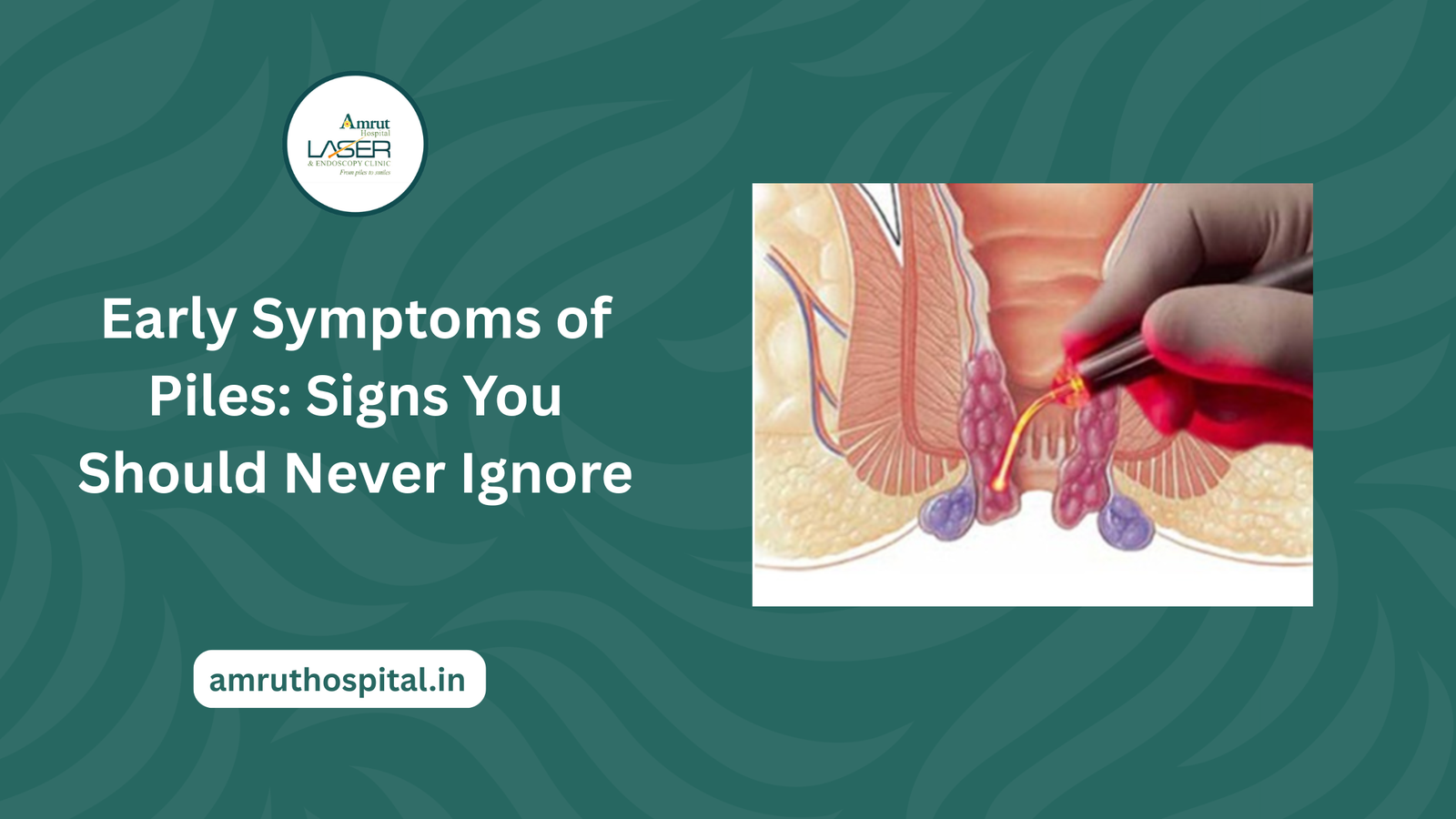
Piles, also known as hemorrhoids, often start quietly.
Many patients in Dombivli ignore early discomfort thinking it is “just constipation” or “temporary irritation.”
Unfortunately, delayed attention is the main reason piles progress from a minor issue to a painful condition requiring urgent care.
Understanding early symptoms of piles can help you seek timely treatment and avoid complications. With modern options like laser piles treatment in Dombivli, early diagnosis can mean faster recovery and minimal discomfort.
What Are Piles?
Piles are swollen blood vessels in or around the rectum and anus.
They develop due to increased pressure in the lower rectal area, commonly caused by:
- Chronic constipation
- Straining during bowel movements
- Sitting for long hours
- Low-fiber diet
- Pregnancy
- Obesity or sedentary lifestyle
Piles can be internal (inside the rectum) or external (around the anus).
Early Symptoms of Piles You Should Never Ignore


In the early stage, piles may not cause severe pain, which is why many people overlook the warning signs.
Common Early Signs of Piles
- Mild discomfort during or after passing stools
- Itching or irritation around the anus
- A feeling of incomplete bowel movement
- Occasional bright red blood on toilet paper
- Slight swelling or lump near the anal area
These symptoms may come and go, but they rarely resolve permanently without medical care.
Early Symptoms of Piles in Men vs Women
| Aspect | Men | Women |
|---|---|---|
| Common trigger | Prolonged sitting, heavy lifting | Pregnancy, hormonal changes |
| Early complaint | Rectal discomfort, straining | Anal pressure, mild bleeding |
| Delay in consultation | Very common | Often noticed earlier |
| Risk of progression | High due to delay | Moderate if untreated |
Both men and women benefit from early laser piles treatment, especially before symptoms worsen.
Stages of Piles and Symptom Progression
| Stage | Symptoms | Treatment Approach |
|---|---|---|
| Stage 1 | Mild itching, slight bleeding | Diet + medications |
| Stage 2 | Bleeding, prolapse during motion | Medication or laser |
| Stage 3 | Piles protrude and need manual reposition | Laser treatment recommended |
| Stage 4 | Constant pain, thrombosis | Advanced surgical care |
👉 Laser piles treatment in Dombivli is most effective in Stage 2 and Stage 3, ensuring quicker recovery and minimal pain.
When Should You See a Doctor for Piles?
You should consult a piles specialist immediately if you notice:
- Repeated bleeding during bowel movements
- Persistent itching or burning
- Pain while sitting or walking
- A growing lump near the anus
- Symptoms lasting more than 5–7 days
Early consultation prevents complications like infection, severe bleeding, and chronic pain.
Why Laser Piles Treatment Is Preferred Today
Laser piles treatment has transformed how piles are managed, especially in early and moderate stages.
Benefits of Laser Piles Treatment in Dombivli
- Minimally invasive procedure
- Minimal bleeding
- No stitches
- Faster recovery
- Short hospital stay
- Lower chances of recurrence
At Amrut Hospital, Dombivli, laser treatment is performed using advanced equipment under expert supervision.
Laser vs Traditional Piles Treatment
| Feature | Laser Treatment | Conventional Surgery |
|---|---|---|
| Pain level | Minimal | Moderate to severe |
| Bleeding | Very low | Higher |
| Hospital stay | Same day discharge | Multiple days |
| Recovery time | 2–5 days | 2–3 weeks |
| Recurrence risk | Low | Moderate |
Common Mistakes Patients Make in Early Piles
- Ignoring bleeding assuming it’s normal
- Relying only on home remedies
- Overusing laxatives without diagnosis
- Delaying consultation due to embarrassment
These mistakes often turn a simple condition into a chronic problem.
Take Action Before Piles Progress
Ignoring early piles symptoms can lead to unnecessary pain and complications.
With advanced piles Hospital in Dombivli, early intervention means less discomfort, faster healing, and better long-term outcomes.
👉 Book your early consultation today at Amrut Hospital, Dombivli
Get expert evaluation and personalized treatment before symptoms worsen.