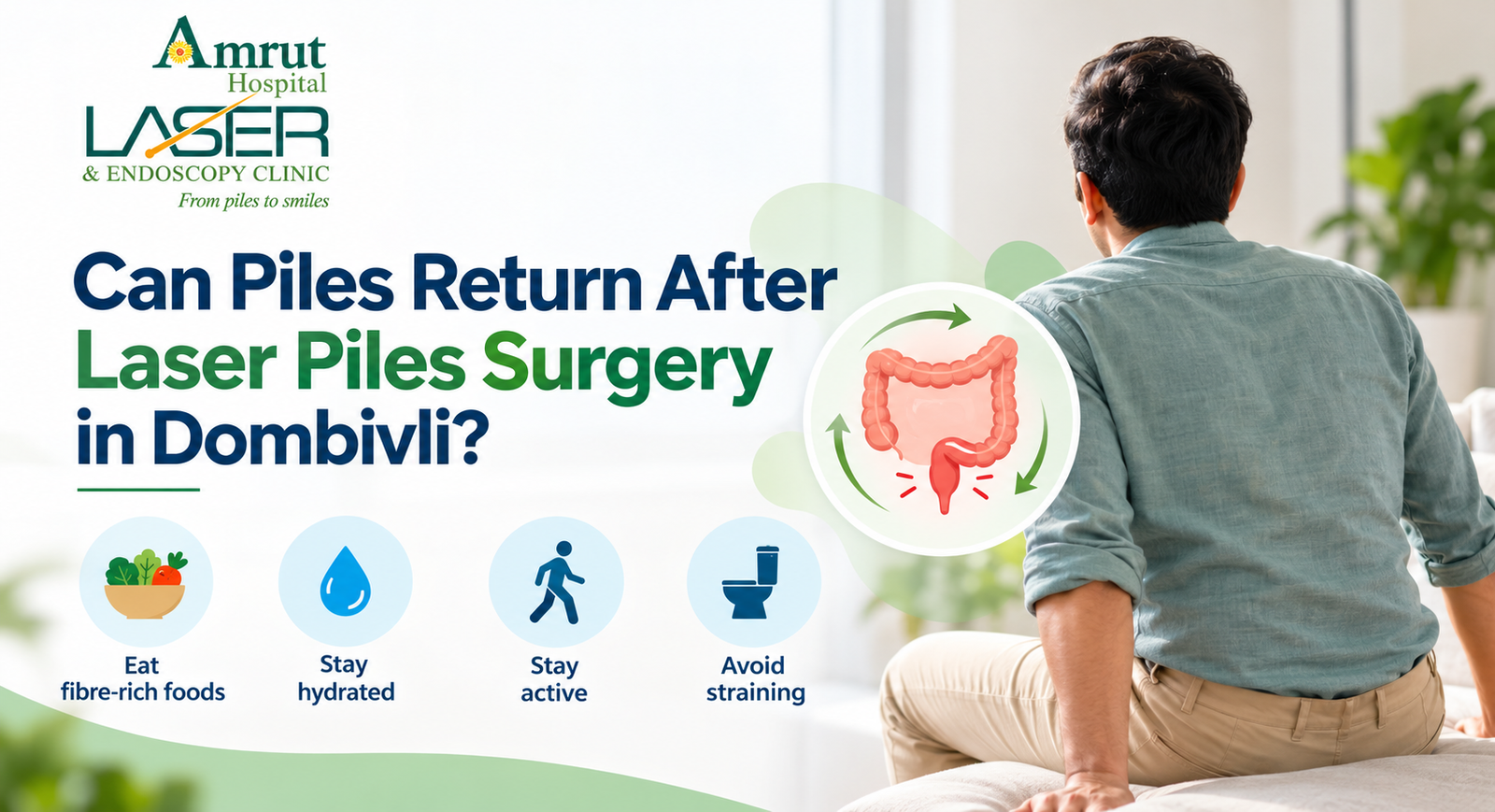
Piles treatment can bring much-needed relief from bleeding, pain, itching and discomfort during bowel movements. But after treatment, one question often stays in a patient’s mind: “Can piles come back after laser surgery?”
The simple answer is that recurrence is possible. Laser treatment addresses the existing piles, but it cannot permanently remove every factor that may contribute to piles in the future. Long-term constipation, repeated straining, low-fibre eating habits, prolonged sitting and ignoring the urge to pass stool can continue to put pressure on the veins around the anus.
This is why choosing the right Piles Surgery in Dombivli is only one part of treatment. Recovery habits and prevention also matter.
At Amrut Hospital, patients seeking Piles treatment in Dombivli, Hemorrhoids treatment in Dombivli or Laser piles treatment in Dombivli can receive medical evaluation based on their symptoms and condition. Understanding what may cause piles to return can help patients take better care of themselves after treatment.
Can Piles Come Back After Laser Piles Surgery?
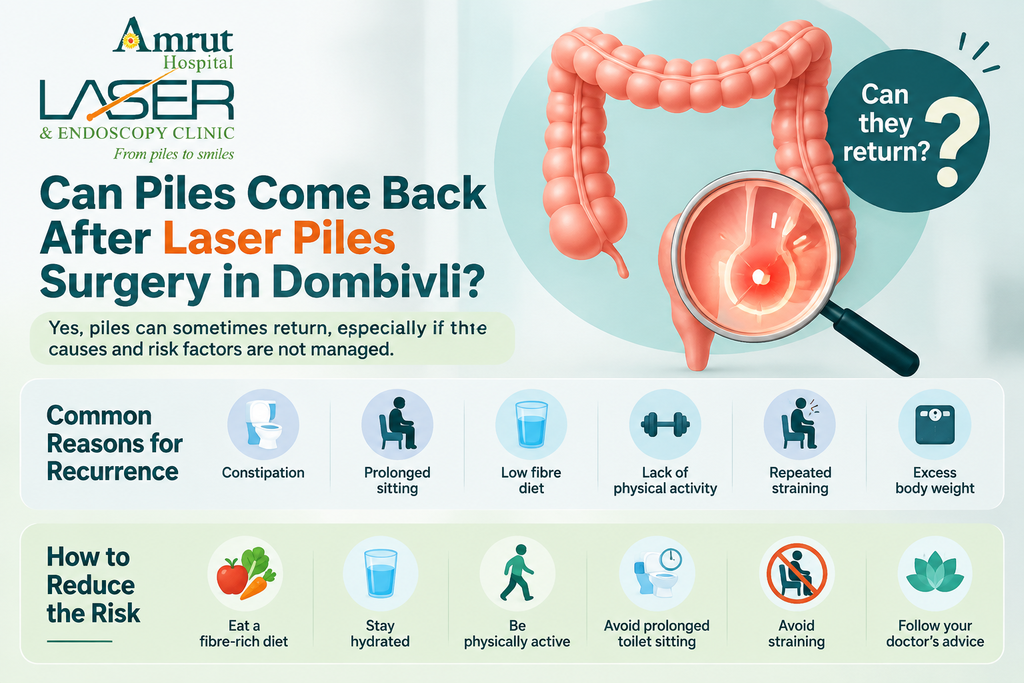
Yes, piles can sometimes develop again after laser piles surgery. Laser treatment treats the existing piles, but recurrence may occur if contributing factors such as chronic constipation, repeated straining, low fibre intake, prolonged sitting or unhealthy bowel habits continue. Following medical advice and maintaining healthy bowel habits may help reduce the risk.
What Is Laser Piles Surgery?
Laser piles surgery is a minimally invasive approach used for selected cases of haemorrhoids. Depending on the technique and the patient’s condition, laser energy may be used to target haemorrhoidal tissue and reduce its blood supply or size.
Compared with some conventional surgical approaches, laser procedures may involve less tissue trauma in suitable patients. However, the best treatment depends on the type and grade of piles, symptoms, previous treatment and overall health.
A surgeon should therefore evaluate the patient before recommending laser piles treatment in Dombivli.
It is also important to understand that “laser” does not automatically mean piles can never occur again. The procedure treats the current problem. Your bowel habits and other risk factors still matter after recovery.
Laser piles surgery treats existing haemorrhoids. It does not make a person permanently immune to piles. Managing constipation, straining and other contributing factors remains important after treatment.
Why Can Piles Return After Laser Piles Surgery?
Several factors may contribute to piles developing again. Some are linked to everyday habits that people may not immediately connect with haemorrhoids.
- Chronic constipation: Hard, dry stools can make bowel movements difficult and increase straining.
- Repeated straining: Regularly pushing hard during bowel movements increases pressure in the anal and rectal veins.
- Low-fibre diet: Not getting enough fibre may contribute to harder stools and irregular bowel movements.
- Low fluid intake: Inadequate hydration can make stools harder in some people.
- Prolonged toilet sitting: Spending unnecessary time on the toilet can increase pressure in the area.
- Ignoring the urge to pass stool: Frequently delaying bowel movements may make stool harder and more difficult to pass.
- Long periods of sitting: A sedentary routine may contribute indirectly through reduced activity and constipation.
- Weight and abdominal pressure: Excess body weight may increase pressure in the pelvic region.
- Pregnancy: Increased pelvic pressure and hormonal changes can contribute to haemorrhoids.
- Individual tendency: Some people may remain more prone to haemorrhoids because of age, bowel habits or other health factors.
Think of surgery as treating the current problem rather than giving lifetime protection against every future haemorrhoid.
How Does Laser Piles Treatment and Recovery Work Step by Step?
Treatment begins well before the actual procedure. A proper diagnosis is needed because rectal bleeding, pain or a lump should not automatically be assumed to be piles.
Step 1: Medical Evaluation
The doctor asks about bleeding, pain, itching, swelling, bowel habits and how long the symptoms have been present.
An examination may be advised to confirm whether the problem is actually haemorrhoids and assess its severity.
Step 2: Choosing the Right Treatment
Not every patient with piles requires surgery.
Early or mild piles may sometimes be managed with dietary changes, bowel habit improvement, medicines or office-based procedures. Persistent or advanced symptoms may require a surgical approach.
If surgery is appropriate, the surgeon will discuss the suitable technique, expected recovery and possible risks.
Step 3: Laser Procedure
During a laser procedure, laser energy is used according to the selected technique to treat haemorrhoidal tissue.
The exact procedure can vary according to the type, size and grade of haemorrhoids.
Step 4: Recovery
Patients receive instructions regarding medicines, diet, hydration, physical activity, wound or local care where applicable and bowel movements.
Recovery time varies. Patients should follow the individual advice given by their surgeon rather than comparing their recovery with someone else’s.
Step 5: Preventing Future Problems
Once the immediate problem improves, attention shifts to preventing constipation and unnecessary straining.
This is where daily habits become especially important.
Successful piles care involves diagnosis, choosing an appropriate treatment, recovery and long-term bowel care. Surgery is one part of the process rather than the end of it.
What Are the Benefits of Laser Piles Treatment?
For appropriately selected patients, potential benefits of laser-based piles procedures may include:
- Minimally invasive treatment options
- Less tissue disruption with some techniques
- Potentially less postoperative discomfort compared with certain conventional procedures
- Shorter recovery in some patients
- Earlier return to routine activities in suitable cases
- Targeted treatment of haemorrhoidal tissue
These benefits are not guaranteed for every patient. The outcome depends on the severity of piles, procedure used, overall health and adherence to post-treatment instructions.
Patients searching for Piles Surgery in Dombivli should therefore focus on proper diagnosis and treatment suitability rather than choosing a procedure only because it uses laser technology.
Laser Piles Surgery vs Conservative Treatment vs Conventional Surgery
| Factor | Conservative Treatment | Laser Piles Treatment | Conventional Surgery |
|---|---|---|---|
| Commonly considered for | Mild or early symptoms | Selected haemorrhoid cases | Selected advanced or complex cases |
| Surgery required | No | Yes, depending on technique | Yes |
| Treatment approach | Diet, bowel habits, medicines and other non-surgical care | Laser-based treatment of haemorrhoidal tissue | Surgical removal or treatment of haemorrhoidal tissue |
| Recovery | Usually no surgical recovery | Varies by procedure and patient | Varies by procedure and patient |
| Can piles recur? | Yes | Yes | Yes |
| Treatment selection | Based on symptoms and examination | Based on grade, symptoms and suitability | Based on grade, symptoms and clinical need |
There is no single piles treatment that is ideal for every patient. A surgeon can recommend an approach after examining the condition.
Who May Need Piles Surgery?
Having piles does not automatically mean you need surgery.
A doctor may discuss surgery when symptoms are persistent, severe or have not improved adequately with conservative treatment.
Evaluation may be especially important when you have:
- Recurrent or persistent rectal bleeding
- A prolapsing pile that comes out during bowel movements
- Persistent swelling or discomfort
- Repeated episodes affecting daily activities
- Symptoms that have not improved with appropriate conservative treatment
- Complications associated with haemorrhoids
Bleeding should not simply be self-diagnosed as piles. Other digestive or colorectal conditions can also cause rectal bleeding.
Depending on symptoms and clinical findings, a doctor may recommend further evaluation.Laparoscopic Hernia surgery or other diagnostic procedures may be relevant for some patients, but they are not routinely required for every case of piles.
How Much Does Laser Piles Surgery Cost in Dombivli?
There is no single fixed cost for laser piles surgery because treatment requirements differ from one patient to another.
Pricing can depend on:
- Grade and type of haemorrhoids
- Number and extent of piles
- Treatment technique
- Hospital and operating-room charges
- Anaesthesia requirements
- Diagnostic investigations
- Medicines
- Length of hospital stay, if required
- Follow-up care
- Insurance coverage
Patients considering
should obtain an estimate after consultation and diagnosis. Choosing treatment based only on the lowest advertised price may overlook important factors such as diagnosis, procedure suitability and follow-up care.
What Is Changing in Piles Treatment in 2026?
In 2026, piles care continues to place greater emphasis on minimally invasive procedures, appropriate patient selection and recovery-focused care.
Laser-based techniques are among the options available for selected haemorrhoid cases. At the same time, modern treatment is not focused only on the procedure itself. Doctors increasingly consider bowel habits, diet, constipation management and follow-up as important parts of long-term care.
Patients are also becoming more informed. Instead of asking only, “Which surgery is quickest?”, many want to understand why piles developed and what they can do to reduce the chance of another episode.
That is an important shift because long-term management often depends on what happens after treatment as much as the procedure itself.
Why Choose Amrut Hospital in Dombivli?
Amrut Hospital in Dombivli provides surgical consultation and treatment for a range of conditions. Patients can be assessed to understand their symptoms, diagnosis and suitable treatment options before a procedure is recommended.
Services include:
- Piles Surgery in Dombivli
- Piles treatment in Dombivli
- Hemorrhoids treatment in Dombivli
- Laser piles treatment in Dombivli
- Laser Fissure Surgery in Dombivli
- Fistula Laser Surgery in Dombivli
- Hernia Surgery in Dombivli
- Gallbladder Surgery in Dombivli
- Laparoscopic Surgery in Dombivli
- Consultation with a Laparoscopic surgeon in Dombivli
- Surgical care at a Laparoscopic hospital in Dombivli
- Endoscopy Surgery in Dombivli
- Anal Cancer Surgery in Dombivli
These conditions are different and require individual diagnosis. The appropriate treatment is determined after medical evaluation rather than using the same surgical approach for every patient.
FAQs About Piles Recurrence After Laser Surgery
1. Can piles come back after laser piles surgery?
Yes. Piles can develop again after laser treatment, particularly if contributing factors such as chronic constipation, repeated straining and unhealthy bowel habits continue. Surgery treats existing haemorrhoids but does not guarantee that new piles will never develop.
2. How can I prevent piles from returning after laser surgery?
Follow your surgeon’s recovery instructions, eat adequate fibre, drink enough fluids, stay physically active and avoid unnecessary straining. Do not spend excessive time sitting on the toilet and try not to repeatedly delay bowel movements.
3. Is laser piles treatment permanent?
Laser treatment can treat existing haemorrhoids, but no piles procedure should be viewed as a guarantee against future haemorrhoids. Long-term bowel habits and individual risk factors influence recurrence.
4. When should I see a doctor if symptoms return after piles surgery?
Seek medical advice if you develop persistent or significant bleeding, increasing pain, swelling, fever, difficulty passing stool or symptoms that concern you after surgery. New bleeding should be properly evaluated rather than automatically assumed to be recurrent piles.
5. Is laser piles treatment in Dombivli suitable for everyone?
No. Suitability depends on the type and grade of piles, symptoms, medical history and previous treatment. A surgical evaluation is needed to determine whether laser treatment, conservative management or another procedure is appropriate.
Take the Next Step Towards Better Piles Care
Piles returning after treatment can be worrying, especially after you have already gone through surgery. But recurrence is not inevitable. Proper treatment combined with healthier bowel habits may help reduce future problems.
If you have recurring bleeding, discomfort, swelling or prolapse, avoid repeatedly treating the symptoms on your own. A proper examination can help determine whether the symptoms are caused by recurrent piles or another condition.
For Piles Surgery in Dombivli, Piles treatment in Dombivli, Hernia treatment in Dombivli or laser piles treatment in Dombivli, consult Amrut Hospital, Dombivli for evaluation and treatment guidance.
Book a consultation with Amrut Hospital in Dombivli to understand your symptoms, treatment options and the steps you can take to support long-term bowel health.
For further information contact:
Amrut Hospital
Address: Dr R.P. Rd, Dombivli, Tilak Nagar, Dombivli East, Kalyan, Maharashtra 421201
Phone: 0251 243 3636