Introduction
If you have ever experienced pain, burning, or bleeding during bowel movements, you might have wondered whether it is piles or something else. Many people assume that any discomfort in the anal area automatically means piles. But that is not always true.
Another common condition called an anal fissure can cause similar symptoms. Because the signs overlap, many patients delay visiting a doctor or try home remedies without understanding the real problem.
In growing urban areas like Dombivli, lifestyle habits such as long sitting hours, low-fiber diets, dehydration, and chronic constipation have increased the number of people suffering from anorectal conditions. What starts as a minor discomfort can slowly become a painful daily problem if ignored.
The good news is that modern treatments have made these conditions easier to treat than ever before. Options like laser piles treatment in Dombivli allow faster recovery, less pain, and minimal hospital stay.
At Amrut Hospital, specialists carefully diagnose whether the issue is piles, fissure, or another anorectal condition before recommending the right treatment. Understanding the difference between the two can help you seek timely medical care and avoid unnecessary suffering.
Featured Snippet: Quick Answer
Piles and fissures are common anal conditions but they are not the same. Piles are swollen veins in the rectum, while anal fissures are small tears in the lining of the anus. Piles often cause painless bleeding, while fissures cause sharp pain during bowel movements. Proper diagnosis helps determine the right treatment, including laser piles treatment in Dombivli if required.
What is the Difference Between Piles and Fissure?
What are Piles?
Piles, also known as hemorrhoids, are swollen veins inside or around the rectum. They develop when excess pressure builds in the lower rectum.
There are two main types:
- Internal piles – located inside the rectum
- External piles – located around the anus
Common symptoms include bleeding during stool, itching, swelling, and discomfort.
What is an Anal Fissure?
An anal fissure is a small tear in the skin lining of the anus. It usually occurs when passing hard stools or due to repeated constipation.
Unlike piles, fissures usually cause intense pain during bowel movements.
Quick Summary
- Piles: Swollen blood vessels in the rectum
- Fissure: Small tear in the anal lining
- Both may cause bleeding but pain is usually stronger in fissures
What Causes Piles and Fissures?
Both conditions often develop because of similar lifestyle factors.
Common Causes of Piles
- Chronic constipation
- Straining during bowel movements
- Sitting for long periods
- Low-fiber diet
- Pregnancy
- Obesity
Common Causes of Fissures
- Passing hard stools
- Chronic constipation
- Frequent diarrhea
- Anal injury or trauma
- Childbirth strain
Why Early Diagnosis Matters
Ignoring symptoms can make the problem worse. Early diagnosis helps to:
- Prevent complications
- Reduce pain and discomfort
- Avoid major surgery
- Get faster recovery with modern treatments
Quick Summary
Most anorectal problems are linked to diet, lifestyle, and bowel habits. Visiting a piles clinic in Dombivli early can prevent complications.
How Do Doctors Diagnose and Treat These Conditions?
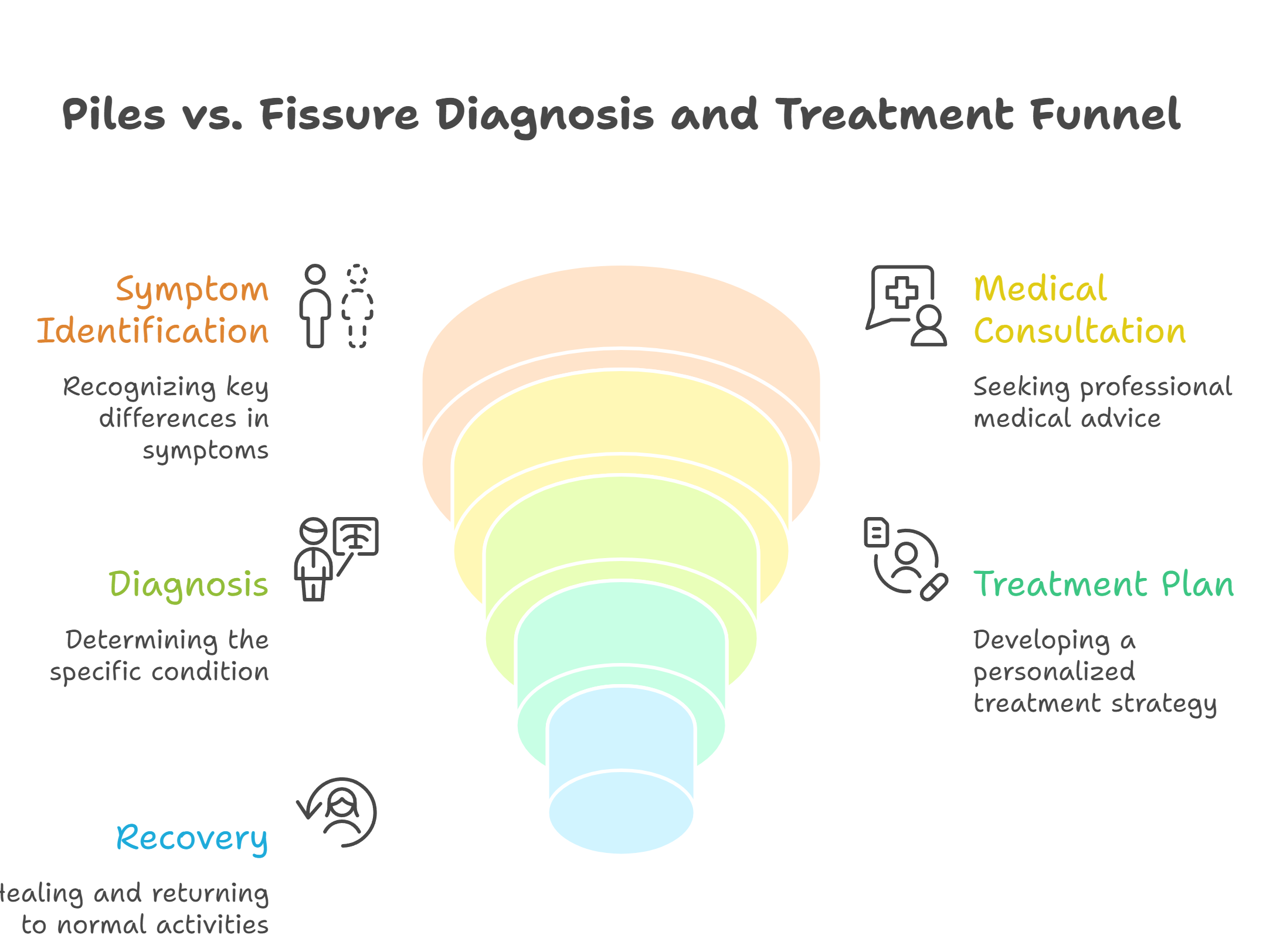
Correct diagnosis is important because treatment for piles and fissures is different.
Step 1: Consultation
The doctor will first ask about your symptoms such as:
- Bleeding during stool
- Pain intensity
- Burning or itching sensation
Step 2: Physical Examination
A simple examination helps doctors identify swelling, tears, or other abnormalities.
Step 3: Diagnostic Tests (if needed)
In some cases doctors may recommend:
- Proctoscopy
- Colonoscopy
- Anoscopy
Step 4: Treatment Plan
Treatment depends on severity and may include:
- Dietary changes
- Medications or ointments
- Lifestyle modifications
- Laser piles treatment in Dombivli
Step 5: Recovery Guidance
Doctors also advise:
- Increasing fiber intake
- Drinking more water
- Improving bowel habits
Quick Summary
Accurate diagnosis ensures patients receive the right treatment quickly and safely.
Benefits of Modern Treatment Options
Medical technology has significantly improved treatment for piles and fissures.
Key Benefits
- Less pain during procedures
- Faster healing time
- Minimal bleeding
- Short hospital stay
- Same-day discharge in many cases
- Lower risk of recurrence
Laser procedures have become increasingly popular because they offer quicker recovery compared to traditional surgery.
Many patients visiting a piles hospital in Dombivli now prefer laser treatment for its comfort and effectiveness.
Quick Summary
Modern treatments focus on minimal pain and faster recovery, especially with laser procedures.
Piles vs Fissure: Key Differences
| Feature | Piles | Fissure |
|---|---|---|
| Condition | Swollen veins | Tear in anal lining |
| Main symptom | Bleeding | Severe pain |
| Pain level | Mild or moderate | Often intense |
| Cause | Pressure in rectal veins | Hard stool or injury |
| Treatment | Medication or laser surgery | Medication or minor surgery |
| Healing time | Depends on severity | Often heals with medication |
Quick Summary
The biggest difference is pain.
Fissures are usually more painful, while piles mainly cause bleeding and swelling.
Who Should Seek Treatment?
You should consult a doctor if symptoms do not improve or become severe.
Warning Signs
- Persistent bleeding during stool
- Severe pain or burning sensation
- Swelling or lump near the anus
- Chronic constipation
- Symptoms lasting longer than one week
People with digestive issues may also need consultation with a laproscopic surgeon in Dombivli or hernia surgeon in Dombivli if other abdominal conditions are suspected.
Quick Summary
If symptoms persist or worsen, medical evaluation is important.
Cost and Pricing Factors
Treatment costs depend on multiple factors.
Factors Affecting Cost
- Severity of piles or fissure
- Type of treatment required
- Diagnostic tests involved
- Hospital facilities
- Doctor’s expertise
Laser treatment may appear slightly expensive initially, but it often reduces overall recovery time and complications.
Patients considering laser piles treatment in Dombivli should consult specialists for an accurate cost estimate.
Quick Summary
Early treatment often reduces overall medical costs and recovery time.
Healthcare Trends in 2026
Treatment for anorectal conditions is evolving rapidly.
Current Trends
- Growing adoption of laser surgery for piles
- More minimally invasive procedures
- Same-day surgeries and quick discharge
- Better diagnostic tools
- Increased awareness of digestive health
Many hospitals now prioritize patient comfort and faster recovery through advanced technology.
Search trends also show increasing awareness about laser piles treatment in Dombivli among patients seeking modern solutions.
Quick Summary
Minimally invasive and laser-based procedures are becoming the preferred treatment option worldwide.
Why Choose Amrut Hospital in Dombivli?
Choosing the right hospital plays an important role in treatment outcomes.
Why Patients Trust Amrut Hospital
- Experienced doctors specializing in anorectal conditions
- Advanced laser treatment technology
- Accurate diagnosis and personalized care
- Hygienic and modern medical facilities
- Supportive and compassionate staff
Patients seeking treatment at Amrut Hospital benefit from expert consultation and advanced care options.
The hospital is recognized as a reliable piles hospital in Dombivli offering effective and safe treatment solutions.
Quick Summary
Amrut Hospital combines expert doctors, advanced technology, and patient-focused care.
Frequently Asked Questions
1. How can I tell if I have piles or fissure?
Piles usually cause painless bleeding, while fissures cause sharp pain during bowel movements. A doctor can confirm the exact condition through examination.
2. Can fissures heal naturally?
Yes, many fissures heal with medications, improved diet, and hydration. Chronic fissures may require medical procedures.
3. Is laser piles treatment painful?
Laser treatment is generally less painful than traditional surgery and allows faster recovery.
4. How long does recovery take after piles treatment?
Recovery varies depending on treatment type, but laser procedures often allow patients to return to normal activities within a few days.
5. When should I visit a piles specialist?
You should consult a doctor if bleeding, pain, or swelling continues for more than a few days.
Get Relief from Piles or Fissure Today
Pain, bleeding, or discomfort during bowel movements should never be ignored. Early diagnosis can make treatment easier and prevent complications.
If you are experiencing symptoms, consult the specialists at Amrut Hospital, a trusted piles hospital in Dombivli.
With advanced care and laser piles treatment in Dombivli, our doctors ensure safe treatment and faster recovery so you can return to your normal life comfortably.