
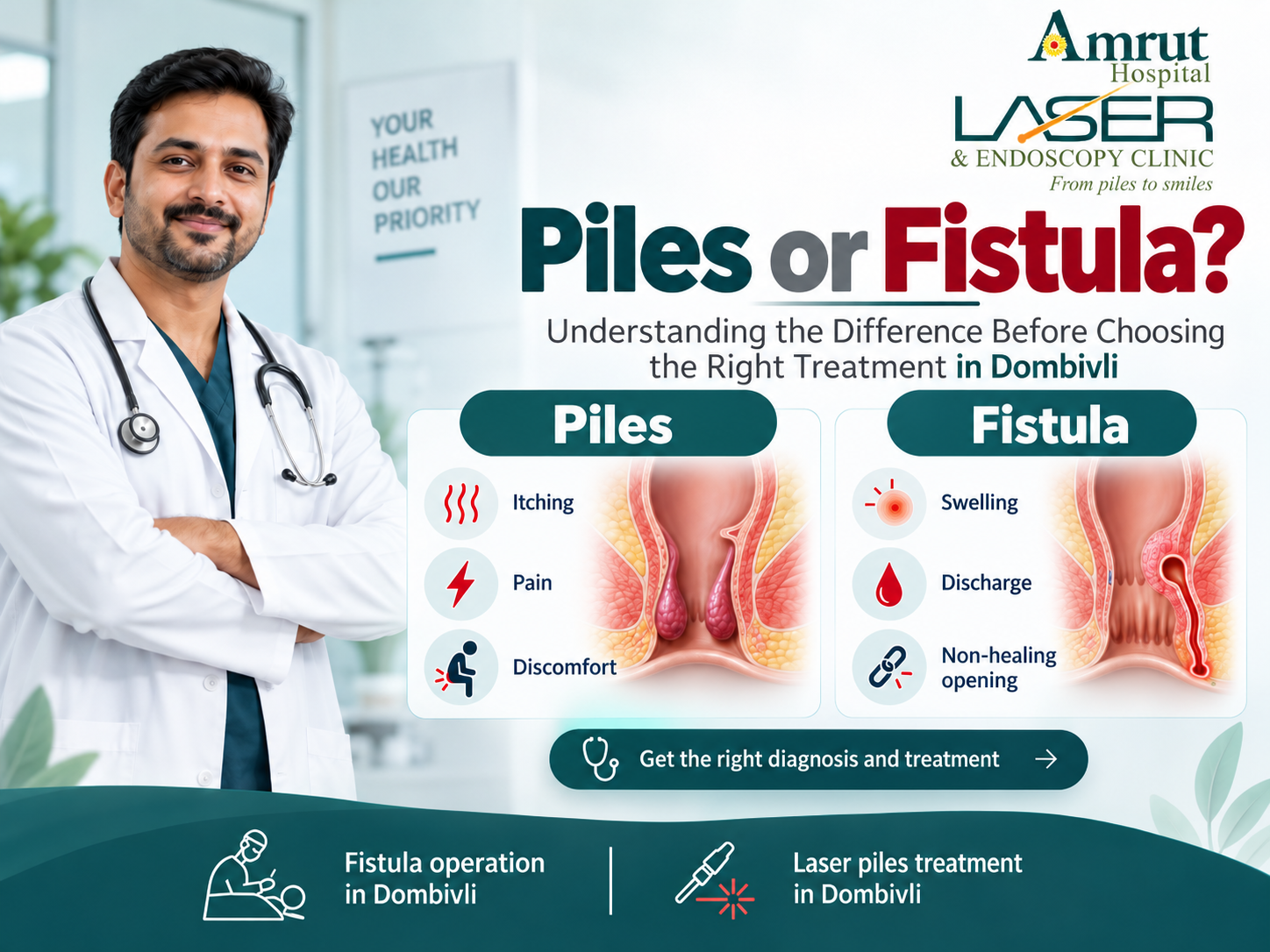
Noticing blood after passing stool, feeling pain while sitting or experiencing repeated swelling near the anal area can be worrying. Many people assume these symptoms are caused by piles. But what if the actual problem is an anal fistula?
Piles and fistula are two different medical conditions at Piles hospital in Dombivli. Although some symptoms may overlap, their causes, diagnosis and treatment approaches are not the same.
For example, someone experiencing occasional bleeding during bowel movements may have piles. Another person noticing repeated swelling and pus discharge near the anus could be dealing with a fistula. Both situations need proper medical evaluation rather than guesswork.
Unfortunately, embarrassment often stops people from discussing these concerns with a doctor. Some try home remedies for weeks, hoping the discomfort will disappear.
If you are considering Piles treatment in Dombivli, understanding the difference between these conditions is an important first step.
At Amrut Hospital, patients can consult Dr. Pramod D. Bahekar for evaluation of piles, fistula, fissure and related surgical conditions.
This guide explains the symptoms, causes, treatment options and factors to consider before making a decision.
What Is the Difference Between Piles and Fistula?
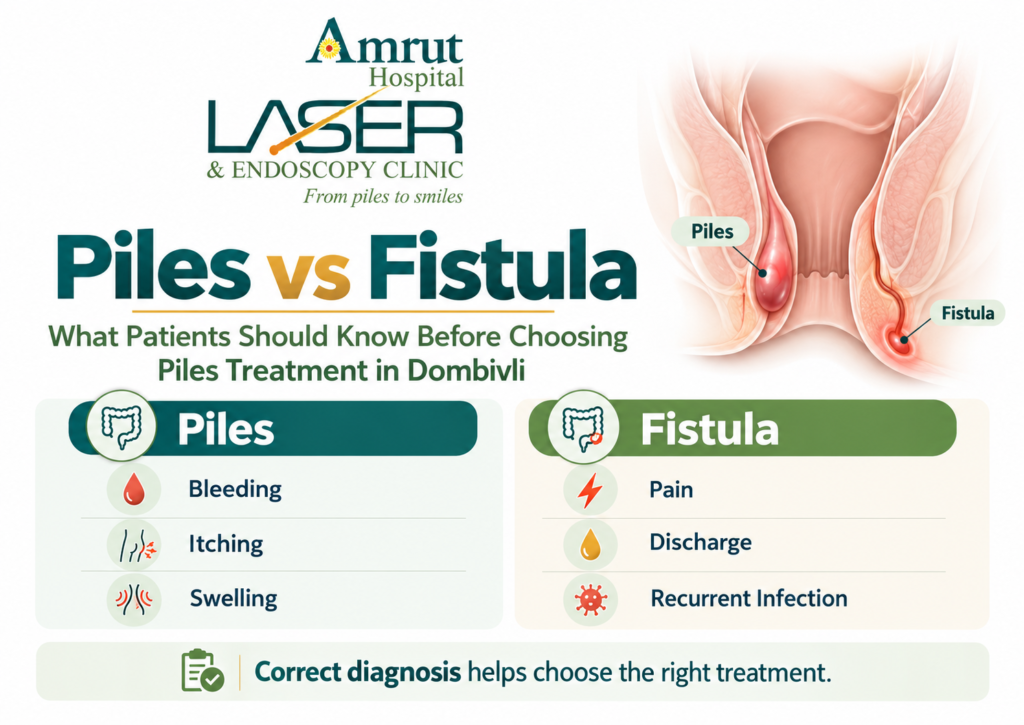
Piles are swollen blood vessels in or around the anus that may cause bleeding, itching or discomfort. An anal fistula is an abnormal tunnel between the anal canal and nearby skin, often caused by infection. Piles may improve with lifestyle changes or medical treatment, while fistulas usually require surgery for lasting healing.
What Is the Difference Between Piles and Fistula?
Although both conditions affect the anal region, they develop in different ways.
What are piles (hemorrhoids)?
Piles, also called hemorrhoids, are swollen blood vessels located inside or around the anus and lower rectum.
They are commonly associated with constipation, straining during bowel movements and prolonged sitting on the toilet.
Common symptoms include:
- Bright red bleeding during bowel movements
- Itching or irritation around the anus
- Swelling or a lump near the anal opening
- Pain or discomfort, particularly with external piles
- Tissue protruding from the anus in some cases
Patients seeking Hemorrhoids treatment in Dombivli may not always require surgery. Mild cases can often improve with dietary changes, medicines and better bowel habits.
What is an anal fistula?
An anal fistula is a small abnormal passage connecting the anal canal to the skin near the anus.
It commonly develops after an infection causes an abscess. Even after the abscess drains, a tunnel may remain.
Possible symptoms include:
- Repeated pain or swelling near the anus
- Pus or fluid discharge
- Skin irritation and unpleasant odour
- Recurrent infections or abscesses
- Fever when an active infection is present
Unlike mild piles, an fistula operation in dombivli rarely heals permanently without surgical treatment.
What Causes Piles and Fistula, and Why Does Early Diagnosis Matter?
Understanding the cause helps doctors recommend appropriate treatment.
Common causes and risk factors for piles
- Chronic constipation: Hard stools increase pressure during bowel movements.
- Excessive straining: Repeated pressure can worsen hemorrhoidal swelling.
- Low-fibre diet: Insufficient fibre may contribute to difficult bowel movements.
- Pregnancy: Increased abdominal pressure can contribute to piles.
- Heavy lifting: Frequent straining may aggravate symptoms.
- Long toilet sitting: Spending excessive time on the toilet can increase pressure.
Common causes of anal fistula
- Infection of glands near the anus
- A previous anal abscess
- Repeated infections in the same area
- Crohn’s disease
- Certain infections or complications from previous surgery
Imagine someone who experiences swelling near the anus every few weeks. The swelling becomes painful, releases fluid and temporarily improves.
It may seem like a minor recurring problem. However, this pattern can suggest an anal fistula that needs assessment.
This is why choosing Piles surgery in Dombivli should begin with confirming the diagnosis, not simply treating the symptoms.
Persistent bleeding also needs medical attention because not every case of rectal bleeding is caused by piles.
Piles are associated with swollen blood vessels and increased pressure. Fistulas commonly follow an infection or abscess. Repeated pus discharge, recurrent swelling or ongoing bleeding should be medically evaluated.
How Does Piles or Fistula Treatment Work? Step-by-Step Process
The treatment journey generally begins with a consultation and a careful examination.
Step 1: Understanding the symptoms
The doctor asks about bleeding, pain, swelling, discharge, constipation and how long the symptoms have been present.
Step 2: Physical examination and diagnosis
A clinical examination helps distinguish piles from fistula or an anal fissure.
Depending on the findings, a doctor may recommend anoscopy, proctoscopy or imaging such as MRI for a complex fistula.
Step 3: Selecting the appropriate treatment
For piles, treatment may include dietary changes, medication, rubber band ligation or surgery.
For an anal fistula, options may include fistulotomy, seton placement, LIFT procedures or selected laser piles surgery.
Step 4: Planning surgical care
When surgery is necessary, the surgeon explains the procedure, anaesthesia, possible complications and expected recovery.
Step 5: Recovery and follow-up
Patients receive guidance on wound care, bowel habits, activity restrictions and follow-up appointments.
People considering Laser piles treatment in Dombivli or Fistula Laser Surgery in Dombivli should understand that laser techniques are not appropriate for every patient.
The safest choice depends on the condition’s severity, anatomy and the surgeon’s assessment.
What Are the Benefits of Choosing the Right Treatment for Piles or Fistula?
Getting the correct diagnosis can help patients avoid unnecessary treatment and manage their condition more effectively.
Key benefits include:
- Targeted treatment: The procedure addresses the diagnosed condition rather than symptoms alone.
- Better symptom management: Appropriate care may reduce bleeding, pain, swelling or discharge.
- Fewer unnecessary procedures: Mild piles may respond to non-surgical treatment.
- Improved recovery planning: Patients can prepare for wound care, follow-up and time away from work.
- Reduced risk of complications: Timely treatment can help address infections and recurring abscesses.
- Greater peace of mind: Understanding the condition helps patients make informed decisions.
For suitable patients, minimally invasive options may offer recovery advantages. However, every procedure has potential risks, and outcomes vary.
Piles vs Fistula: How Do Their Symptoms and Treatments Compare?
The following comparison highlights important differences.
| Factor | Piles (Hemorrhoids) | Anal Fistula |
|---|---|---|
| Main condition | Swollen blood vessels | Abnormal tunnel near the anus |
| Common cause | Increased pressure and straining | Infection or anal abscess |
| Bleeding | Often bright red | May occur with discharge |
| Pain | Varies by type and severity | Often recurring or throbbing |
| Pus discharge | Not typical | Common |
| Non-surgical treatment | Often suitable for mild cases | Usually insufficient |
| Surgery | Needed in selected cases | Often required |
| Laser treatment | An option for selected patients | An option for selected fistulas |
What about anal fissures?
An anal fissure is a small tear in the lining of the anus. It often causes sharp pain during bowel movements and may also cause bleeding.
Patients searching for Fissure treatment in Dombivli, Anal fissure treatment in Dombivli or a Fissure doctor in Dombivli should know that fissures are different from both piles and fistulas.
Most recent fissures can improve with conservative care. Laser Fissure Surgery in Dombivli may be considered in certain surgical settings, but standard treatments for chronic fissures also include medication and other procedures.
Who Needs Piles or Fistula Treatment?
Not everyone with piles requires surgery. However, certain symptoms should prompt medical attention.
Consult a doctor if you experience:
- Repeated bleeding during bowel movements
- Persistent pain or swelling
- Pus discharge near the anal opening
- A lump that repeatedly appears
- Symptoms continuing despite home care
- Recurrent anal abscesses
People with severe piles or persistent symptoms may need an assessment for Piles Surgery in Dombivli.
Similarly, those experiencing recurrent discharge or infection should consult a Fistula doctor in Dombivli or Fistula specialist in Dombivli.
When searching for a Fistula hospital in Dombivli, consider the surgeon’s experience, available diagnostic facilities and follow-up care.
Seek urgent medical attention for severe bleeding, fever with painful swelling or rapidly worsening symptoms.
What Factors Affect the Cost of Piles or Fistula Treatment in Dombivli?
The cost of treatment varies depending on the diagnosis and procedure required.
Important factors include:
- Severity: Advanced piles or complex fistulas may require more involved treatment.
- Procedure: Conventional surgery and laser-assisted techniques have different costs.
- Diagnostic tests: Imaging or additional examinations may be necessary.
- Anaesthesia: Charges depend on the anaesthesia required.
- Hospital stay: Day-care treatment and inpatient care have different costs.
- Follow-up: Medicines, dressings and further visits may affect overall expenses.
Instead of choosing treatment based only on price, patients should request a clear estimate after consultation.
What Are the Latest Trends in Piles and Fistula Treatment in 2026?
In 2026, anorectal care continues to focus on accurate diagnosis, minimally invasive techniques where appropriate and personalised surgical decisions.
Current developments include:
- Laser-assisted procedures: Laser hemorrhoidoplasty is an option for selected piles cases.
- Sphincter-preserving fistula surgery: Techniques aim to treat fistulas while protecting bowel-control muscles.
- Evidence-based decisions: Doctors compare short-term recovery with long-term effectiveness.
- Individualised treatment: Severity, anatomy and medical history guide procedure selection.
A 2026 systematic review of 15 randomised trials involving 1,099 patients found that laser hemorrhoidoplasty offered some short-term recovery advantages over conventional hemorrhoidectomy. However, long-term durability remained uncertain.
Laser technology can be helpful, but it is not automatically the best treatment for everyone.
Why Choose Amrut Hospital in Dombivli?
Amrut Hospital provides consultation and surgical care for piles, fissula, fistula and other gastrointestinal or general surgical conditions.
Under Dr. Pramod D. Bahekar, the hospital offers evaluation and treatment planning based on the patient’s condition.
Key areas of care include:
- Piles Surgery in Dombivli: Assessment of hemorrhoids and appropriate surgical options.
- Fistula Laser Surgery in Dombivli: Evaluation of fistula anatomy and suitability for laser-assisted treatment.
- Laser Fissure Surgery in Dombivli: Consultation for persistent or chronic fissure symptoms.
- Anal Cancer Surgery in Dombivli: Surgical consultation for suspected or diagnosed anal cancer.
- Hernia Surgery in Dombivli: Evaluation and surgical care for hernia conditions.
- Gallbladder Surgery in Dombivli: Assessment of gallstones and gallbladder disorders.
- Endoscopy Surgery in Dombivli: Endoscopic diagnostic and treatment-related services.
- Laparoscopic Surgery in Dombivli: Minimally invasive surgical options for suitable conditions.
Patients also seek the hospital when looking for Hernia treatment in Dombivli, a Hernia doctor in Dombivli or a Hernia specialist in Dombivli.
For digestive concerns, searches may include Endoscopy doctor in Dombivli, Endoscopy centre in Dombivli, Gastro endoscopy in Dombivli or Laparoscopic surgeon in Dombivli.
Other related searches include Gallstone treatment in Dombivli, Gallstone doctor in Dombivli, Laparoscopic hospital in Dombivli, Anal cancer treatment in Dombivli, Anal cancer doctor in Dombivli and Anal cancer specialist in Dombivli.
These conditions require different investigations and treatment pathways. In particular, suspected anal cancer needs prompt specialist assessment rather than routine piles treatment.
Amrut Hospital focuses on appropriate diagnosis, surgical guidance and recovery support.
Frequently Asked Questions (FAQs)
1. How can I tell whether I have piles or fistula?
Piles commonly cause bright red bleeding, itching or swelling. Fistulas often cause repeated pain, pus discharge and infection. A medical examination is needed to confirm the diagnosis.
2. Can piles turn into a fistula if left untreated?
Piles do not normally turn into a fistula. Fistulas usually develop after an infection or anal abscess. Both conditions have different causes and treatment approaches.
3. Is laser treatment suitable for both piles and fistula?
Laser treatment may be suitable for selected cases of piles and fistula. However, the choice depends on severity, anatomy and medical evaluation.
4. Is piles surgery always necessary?
No. Mild piles often improve with increased fibre intake, appropriate medicines and better bowel habits. Surgery may be recommended for severe, persistent or recurring symptoms.
5. When should I consult a doctor for piles or fistula?
Consult a doctor if you experience ongoing bleeding, pain, swelling, pus discharge or recurring symptoms. Early evaluation helps identify the cause and appropriate treatment.
Choose the Right Diagnosis Before the Right Treatment
Piles and fistula may affect the same region, but they are not the same condition.
The most important step is understanding what is causing your symptoms before choosing medication, laser treatment or surgery.
If you are experiencing repeated bleeding, swelling, pain or discharge, delaying examination may allow the underlying problem to continue.
Amrut Hospital offers consultation for patients seeking piles, fissure and fistula treatment under Dr. Pramod D. Bahekar.
Book a Consultation at Amrut Hospital
Address: Dr R.P. Rd, Dombivli, Tilak Nagar, Dombivli East, Kalyan, Maharashtra 421201
0251 243 3636