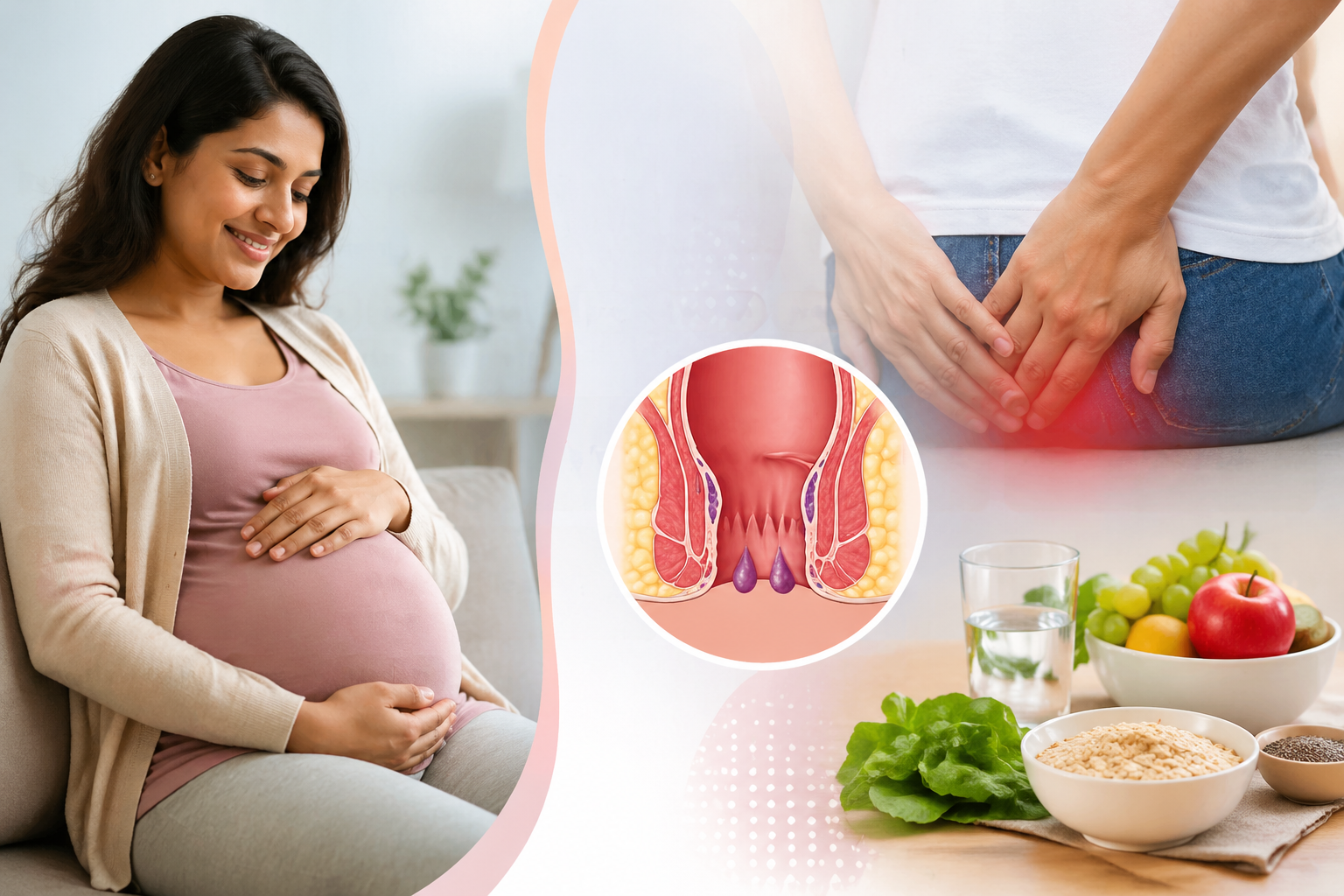
Pregnancy is a beautiful journey, but it’s not without its challenges. One of the more uncomfortable issues that many expectant mothers face is piles, also known as hemorrhoids. While it’s not often talked about, piles can cause pain and discomfort during pregnancy. But don’t worry, you’re not alone. In this blog, we’ll explore why piles happen during pregnancy, how to treat them safely, and what to avoid. We’ll also touch on some related issues like piles fistula and fissure, and hernia in men to give you the complete picture.
What Are Piles and Why Do They Occur During Pregnancy?
Piles are swollen veins around the anus or in the lower rectum, and they’re more common during pregnancy than you might think. The body’s hormonal changes and increased pressure from the growing uterus can make these veins swell up, causing discomfort. It’s completely natural, but understanding why they happen can help you take control.
Why Are Pregnant Women More Likely to Get Piles?
- Pressure from the Growing Uterus: As your baby grows, your uterus presses on the veins in your pelvic area, which can cause them to swell. It’s a lot of pressure for your body to handle, and it shows up in places you might not expect!
- Hormonal Changes: The pregnancy hormones, especially progesterone, relax the veins, making them more likely to swell. This is your body’s way of preparing to carry and nourish your baby, but it also leads to some uncomfortable side effects.
- Constipation: Pregnancy often comes with constipation, which can lead to straining during bowel movements. This strain puts extra pressure on your rectal veins, worsening piles.
Safe Treatments for Piles During Pregnancy
While piles can be a pain, the good news is that there are plenty of ways to manage them without harming you or your baby. Here are some safe treatment options to help you feel more comfortable:
1. Laser Piles Treatment in Dombivli: A Modern Solution
If you’re struggling with piles during pregnancy, laser piles treatment in Dombivli is a great option. Unlike traditional surgeries, laser treatment is minimally invasive, which means a faster recovery and less discomfort. No one wants to spend extra time in recovery, especially when you have a growing baby to care for!
Laser treatment uses a focused light to shrink the swollen veins, offering a long-term solution without the need for repeated treatments. It’s a simple, safe, and effective option that many pregnant women choose.
Why Choose Laser Piles Treatment?
- Minimally Invasive: No cutting or stitches required, which means less pain and a faster recovery.
- Quick Recovery: You can usually go back to your routine in just a few days.
- Long-Term Relief: It provides lasting results, so you don’t have to keep worrying about recurring piles.
If you’re in Dombivli, ask your doctor if this treatment is right for you—it’s a game-changer for many.
2. Managing Piles Fistula and Fissure
In some cases, piles can lead to complications like piles fistula and fissure. A fistula is a painful condition where there’s an abnormal connection between the rectum and skin, while a fissure is a tear in the anal tissue. If you’re experiencing any of these, don’t panic. It’s important to seek medical help right away so your doctor can recommend the best course of action, which may include laser treatment or other interventions.
3. Hernia Symptoms: What You Need to Know
Hernia is another condition that can arise during pregnancy, particularly in men. A hernia occurs when part of an organ, usually the intestines, pushes through a weak spot in the muscle or tissue. It’s not just men who suffer from hernias, but pregnancy can make the risk higher for women as well.
What Should You Look Out For?
- A Bulge in the Abdomen or Groin: It’s the most common sign of a hernia.
- Pain and Discomfort: You may feel pain, especially when lifting, bending, or coughing.
If you notice any of these symptoms, make sure to consult with your healthcare provider. Early detection is key to preventing complications later on.
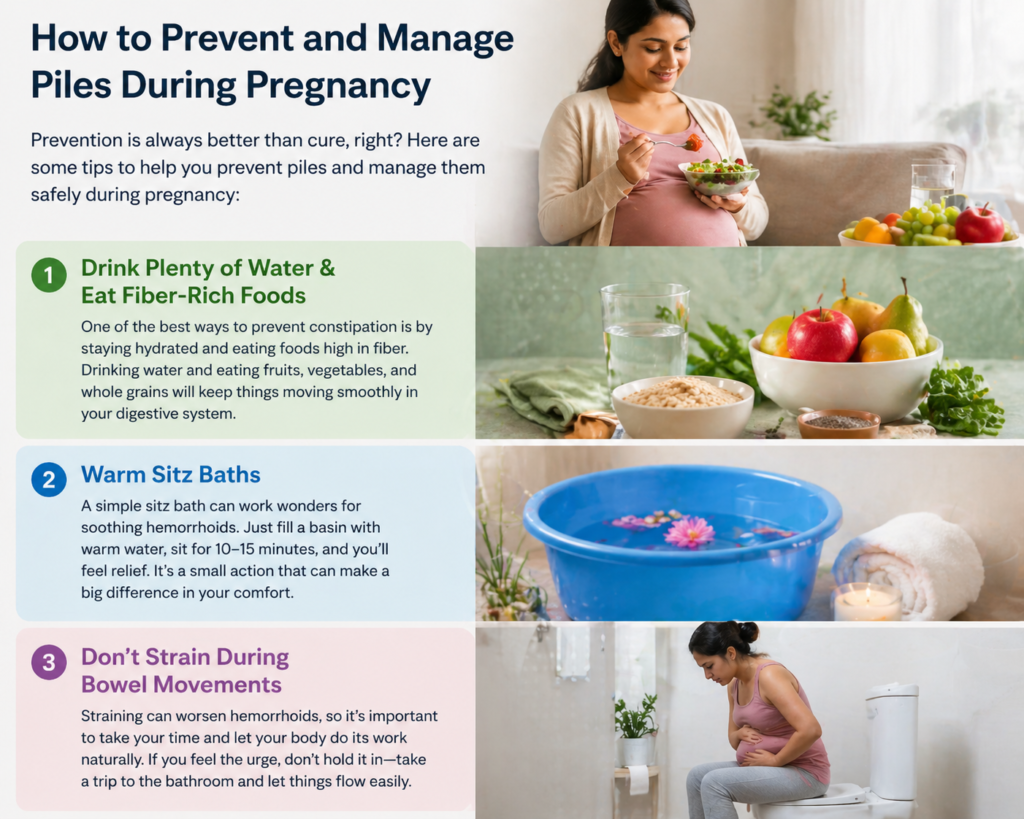
How to Prevent and Manage Piles During Pregnancy
Prevention is always better than cure, right? Here are some tips to help you prevent piles and manage them safely during pregnancy:
1. Drink Plenty of Water & Eat Fiber-Rich Foods
One of the best ways to prevent constipation is by staying hydrated and eating foods high in fiber. Drinking water and eating fruits, vegetables, and whole grains will keep things moving smoothly in your digestive system.
2. Warm Sitz Baths
A simple sitz bath can work wonders for soothing hemorrhoids. Just fill a basin with warm water, sit for 10–15 minutes, and you’ll feel relief. It’s a small action that can make a big difference in your comfort.
3. Don’t Strain During Bowel Movements
Straining can worsen hemorrhoids, so it’s important to take your time and let your body do its work naturally. If you feel the urge, don’t hold it in—take a trip to the bathroom and let things flow easily.
What to Avoid When Managing Piles During Pregnancy
Here are some things to watch out for when dealing with piles during pregnancy:
1. Prolonged Sitting
Sitting for long periods can increase the pressure on your rectal veins, making piles worse. If you have a desk job or spend a lot of time sitting, be sure to take breaks and move around every 30 minutes.
2. Lifting Heavy Objects
Lifting heavy items puts additional strain on your abdomen and pelvic area. Avoid lifting anything that feels too heavy, and ask for help when needed. Your baby will thank you!
FAQs About Piles During Pregnancy
1. Can laser piles treatment be done during pregnancy?
Yes! Laser piles treatment is considered safe for pregnant women, but always consult your doctor before proceeding to ensure it’s the right option for you.
2. How long will it take to recover from laser piles treatment?
Most women can return to their regular activities within 1–2 days after laser treatment.
3. What are the symptoms of a hernia during pregnancy?
Look out for a bulging area in your abdomen or groin, pain, and discomfort when lifting or bending. If you notice these symptoms, make sure to see your doctor.
Why Choose Amrut Hospital for Piles Treatment?
At Amrut Hospital, we understand the challenges that pregnancy brings. Our team of experts is here to provide safe, effective solutions like laser piles treatment in Dombivli to help you feel better faster. We’re here to support you with personalized care and guidance every step of the way.
Book your consultation with us today and let us help you manage your piles safely during pregnancy.