
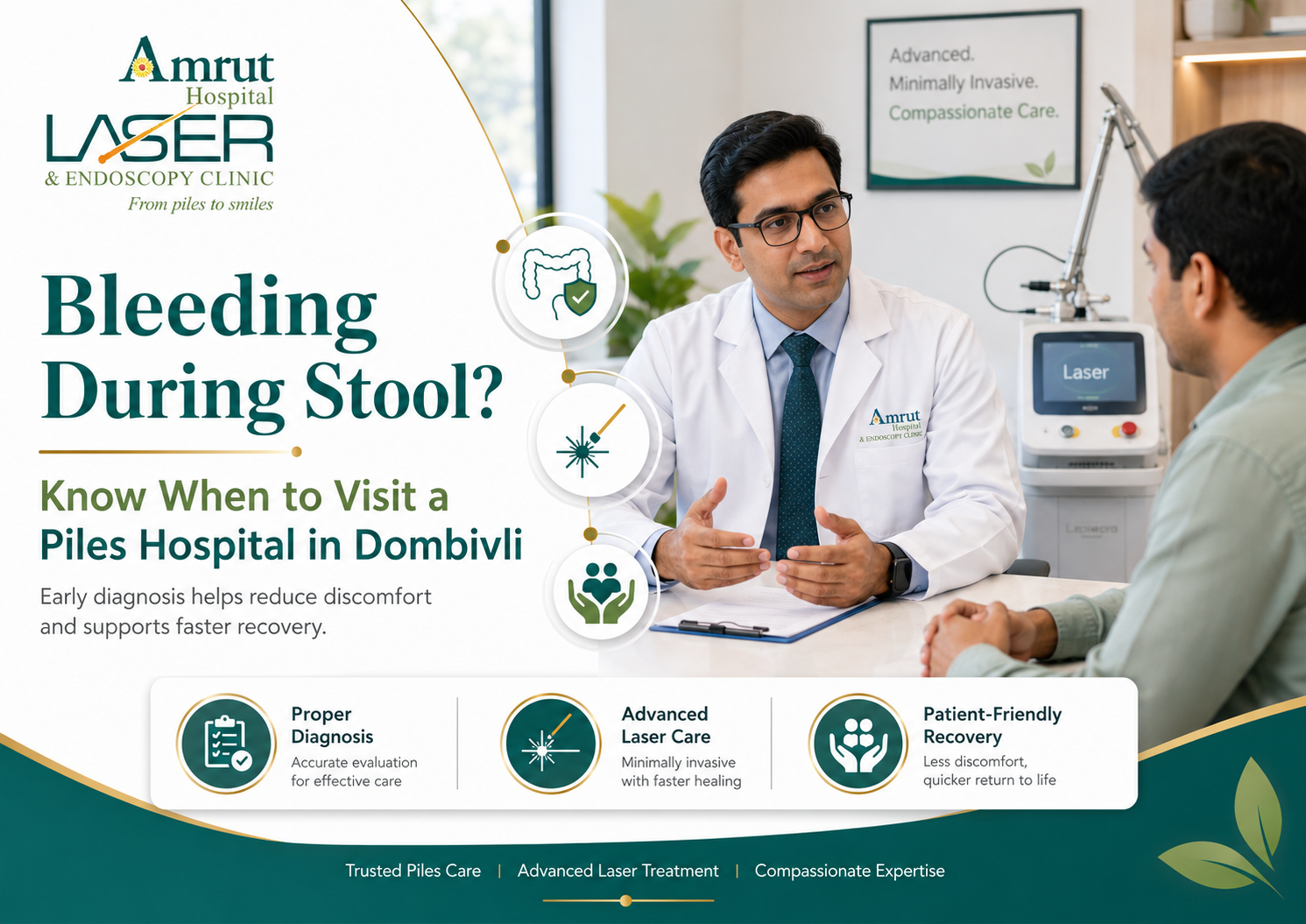
Seeing blood during stool can be scary. Many people notice it once or twice and think, “Maybe it is because of constipation.” Some feel embarrassed to talk about it. Others keep trying home remedies, creams, or medicines without knowing the real cause.
But bleeding during stool should not be ignored, especially if it happens again and again. It may be due to piles, fissure, infection, or another anorectal condition. Sometimes, bleeding may be painless. Sometimes, it may come with burning, swelling, itching, pain, or a lump near the anal area.
For many patients in dombivli thane, the biggest confusion is knowing when to wait and when to visit a doctor. If bleeding is repeated, painful, or affecting your daily comfort, it is time to get proper medical advice.
Amrut hospital at dombivli , patients can consult for diagnosis, piles treatment guidance, and advanced options such as laser piles treatment in dombivli. Early care can make treatment easier, recovery smoother, and anxiety much lower.
Bleeding during stool may be a sign of piles, fissure, constipation-related injury, or another anorectal problem. You should visit a Piles hospital in Dombivli if bleeding repeats, comes with pain, swelling, itching, lump, or discomfort. Early diagnosis helps decide whether medicines, lifestyle changes, or laser piles treatment in dombivli is needed.
What is Bleeding During Stool?
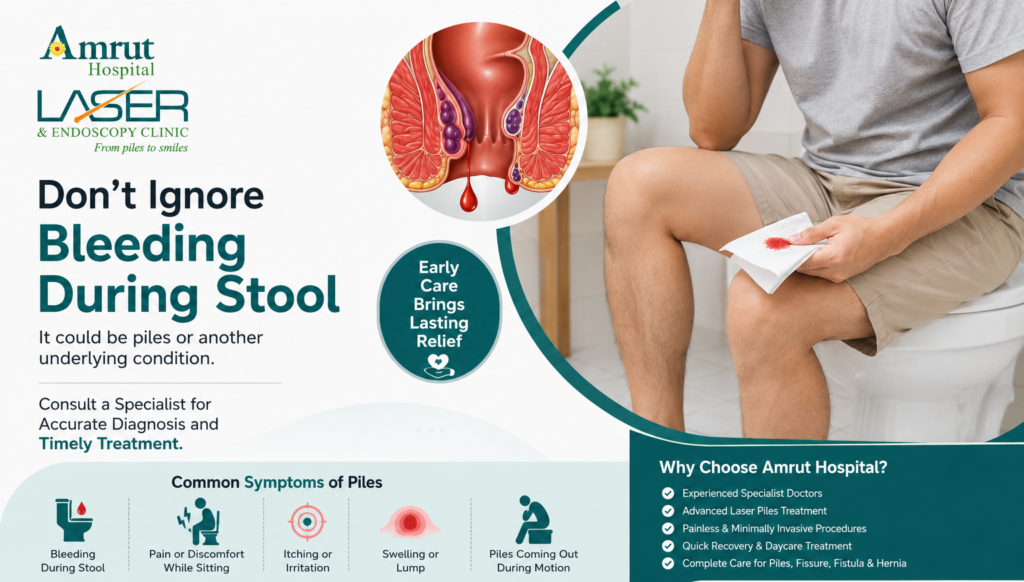
Bleeding during stool means noticing blood while passing motion, on toilet paper, in the toilet bowl, or mixed with stool. In piles, bleeding is often bright red and may happen because swollen veins inside or around the anal area get irritated during bowel movement.
The bleeding may be mild at first. Some patients may see only a few drops. Others may notice bleeding repeatedly, especially after constipation or straining.
Bleeding can happen due to internal piles, external piles, fissure, hard stool injury, infection, or other digestive and rectal conditions. That is why self-diagnosis is not safe.
If you notice bleeding more than once, it is better to consult a Piles clinic in Dombivli. A proper check-up helps identify the exact cause and prevents delay in treatment.
Bleeding during stool is not something to ignore. It may be due to piles, fissure, or another rectal condition. A doctor can confirm the cause and suggest the right treatment.
Why Does Bleeding During Stool Happen?
Bleeding during stool can happen for different reasons. In many patients, constipation and straining are the main triggers. But repeated bleeding needs medical attention.
Common causes and risk factors include:
- Chronic constipation
- Hard stool causing injury
- Straining during bowel movements
- Internal piles
- External piles with irritation
- Anal fissure
- Low-fiber diet
- Not drinking enough water
- Sitting on the toilet for too long
- Long sitting hours at work
- Obesity
- Pregnancy-related pressure
- Repeated diarrhea
- Poor bowel habits
You should take bleeding seriously if:
- It happens repeatedly
- It comes with pain or burning
- There is swelling near the anus
- You feel a lump near the anal opening
- You notice itching or mucus discharge
- Piles come out during stool
- You feel weak or tired due to frequent bleeding
- Medicines or home care do not help
Many patients search for a Piles clinic in Dombivli only after symptoms become difficult to manage. But early consultation can prevent unnecessary pain and confusion.
How Does Diagnosis and Treatment Work?
The treatment for bleeding during stool starts with diagnosis. The doctor first checks what is causing the bleeding. This step is very important because not every bleeding case is piles.
Step 1: Symptom Discussion
The doctor will ask about your symptoms. You may be asked:
How often does bleeding happen?
Is the blood bright red or dark?
Do you feel pain while passing stool?
Is there swelling, itching, or a lump?
Do you have constipation?
Have you used any medicine or cream before?
Be honest while answering. These details help the doctor understand your condition better.
Step 2: Medical History
Your doctor may ask about diabetes, blood pressure, heart disease, blood thinner medicines, allergies, previous surgery, or digestion problems.
This helps in planning safe treatment.
Step 3: Physical or Proctology Examination
A simple examination helps check whether the bleeding is due to piles, fissure, fistula, or another anorectal issue.
In some cases, the doctor may suggest further evaluation if needed. Patients may also search for an Endoscopic surgeon in dombivli when digestive or rectal evaluation is required.
Step 4: Treatment Planning
If piles are confirmed, treatment depends on the grade and symptoms. Mild cases may improve with medicines, fiber, water intake, and bowel habit correction.
If piles are painful, bleeding repeatedly, or not improving, laser piles treatment in dombivli may be considered in suitable cases.
Step 5: Recovery and Prevention Guidance
Treatment does not end with the procedure. Diet, hydration, hygiene, and avoiding straining are important for long-term comfort.
The right treatment depends on the cause of bleeding. Diagnosis comes first. After examination, the doctor may suggest medicines, lifestyle changes, laser treatment, or other care options.
Benefits of Timely Piles Treatment
Many people wait because they hope bleeding will stop on its own. Sometimes it does. But if it keeps returning, waiting can make the problem worse.
Timely treatment may help by:
- Finding the exact cause of bleeding
- Reducing pain and discomfort
- Preventing repeated irritation
- Managing piles before they worsen
- Avoiding unnecessary fear and confusion
- Improving bowel comfort
- Helping patients return to daily routine
- Reducing dependency on temporary creams
- Supporting faster recovery in suitable cases
- Preventing complications linked with untreated piles
For suitable patients, laser operation for piles in dombivli may offer a minimally invasive option with less bleeding, less discomfort, and faster return to routine compared to traditional methods.
Patients in dombivli thane who are facing repeated bleeding should not delay consultation. A small step today can prevent bigger discomfort later.
Home Remedies vs Medicines vs Laser Treatment
| Factor | Home Remedies | Medicines | Laser Piles Treatment |
|---|---|---|---|
| Best for | Mild constipation-related symptoms | Mild to moderate symptoms | Suitable recurring or advanced piles cases |
| Doctor needed? | Not always | Recommended | Required |
| Relief type | Temporary support | Symptom control | Treats affected piles tissue |
| Helps bleeding? | May help if constipation reduces | May help in mild cases | May reduce bleeding in suitable piles cases |
| Recovery time | Not applicable | Depends on condition | Usually quicker in suitable cases |
| Best use | Early lifestyle correction | Doctor-guided relief | Doctor-confirmed piles needing procedure |
| Limitation | May not treat piles | May not solve recurring piles | Not suitable for every patient |
Home remedies like drinking more water, eating fiber-rich food, and avoiding straining can help in mild cases. But if bleeding continues, do not keep guessing.
A trusted Piles hospital in Dombivli can help you understand whether your condition needs medicines, lifestyle correction, or laser piles treatment in dombivli.
Who Should Visit a Doctor for Bleeding During Stool?
You should visit a doctor if bleeding is not a one-time issue. Even if pain is not severe, repeated bleeding needs evaluation.
You may need medical care if you have:
- Bleeding during stool more than once
- Pain while passing stool
- Burning sensation after stool
- Swelling near the anal area
- Lump near the anus
- Itching or irritation
- Mucus discharge
- Piles coming out during stool
- Constipation that keeps returning
- No relief from home remedies
- Bleeding with weakness or fatigue
- Fear or anxiety while passing stool
A Piles doctor in Dombivli can check the type and grade of piles and suggest the right treatment.
Some patients may also have other surgical concerns such as hernia, gallbladder issues, or digestive problems. In such cases, consultation with a Hernia surgeon in Dombivli, Laparoscopic surgeon in dombivli, or Endoscopic surgeon in dombivli may be helpful depending on symptoms.
Cost of Piles Treatment in Dombivli: What Affects Pricing?
The cost of piles treatment depends on the patient’s condition. There is no single fixed price for everyone because symptoms and treatment needs can differ.
Cost factors may include:
- Cause of bleeding
- Grade of piles
- Internal or external piles
- Severity of pain or swelling
- Frequency of bleeding
- Need for tests or evaluation
- Type of treatment advised
- Laser procedure requirement
- Type of anesthesia
- Hospital stay or day-care procedure
- Medicines and follow-up care
- Presence of fissure, fistula, or other conditions
Patients often ask about the cost of laser operation for piles in dombivli. The best way to know is through consultation and examination. Once the doctor understands the condition, the treatment plan and pricing can be explained clearly.
Choosing treatment only because it is cheap may not be safe. Proper diagnosis, doctor’s experience, hospital setup, and aftercare matter a lot.
Industry Trends in 2026
In 2026, piles care is becoming more patient-friendly. People no longer want to silently suffer for months. They want quicker relief, better comfort, and clear guidance.
Important trends include:
- More awareness about rectal bleeding
- Higher preference for minimally invasive procedures
- Growing demand for laser piles treatment
- More focus on day-care treatment options
- Faster recovery expectations among working patients
- Better diagnosis for piles, fissure, and fistula
- Increased local searches for piles specialists
- More importance given to lifestyle correction
- Patient education through blogs, videos, and online platforms
Patients in dombivli thane are also searching for local, trusted care instead of delaying treatment. Searches like Piles clinic in Dombivli, Piles hospital in Dombivli, and laser piles treatment in dombivli show that patients want nearby care with modern treatment options.
Why Choose amrut hospital in dombivli thane?
amrut hospital is a trusted healthcare name for patients looking for piles, fissure, fistula, hernia, laparoscopic, and endoscopic treatment support in dombivli thane.
Patients choose amrut hospital because they get proper diagnosis, clear guidance, and care based on their actual condition.
At amrut hospital, patients can receive:
- Diagnosis for bleeding during stool
- Treatment guidance for internal and external piles
- Modern laser treatment options
- Consultation for piles, fissure, and fistula
- Patient-friendly approach
- Pre-treatment and post-treatment support
- Diet and bowel habit guidance
- Surgical care for related conditions
- Convenient care for patients in dombivli thane
If you are searching for a Piles doctor in Dombivli, amrut hospital can help you understand your symptoms clearly and choose the right treatment path.
The hospital also supports patients looking for a Hernia surgeon in Dombivli, Laparoscopic surgeon in dombivli, or Endoscopic surgeon in dombivli for related medical needs.
FAQs
1. Is bleeding during stool always due to piles?
No. Bleeding during stool may happen due to piles, fissure, constipation-related injury, infection, or other rectal conditions. A doctor’s examination is needed to confirm the exact cause.
2. When should I visit a piles hospital in Dombivli for bleeding?
You should visit a doctor if bleeding happens repeatedly, comes with pain, swelling, itching, lump, or discomfort, or does not improve with basic care.
3. Can laser piles treatment in dombivli stop bleeding?
Laser piles treatment may help reduce bleeding in suitable piles cases by treating the affected piles tissue. The doctor will decide suitability after examination.
4. Is laser operation for piles in dombivli painful?
Laser treatment is generally associated with less discomfort compared to traditional surgery in suitable cases. Mild discomfort may happen after treatment, but it is usually manageable with medicines and care.
5. Can piles bleeding come back after treatment?
Yes, symptoms can return if constipation, straining, low-fiber diet, low water intake, or long sitting habits continue. Lifestyle correction is important after treatment.
Bleeding during stool should not be ignored. It may be piles, fissure, or another condition that needs proper diagnosis.
If you are facing repeated bleeding, pain, swelling, itching, or discomfort, visit amrut hospital in dombivli thane for expert evaluation and treatment guidance.
For advanced laser piles treatment in dombivli, consult amrut hospital today and take the first step toward safe, comfortable, and confident recovery.