Travelling after piles surgery is one of the most common concerns patients have. Many people delay treatment because they are worried about office travel, daily commuting, train journeys, business trips, or upcoming family functions. If you are planning laser piles treatment in Dombivli, you may be wondering: “How many days of rest will I need?” or “Can I travel after laser piles surgery?”
The good news is that laser-based piles treatment is generally considered a minimally invasive approach, and recovery is usually smoother compared to traditional open surgery. However, travel should still be planned carefully. Sitting for long hours, constipation, dehydration, sudden jerks, and missed medicines can increase discomfort after surgery.
This blog explains when you can travel after a laser operation for piles, what precautions to follow, and when you should speak to your doctor before planning a trip. It is especially useful for patients in Dombivli, Mumbai who travel regularly for work, family, or business.
Can You Travel After Laser Piles Surgery?
Yes, many patients can travel short distances within a few days after laser piles surgery, depending on pain, bleeding, bowel movements, and doctor advice. Long-distance travel is usually safer after 1–2 weeks, while flights or long road trips should be planned only after follow-up consultation and stable recovery.
What is Laser Piles Surgery and Why Does Travel Matter?
Laser piles surgery, also called laser hemorrhoid surgery, is a minimally invasive treatment used to shrink or treat swollen hemorrhoidal tissue using focused laser energy. It is commonly recommended for selected cases of internal piles, bleeding piles, or prolapsing piles after proper diagnosis.
Piles, also known as hemorrhoids, happen when veins around the anus or lower rectum become swollen. Common triggers include constipation, straining during stool, long toilet sitting, low-fiber diet, obesity, pregnancy, and regular heavy lifting. Mayo Clinic also lists long sitting, low fiber intake, and lifting heavy items as factors linked with hemorrhoids.
Travel matters because recovery after any piles procedure depends on:
- Sitting comfort
- Smooth bowel movements
- Pain control
- Bleeding control
- Hydration
- Medication schedule
- Avoiding pressure on the anal area
Even if laser surgery allows faster recovery, your body still needs healing time.
Mini Summary Box
Laser surgery may reduce recovery discomfort, but travel should be based on your symptoms, bowel movement comfort, and surgeon’s advice.
Why Do Patients Need Travel Guidance After Laser Piles Treatment?
Many patients searching for laser piles treatment in Dombivli are working professionals, business owners, students, drivers, or frequent travellers. For them, recovery is not just about surgery. It is about returning to daily life safely.
Travel guidance is important because:
- Long sitting can increase pressure near the anal region
- Dehydration during travel can worsen constipation
- Skipping fiber or medicines can make stool hard
- Sudden movement during road travel can cause discomfort
- Lack of clean washrooms can create anxiety
- Straining after surgery can delay healing
- Heavy luggage lifting may increase pressure
Medical sources advise keeping stool soft, avoiding straining, drinking enough fluids, and eating fiber-rich foods to reduce hemorrhoid symptoms and prevent recurrence.
If you are searching for a piles hospital near me, choose a hospital that explains not only the procedure but also post-surgery care, travel timing, diet, and warning signs.
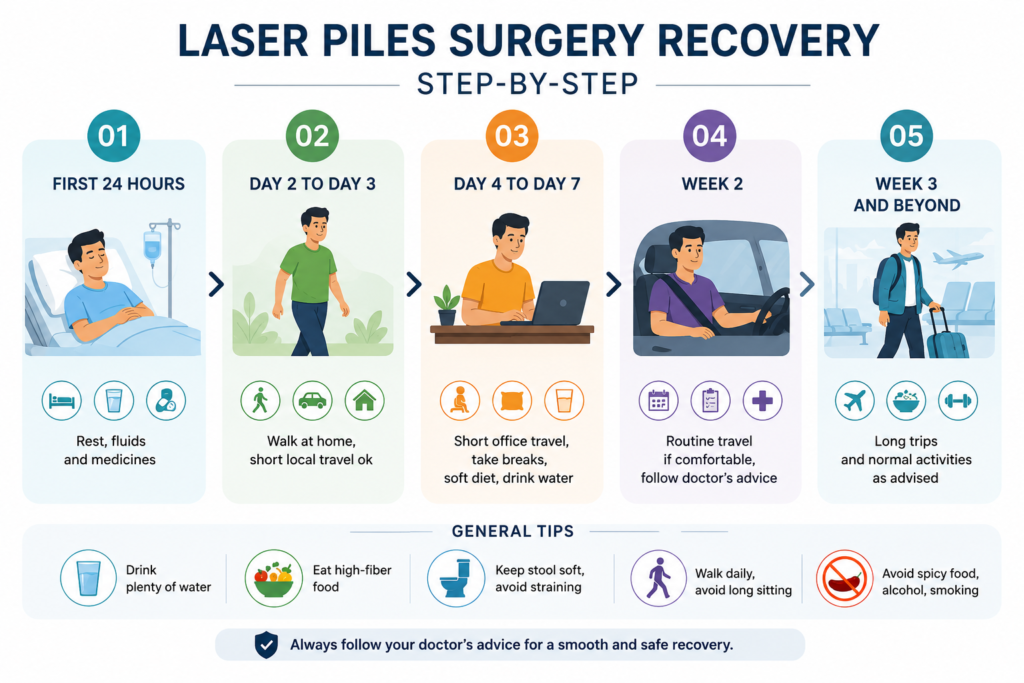
How Does Recovery After Laser Piles Surgery Work? Step-by-Step
Recovery is not the same for every patient. Your timeline depends on the grade of piles, pain tolerance, bowel habits, other health conditions, and the type of procedure performed.
Step 1: First 24 Hours After Surgery
The first day is for rest and observation. You may feel mild discomfort, heaviness, or a burning sensation while passing stool.
What to do:
- Take medicines as prescribed
- Drink enough water
- Eat light, fiber-friendly food
- Avoid unnecessary travel
- Do not lift heavy bags
- Avoid sitting continuously for long periods
Short local travel from hospital to home is usually planned with medical guidance.
Step 2: Day 2 to Day 3
Many patients begin moving around at home. Walking slowly is usually better than complete bed rest, unless your doctor advises otherwise.
You may be able to travel short distances if:
- Pain is manageable
- Bleeding is minimal
- You can sit comfortably
- You have passed stool without major difficulty
- You are not feeling dizzy or weak
Avoid two-wheeler rides, bumpy roads, and long train journeys during this phase.
Step 3: Day 4 to Day 7
This is when some patients feel ready for short office commutes or nearby travel. However, long sitting should still be avoided.
Helpful tips:
- Use a soft cushion if advised
- Take short walking breaks
- Carry water
- Avoid spicy and junk food
- Do not delay toilet urges
- Continue stool softeners if prescribed
Guy’s and St Thomas’ NHS guidance for piles surgery advises gradual return to usual activity and avoiding heavy activity such as lifting, exercise, or running during the first week or so after surgery.
Step 4: Week 2
By the second week, many patients can manage routine travel better. This may include office travel, short car rides, local train travel, or nearby family visits.
But before long-distance travel, ask your doctor if:
- You still have bleeding
- Pain increases after sitting
- Stool is hard
- You have fever
- You feel swelling or discharge
- You need strong painkillers
Step 5: Week 3 and Beyond
Long trips, flights, business travel, and outstation travel are usually considered safer when recovery is stable. Traditional hemorrhoidectomy can take two to four weeks on average, and sometimes longer for strenuous activity; laser procedures may allow faster recovery in selected patients, but follow-up advice remains important.
Benefits of Laser Piles Treatment for Working and Travelling Patients
For suitable patients, laser surgery for piles may offer practical recovery benefits.
Key benefits may include:
- Minimally invasive treatment approach
- Less tissue trauma compared to conventional cutting methods
- Reduced post-procedure discomfort in many cases
- Shorter hospital stay in selected cases
- Faster return to routine activities
- Lower need for large wounds or stitches
- Better comfort during recovery planning
- Useful for patients with busy schedules
- Helps reduce fear around surgery
Many people search “laser treatment is painful” because they fear severe post-surgery pain. In reality, pain levels vary by patient and disease severity. Laser treatment is generally designed to reduce tissue damage, but some discomfort during bowel movements can still happen during healing.
Laser Piles Surgery vs Traditional Piles Surgery
| Factor | Laser Piles Surgery | Traditional Hemorrhoidectomy |
|---|---|---|
| Procedure type | Minimally invasive laser-based treatment | Surgical removal of piles tissue |
| Pain level | Usually less in suitable cases | Can be more painful during recovery |
| Recovery time | Often faster, depending on case | May take a few weeks |
| Travel comfort | Short travel may resume earlier with advice | Longer rest often needed |
| Wound size | Usually smaller | Larger wound area possible |
| Hospital stay | Often shorter in selected cases | May require longer recovery planning |
| Best for | Selected piles cases after diagnosis | Large, severe, or complicated piles |
| Doctor advice needed? | Yes | Yes |
Cleveland Clinic notes that hemorrhoidectomy recovery can take two to eight weeks depending on pain and complications, while newer surgical techniques aim to improve healing and recovery.
Who is a Good Candidate for Laser Piles Treatment?
You may need consultation for laser piles treatment in Dombivli if you have:
- Bleeding during stool
- Pain while passing stool
- Itching or burning near the anus
- Swelling or lump near the anal opening
- Piles coming out during bowel movement
- Repeated constipation with straining
- Symptoms not improving with medicines
- Recurring piles after home remedies
You should also see a doctor if you are confused whether symptoms are piles, fissure, fistula, or another anorectal condition. Some symptoms overlap, and proper diagnosis is important.
A piles specialist in Mumbai may recommend examination, proctoscopy, or other tests depending on your symptoms. Patients who also ask about laser treatment for fistula, fissure treatment, or hernia in men should understand that these are different conditions and need separate diagnosis.
Cost and Pricing Factors for Laser Piles Treatment
The cost of laser piles treatment can vary from patient to patient. A fixed price without diagnosis may not be accurate.
Common pricing factors include:
- Grade of piles
- Number and type of hemorrhoids
- Severity of bleeding or prolapse
- Need for diagnostic tests
- Type of anesthesia
- Hospital stay requirement
- Medicines and post-care
- Other conditions like fissure or fistula
- Insurance or cashless support eligibility
If you are searching for a piles doctor in Mumbai or Dombivli, ask for a transparent consultation-based estimate. Cost should not be the only deciding factor. Experience, diagnosis accuracy, post-operative care, and emergency support matter equally.
Industry Trends in 2026: Piles Treatment and Recovery Care
In 2026, piles treatment is moving toward faster recovery, better comfort, and patient-friendly post-care. People no longer want to suffer silently or delay treatment because of embarrassment.
Important trends include:
- More awareness about laser-based treatment
- Faster return-to-work planning
- Better diagnosis for piles, fissure, and fistula
- Day-care treatment options for selected patients
- More focus on diet and constipation prevention
- Increased patient education through videos and blogs
- Location-based searches like “piles hospital near me”
- Growing demand for specialists in Dombivli and Mumbai
Patients are also asking smarter questions, such as:
- Can I travel after surgery?
- When can I return to office?
- Is laser surgery painful?
- How can I prevent recurrence?
- What food should I avoid after surgery?
This shift is good because informed patients recover more confidently.
Why Choose Amrut Hospital in Dombivli, Mumbai?
Amrut Hospital in Dombivli East provides treatment for piles, fissure, fistula, hernia, gallbladder, endoscopy, and laparoscopic surgery, according to its official website. The hospital states that it is headed by Dr. Pramod Bahekar and offers patient care in Dombivli East, Thane, Maharashtra.
Patients looking for laser piles treatment in Dombivli can consider Amrut Hospital for:
- Consultation for piles, fissure, and fistula symptoms
- Diagnosis-based treatment planning
- Laser treatment options for suitable cases
- Guidance on recovery and travel planning
- Post-treatment care instructions
- Support for related conditions like hernia and endoscopy needs
- Convenient access for patients from Dombivli, Kalyan, Thane, and Mumbai
The official site also mentions modern technology, qualified doctors, emergency treatment support, and treatment categories including hemorrhoids/piles, fissure, anal cancer, hernia, gallbladder surgery, endoscopy surgery, laparoscopic surgery, and fistula.
FAQs: Travel After Laser Piles Surgery
1. Can I travel by car after laser piles surgery?
Short car travel may be possible within a few days if pain is controlled and your doctor allows it. Avoid bumpy roads, long sitting, and heavy luggage. Take breaks if the journey is longer than 30–45 minutes.
2. When can I travel by train after laser operation for piles?
Local train travel may be possible after a few days for some patients, but crowded trains and long standing should be avoided early. For long-distance trains, wait until your bowel movements are comfortable and bleeding is minimal.
3. Can I fly after laser hemorrhoid surgery?
Flying should be planned only after follow-up consultation. If you still have pain, bleeding, constipation, or need strong medicines, postpone air travel. For longer flights, hydration and walking breaks are important.
4. Is laser treatment for piles painful during recovery?
Laser treatment is usually less painful than traditional surgery in suitable cases, but mild pain, burning, or discomfort during stool can happen. If pain increases suddenly, consult your doctor.
5. What should I carry while travelling after piles surgery?
Carry prescribed medicines, water, fiber-friendly snacks, soft tissues or wipes, doctor’s prescription, and a cushion if advised. Avoid spicy food, dehydration, alcohol, and long sitting without breaks.
Planning travel after piles surgery? Don’t guess your recovery timeline.
Book a consultation at Amrut Hospital, Dombivli for expert diagnosis, safe recovery guidance, and personalized advice on laser piles treatment in Dombivli.
Early treatment can make recovery simpler, travel safer, and daily life more comfortable.