Piles treatment has changed a lot over the years. For many patients, the word “piles surgery” still brings up thoughts of severe pain, long bed rest, and difficult recovery. That fear is one reason people often delay seeing a doctor, even when bleeding, itching, swelling, or a lump keeps returning.Today, laser piles treatment in Dombivli has become one of the modern options available for selected patients who need a minimally invasive approach. Doctors now focus more on accurate diagnosis, lifestyle changes, medicines, office-based procedures, and suitable surgical options based on the patient’s condition.
Modern piles care is much more individualized. Doctors now begin with accurate diagnosis, lifestyle changes, medicines, and office-based procedures where suitable. Surgery is considered when symptoms are persistent, advanced, or do not improve with simpler treatment.
For selected patients, laser piles treatment in Dombivli has become one of the minimally invasive options available today. Research suggests that laser hemorrhoidoplasty can offer lower short-term pain and earlier return to daily activities compared with conventional hemorrhoidectomy in appropriately selected Grade II and III cases. However, laser is not automatically the best option for every patient.
At Amrut Hospital, the focus should always be on matching the treatment to the patient, rather than choosing a procedure simply because it is newer.
How Has Piles Treatment Changed Over Time?
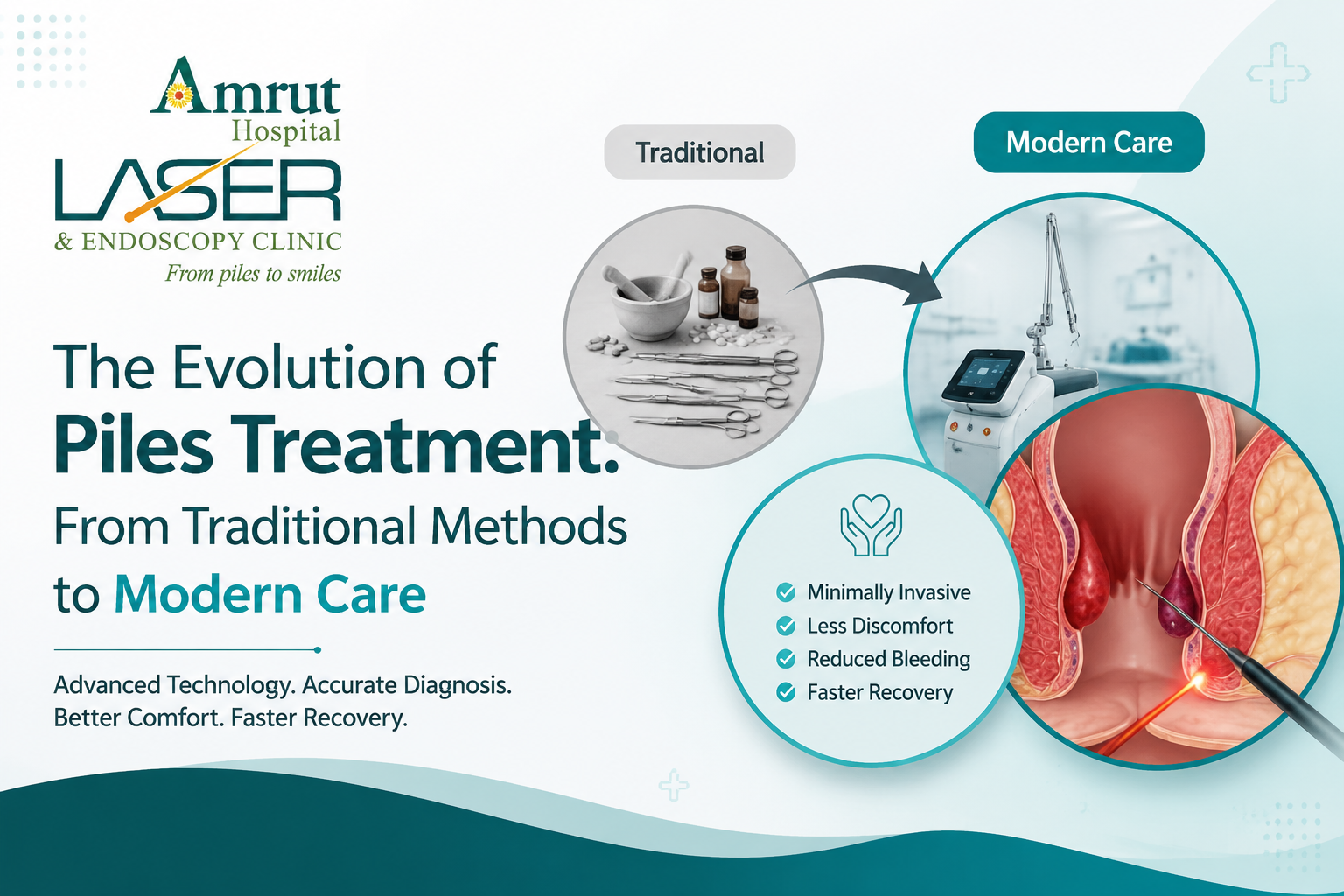
Piles treatment has evolved from mainly medicines and conventional surgery to a step-by-step approach that includes lifestyle changes, office procedures, minimally invasive techniques, and laser treatment. Laser piles treatment in Dombivli may offer less postoperative discomfort and faster recovery for selected patients, but the right treatment depends on the type and grade of piles.
What Is the Evolution of Piles Treatment?
The evolution of piles treatment refers to the move from a limited choice of medicines or conventional surgery toward a more personalized approach.
Today, doctors can choose from dietary changes, medicines, rubber band ligation, other office procedures, laser hemorrhoidoplasty, and conventional surgery depending on the patient’s symptoms and piles grade.
Current 2026 guidance continues to recommend fiber, healthier bowel habits, and avoiding prolonged toilet sitting or straining as first-line management for symptomatic hemorrhoids.
Modern technology has therefore not replaced basic treatment. Instead, it has added more choices for patients who need further intervention.
For someone visiting a Piles clinic in Dombivli, the first question should not be, “Can I have laser treatment?”
It should be, “What type of piles do I have, and which treatment suits me best?”
Why Has Modern Piles Treatment Become Important?
Many patients live with piles symptoms for months because they are embarrassed or afraid of treatment.
Modern care matters because it allows doctors to choose treatment according to severity instead of using the same approach for everyone.
Important reasons include:
- Better diagnosis: Bleeding, pain, and swelling are not always caused by piles.
- Grade-based treatment: Grade I piles may need a very different approach from Grade IV piles.
- Less invasive options: Selected patients may avoid larger surgical wounds.
- Improved comfort: Modern techniques aim to reduce postoperative pain and disruption to daily life.
- Faster return to routine: Some minimally invasive procedures may allow an earlier return to work.
- Personalised planning: Age, diabetes, medicines, bleeding risk, and other health conditions can be considered before treatment.
- Earlier intervention: Patients may be more willing to seek care when they know surgery is not always the first step.
A qualified Piles doctor in Dombivli can help separate mild disease from cases that need a procedure.
Modern piles care is not simply “traditional surgery versus laser.” It is a step-by-step process that begins with diagnosis and uses the least invasive effective option wherever medically appropriate.
How Does Modern Piles Treatment Work Step by Step?
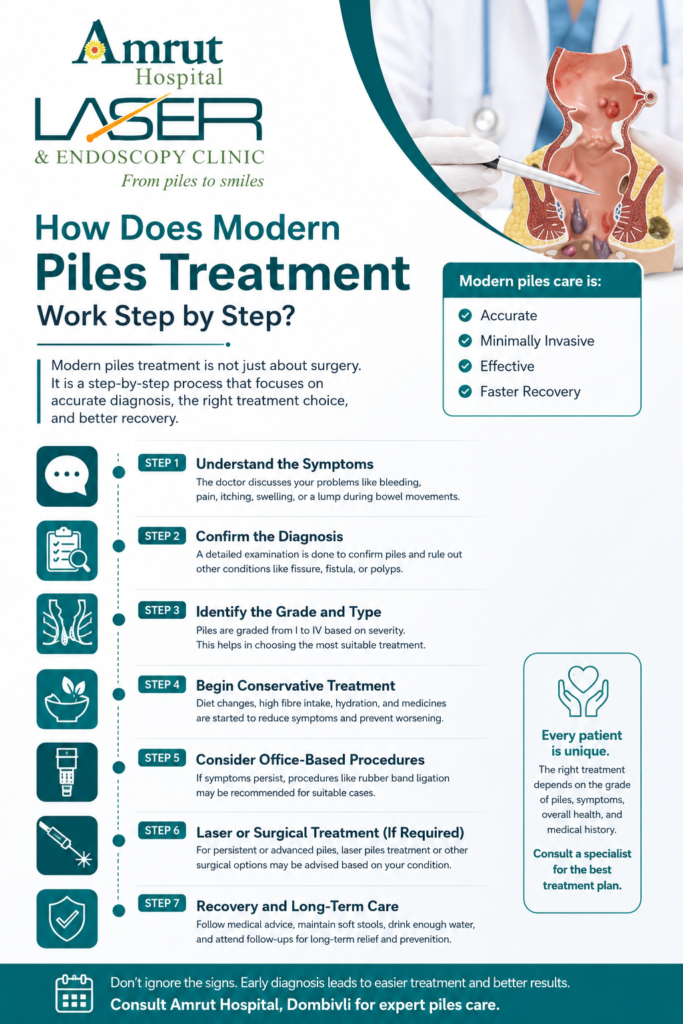
Treatment generally follows a structured process.
Step 1: Understand the Symptoms
The doctor asks about bleeding, itching, pain, constipation, swelling, and prolapse.
One patient may have occasional painless bleeding. Another may have a lump that comes out during every bowel movement. These two people may need completely different treatment plans.
Step 2: Confirm the Diagnosis
A clinical examination helps determine whether the symptoms are actually caused by hemorrhoids.
This matters because fissure, fistula, and other anorectal conditions may cause similar complaints.
Step 3: Identify the Grade and Type of Piles
Internal piles are commonly classified from Grade I to Grade IV according to the extent of prolapse.
The grade helps guide treatment, although symptoms and overall health also matter.
Step 4: Begin Conservative Management When Appropriate
Current guidance recommends dietary and behavioral measures as first-line treatment for many symptomatic patients. Increasing fiber intake and avoiding prolonged toilet sitting or straining are commonly advised.
Medicines may also be prescribed for symptom relief where appropriate.
Step 5: Consider Office-Based Procedures
If symptoms continue, selected internal hemorrhoids may be treated using procedures such as rubber band ligation.
These treatments can sometimes avoid formal surgery.
Step 6: Consider Laser or Surgical Treatment
If the condition is suitable, laser operation for piles in Dombivli may be discussed.
Laser hemorrhoidoplasty uses controlled laser energy within hemorrhoidal tissue with the aim of reducing its blood supply and volume.
Research comparing laser hemorrhoidoplasty with conventional hemorrhoidectomy in Grade II and III piles found lower early postoperative pain and quicker return to work or daily activities in the laser group.
Step 7: Recovery and Prevention
Treatment does not end when the procedure is over.
Patients are generally advised to maintain soft stools, adequate fiber and hydration, healthy bowel habits, and follow-up as recommended.
What Are the Benefits of Modern Laser Piles Treatment?
For properly selected patients, potential benefits of laser hemorrhoidoplasty may include:
- Less postoperative pain compared with conventional hemorrhoidectomy in some studies
- Lower short-term bleeding in selected studies
- Smaller or limited surgical wounds depending on the technique
- Earlier return to daily activities
- Shorter operative time in some comparative studies
- Reduced need for pain medicines in some patients
- A minimally invasive treatment option for suitable hemorrhoids
A meta-analysis involving 661 patients with Grade II or III hemorrhoids found that patients undergoing laser hemorrhoidoplasty returned to work or normal daily activities significantly earlier than those undergoing conventional hemorrhoidectomy.
However, longer-term outcomes deserve equal attention. A 2024 systematic review noted that recurrence outcomes may vary depending on the laser technique and wavelength, so laser should not be described as universally superior to conventional surgery.
That is why proper patient selection matters.
Laser Piles Treatment vs Traditional Treatment: What Is the Difference?
| Treatment Option | Common Role | Recovery | Key Consideration |
|---|---|---|---|
| Fibre and lifestyle changes | Mild symptomatic piles | No surgical recovery | Often first-line treatment |
| Medicines/topical therapy | Temporary symptom management | Minimal | May not address significant prolapse |
| Rubber band ligation | Selected internal piles | Usually relatively quick | May require repeat treatment |
| Laser hemorrhoidoplasty | Selected hemorrhoids | Often faster short-term recovery | Not suitable for every piles grade |
| Conventional hemorrhoidectomy | Advanced or selected severe disease | Usually longer recovery | Remains important for certain cases |
The key difference is not simply the technology used.
A conventional operation can still be the more appropriate treatment for certain advanced cases, while a patient with mild piles may not need any surgery at all.
A good Piles hospital in Dombivli should therefore offer diagnosis-led treatment rather than automatically recommending one technique.
Who Is a Good Candidate for Laser Piles Treatment?
A person may be considered for laser treatment when:
- Piles remain symptomatic despite conservative treatment
- Repeated bleeding affects daily life
- Internal piles prolapse during bowel movements
- The hemorrhoid grade is suitable for the chosen laser technique
- The patient is medically fit for the procedure
- The surgeon believes laser offers an appropriate balance of benefits and risks
Laser hemorrhoidoplasty has been studied particularly in Grade II and Grade III hemorrhoids.
Patients with large external hemorrhoids, advanced prolapse, or another anorectal condition may need a different approach.
Do you need to decide this yourself? No.
A consultation and examination should guide the decision.
How Much Does Laser Piles Treatment in Dombivli Cost?
There is no single price that applies to every patient.
The cost of laser piles treatment in Dombivli can depend on:
- Grade and type of piles
- Number of hemorrhoids treated
- Diagnostic investigations
- Type of procedure
- anesthesia requirements
- Medicines and consumables
- Day-care or hospital stay
- Existing medical conditions
- Follow-up requirements
- Insurance eligibility and policy terms
A low advertised package may not include every part of treatment, while some patients may not need laser at all.
The most useful approach is to get examined first and request a clear estimate based on the recommended treatment.
What Are the Piles Treatment Trends in 2026?
One of the clearest trends in 2026 is personalized, step wise care.
The American Gastroenterological Association’s 2026 clinical practice update continues to place dietary and lifestyle changes at the beginning of hemorrhoid treatment, particularly increasing fiber and avoiding excessive straining or prolonged toilet sitting.
At the same time, minimally invasive procedures are increasingly being evaluated as alternatives to larger operations for selected patients.
Research into laser hemorrhoidoplasty focuses on:
- Better patient selection
- Lower postoperative pain
- Earlier return to work
- Refinement of laser energy and techniques
- Long-term recurrence outcomes
- Comparing minimally invasive treatments with conventional surgery
This is an important shift.
The future is not about using the newest technology on every patient. It is about using the right technology for the right patient.
Why Choose Amrut Hospital in Dombivli?
For someone searching for a Piles clinic in Dombivli, Piles doctor in Dombivli, or Piles hospital in Dombivli, convenience matters—but appropriate medical evaluation matters even more.
At Amrut Hospital, patients can consult for piles symptoms and understand which treatment options may be appropriate after examination.
The hospital also provides surgical care relevant to people searching for a Hernia surgeon in Dombivli, Laparoscopic surgeon in Dombivli, and Endoscopic surgeon in Dombivli for separate surgical conditions.
Modern technology is valuable, but it works best when combined with clinical judgment, clear communication, and personalized treatment planning.
For piles patients, that means understanding the disease first and choosing the procedure second.
FAQs About Modern Piles Treatment
1. Is laser piles treatment better than traditional surgery?
Laser hemorrhoidoplasty may offer lower short-term pain and quicker return to normal activities for selected patients, but conventional surgery can remain appropriate for advanced or complex hemorrhoids. The best option depends on the patient’s condition
2. Is laser piles treatment painful?
Some discomfort can occur after any procedure. Research suggests postoperative pain can be lower after laser hemorrhoidoplasty than conventional hemorrhoidectomy in selected Grade II and III cases.
3. Can piles be treated without surgery?
Yes. Many patients begin with fiber, hydration, better bowel habits, and medicines. Office-based procedures may also be suitable when symptoms persist
4. Can piles return after laser treatment?
Recurrence is possible after piles treatment. Evidence suggests recurrence varies according to the technique, disease severity, and follow-up period. Maintaining good bowel habits remains important.
5. When should I visit a piles doctor?
Consult a doctor if you have recurring rectal bleeding, significant pain, swelling, prolapse, or symptoms that do not improve. Rectal bleeding should not automatically be assumed to be piles without proper evaluation.
Take the Next Step Towards the Right Piles Treatment
Piles treatment has come a long way. Patients today have more choices, better diagnostic methods, and minimally invasive options that were not as widely available in the past.
But technology alone does not make a treatment right.
If you are dealing with repeated bleeding, pain, itching, swelling, or prolapse, consult Amrut Hospital, Dombivli for an evaluation. A doctor can determine whether lifestyle changes, medicines, an office procedure, laser piles treatment in Dombivli, or another surgical approach is appropriate for your condition.
Book a consultation with Amrut Hospital and take the first step towards informed, personalized piles care.