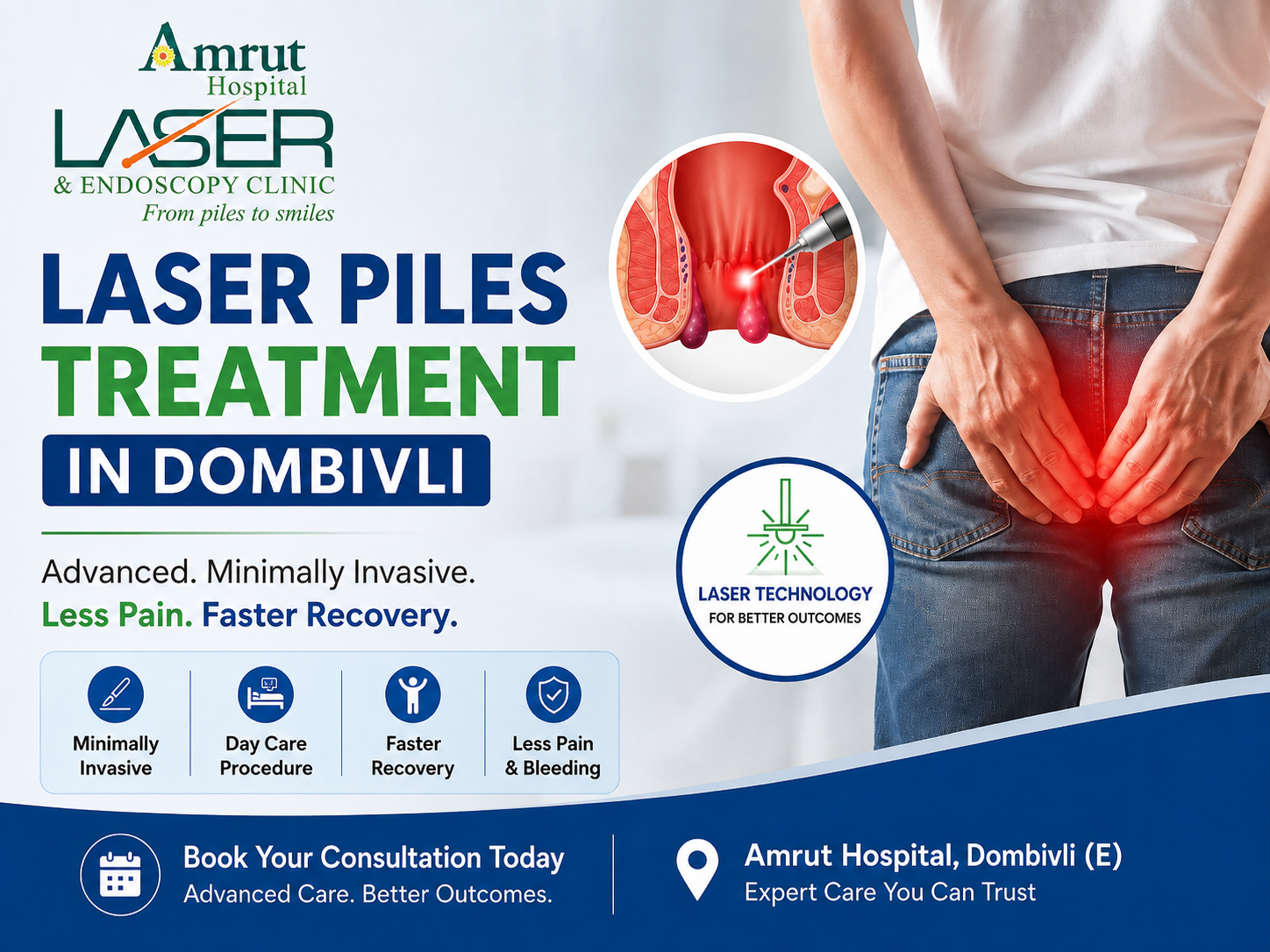
Laser piles treatment in Dombivli may help suitable patients manage recurring bleeding, swelling, itching, and discomfort with a minimally invasive approach. Piles can make ordinary activities such as sitting at work, travelling, exercising, or passing stool difficult. When symptoms keep returning despite medicines and lifestyle changes, a proper medical examination becomes important.
This places the exact focus keyphrase in the first sentence.
But what if the bleeding returns or piles begin coming outside during bowel movements?
Mild piles may improve with fibre, fluids, better toilet habits, and medicines. Persistent bleeding, prolapse, or repeated discomfort may need a procedure after proper examination. This is why choosing an experienced Piles doctor in Dombivli matters.
For suitable patients, laser piles treatment in Dombivli may offer less short-term pain and quicker recovery than conventional excisional surgery. However, it is not right for every type of piles. Treatment should follow an accurate diagnosis.
Laser piles treatment in Dombivli is a minimally invasive procedure used to shrink selected internal haemorrhoids with controlled laser energy. It may cause less postoperative pain, bleeding, and downtime than conventional haemorrhoidectomy in suitable patients, but eligibility depends on the piles grade, symptoms, external component, and the surgeon’s examination.
What Is Laser Piles Treatment in Dombivli?
Laser piles treatment, also called laser haemorrhoidoplasty, uses controlled laser energy to shrink enlarged haemorrhoidal tissue and reduce its blood supply.
Unlike conventional haemorrhoidectomy, it may avoid large external cuts in selected cases. A 2024 meta-analysis of 17 trials involving 1,196 patients found lower day-one pain, less blood loss, shorter procedure time, and less postoperative bleeding with laser treatment. Recurrence was not significantly different between the groups.
Laser does not mean zero pain or guaranteed permanent results. The doctor must first confirm that piles are causing the symptoms.
Why Do Piles Develop, and When Is Treatment Needed?
Piles are swollen vascular tissues around the anus or inside the lower rectum. Symptoms may include itching, a tender lump, discomfort, bright red bleeding, and tissue coming out during bowel movements.
Common contributing factors include:
- Straining while passing stool
- Chronic constipation or diarrhoea
- Sitting on the toilet for too long
- A low-fibre diet
- Pregnancy
- Age-related tissue weakness
- Frequent heavy lifting
Not every patient needs surgery. Dietary and behavioural changes are usually the first line of care. Evidence reviewed in the 2024 ASCRS guideline found that fibre reduced persistent symptoms by 53% and also lowered bleeding.
Treatment may be needed when bleeding continues, piles prolapse, conservative care fails, or daily life is affected. Rectal bleeding should be assessed because other bowel conditions can cause similar symptoms
How Does Laser Piles Treatment in Dombivli Work?
1. Consultation
The doctor asks about bleeding, constipation, pain, prolapse, medicines, and overall health.
This is also the right time to discuss how long you have had symptoms and whether creams, stool softeners, or dietary changes have helped.
2. Examination
The surgeon may inspect the area, perform a digital rectal examination, and use an anoscope or proctoscope. An endoscopic surgeon in Dombivli may advise further testing when the bleeding source is unclear or other bowel symptoms are present.
Selected patients may need colonoscopy when no clear cause is found, bowel symptoms change, or bleeding continues after treatment.
3. Choosing the Right Treatment
The doctor decides whether diet and medicines, rubber-band ligation, laser treatment, or conventional surgery is most suitable.
Many grade I and grade II cases, along with selected grade III cases, may be treated with office procedures. Significant external piles or combined grade III–IV piles may need excisional surgery
4. Laser Procedure
During a laser operation for piles in Dombivli, anaesthesia is given. A fine probe delivers controlled energy into the haemorrhoidal tissue, causing it to shrink.
Recent clinical recommendations focus on standardising laser settings, probe placement, patient preparation, and aftercare.
5. Discharge and Recovery
Suitable patients may leave the hospital on the same day or after a short stay. Recovery advice generally covers medicines, fibre, fluids, soft stools, physical activity, and warning signs.
Laser is only one part of successful piles care. Correct diagnosis, suitable patient selection, soft stools, healthy toilet habits, and regular follow-up all influence recovery and long-term comfort.
What Are the Benefits of Laser Piles Treatment?
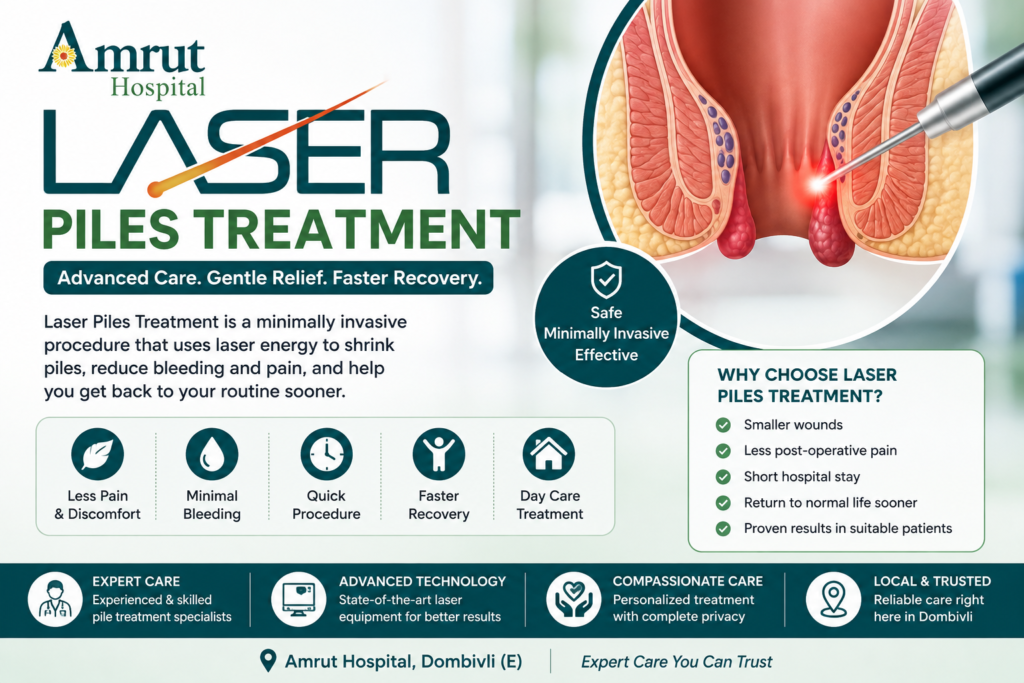
For appropriately selected patients, possible benefits include:
- Less short-term postoperative pain
- Lower short-term bleeding risk
- Smaller wounds in selected cases
- Shorter procedure time
- Earlier return to work or routine
- Reduced need for pain medicine
- Short-stay or day-care treatment
A review of grade II and grade III piles found lower pain, less analgesic use, less bleeding, and quicker return to activities after laser haemorrhoidoplasty. Larger trials are still needed
Results still depend on the grade, external component, technique, bowel habits, and follow-up. Two people with similar symptoms may not always need the same treatment.
How Does Laser Treatment Compare with Other Piles Treatments?
| Treatment | Often Considered For | Main Advantage | Limitation |
|---|---|---|---|
| Fibre, fluids and medicines | Mild or early symptoms | Non-invasive | May not control persistent prolapse |
| Rubber-band ligation | Grade I–II and selected grade III internal piles | Effective office procedure | Repeat treatment may be needed |
| Laser haemorrhoidoplasty | Selected grade II–III internal piles | Less short-term pain and bleeding | Not suitable for every case |
| Conventional haemorrhoidectomy | Significant external or advanced combined piles | Effective for advanced disease | More pain and wound care |
| Haemorrhoidal artery ligation | Selected internal piles | Less tissue removal | Recurrence may be higher than excisional surgery |
Clinical guidance considers rubber-band ligation the most effective office treatment for many suitable cases. Excisional surgery remains important for selected external or grade III–IV disease.
Who Is a Good Candidate for Laser Piles Treatment?
Laser treatment may be considered for patients with:
- Confirmed internal piles with repeated bleeding
- Grade II or selected grade III haemorrhoids
- Prolapse during bowel movements
- Symptoms not controlled by fibre, medicines, and bowel-care changes
- A preference for minimally invasive treatment after understanding alternatives
- Fitness for the advised procedure and anaesthesia
It may not suit large external piles, grade IV prolapse, infection, or unclear bleeding.
A reliable Piles clinic in Dombivli should recommend treatment based on suitability, not simply because laser technology is available.
What Factors Affect the Cost of Laser Piles Treatment in Dombivli?
The cost of laser piles treatment in Dombivli varies because every patient’s condition is different.
Important pricing factors include:
- Grade and number of haemorrhoids
- Internal, external, or combined piles
- Required blood tests or endoscopy
- Type of anaesthesia
- Day-care treatment or hospital stay
- Laser equipment and medical consumables
- Prescribed medicines
- Follow-up consultations
- Existing health conditions
- Insurance coverage
A trustworthy Piles hospital in Dombivli should provide an estimate after examination rather than making a one-price promise without understanding the condition.
What Are the Piles Treatment Trends in 2026?
In 2026, the key trend is not “laser for everyone.” It is personalised, minimally invasive, and evidence-aware care.
- Better patient selection: Treatment is matched to piles grade, prolapse, external disease, symptoms, and individual needs.
- Standardised laser protocols: Expert recommendations now cover preparation, laser technique, safety measures, and postoperative care.
- Day-care recovery: Hospitals are focusing on safe discharge, better pain control, bowel care, and an earlier return to routine.
- Balanced treatment choices: Evidence supports short-term recovery benefits for laser, while conventional surgery remains valuable for advanced or external disease.
- Careful bleeding evaluation: Endoscopy is used selectively because not every case of rectal bleeding is caused by piles.
The focus is shifting from promoting a single procedure to selecting the treatment that offers the best balance of relief, safety, recovery, and long-term results.
Why Choose Amrut Hospital in Dombivli?
Amrut Hospital provides care for piles, fissure, fistula, hernia, gallbladder problems, and other general surgical conditions. Its official information lists laser, laparoscopic, and endoscopic services under the guidance of Dr. Pramod Bahekar
Evaluation can include conservative and procedural options. Access to a laparoscopic surgeon in Dombivli, a hernia surgeon in Dombivli, and endoscopic assessment may also help when another condition needs attention.
Patients deserve a clear diagnosis, an honest explanation, and care without judgement. After months of silent discomfort, that first conversation can bring real relief.
What Are the 7 Benefits of Laser Piles Treatment?
For suitable patients, laser piles treatment in Dombivli may offer these benefits:
- Less postoperative pain compared with conventional surgery in selected cases.
- Reduced bleeding because laser energy seals small blood vessels during treatment.
- Minimally invasive procedure with less damage to nearby healthy tissue.
- Shorter hospital stay, with day-care discharge possible for many patients.
- Faster return to routine activities, depending on recovery and type of work.
- Smaller wounds and easier aftercare in appropriately selected cases.
- Lower need for strong pain medicines during the early recovery period
Frequently Asked Questions About Laser Piles Treatment in Dombivli
1. Is laser piles treatment painful?
Laser treatment is not completely pain-free. However, studies generally report less short-term pain than conventional excisional surgery. Individual recovery can vary.
2. Can piles return after laser treatment?
Yes. Recurrence is possible after any procedure. Research has not consistently found a significant difference in recurrence between laser treatment and conventional surgery.
Good toilet habits, fibre intake, hydration, and constipation control remain important after treatment.
3. How soon can I return to work?
Many patients return to a light routine sooner than after conventional surgery. The exact timing depends on recovery, bleeding, discomfort, and the type of work you perform.
4. Do all grades of piles need laser surgery?
No. Early piles may improve with fibre, fluids, medicines, and better toilet habits. Some cases suit office procedures, while advanced external or combined piles may require excisional surgery
5. When should I consult a piles specialist?
Consult a doctor if you experience rectal bleeding, persistent symptoms, severe pain, or piles that repeatedly come outside.
Heavy bleeding, faintness, fever, or rapidly worsening pain requires urgent medical attention
Take the Next Step Toward Comfortable Living
You do not have to plan your day around pain or bleeding. Book a confidential consultation at Amrut Hospital to understand the cause, stage, and suitable treatment.
Ask whether laser piles treatment in Dombivli is right for you. A proper consultation should clearly explain the benefits, limitations, alternatives, recovery process, and expected cost before you decide.